
01What is myelopathy?
Myelopathy is not the same as a pinched nerve affecting one arm or one leg. It involves the spinal cord itself. Cervical myelopathy is the most common spine-related form and can occur when stenosis, disc herniation, bone spurs, or ligament thickening narrows the spinal canal.
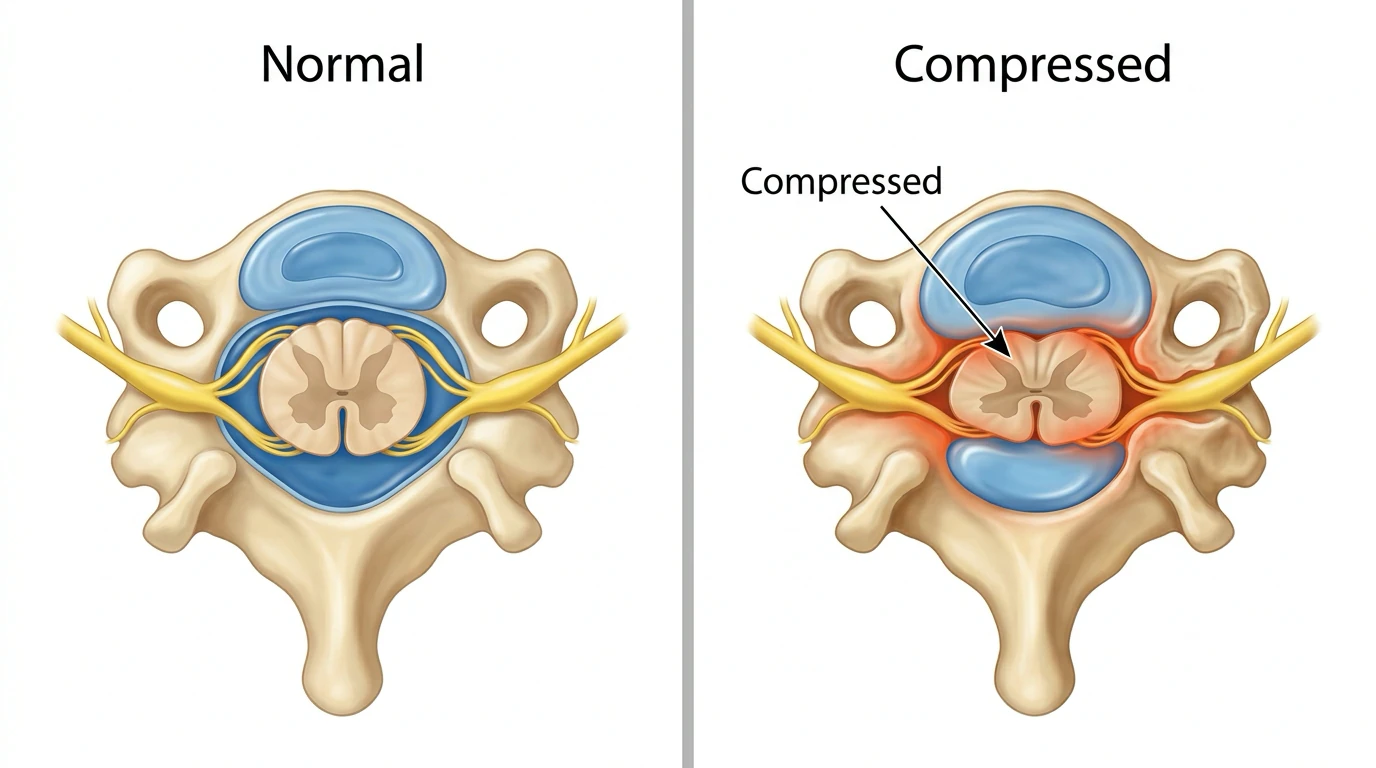
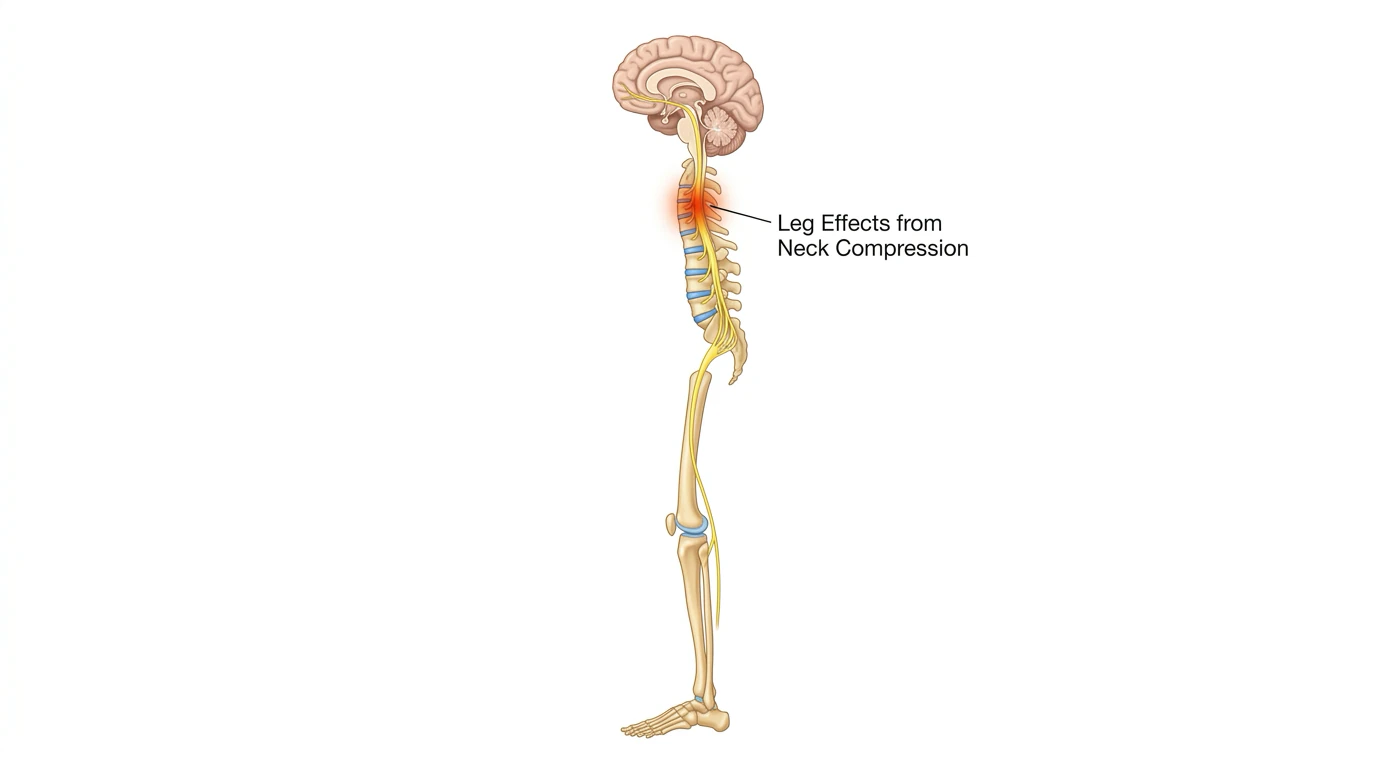
The spinal cord is the main communication pathway between the brain and body. When it is compressed, symptoms may appear at or below the compressed level. That is why a neck problem can affect walking, balance, hand coordination, or leg function.
02What are the symptoms?
Myelopathy symptoms may include hand clumsiness, trouble with buttons or handwriting, balance problems, falls, stiffness, numbness, weakness, changes in walking, or arm and leg symptoms. Neck pain may be present, but some patients notice coordination or walking changes more than pain.
A patient with myelopathy may not describe severe pain, which is one reason spinal cord symptoms can be missed. A person may first notice that walking feels less coordinated, stairs feel less secure, handwriting changes, or small buttons become harder to fasten. These are functional clues, not just pain complaints, and they can develop gradually and be mistaken for aging, arthritis, or peripheral nerve problems.
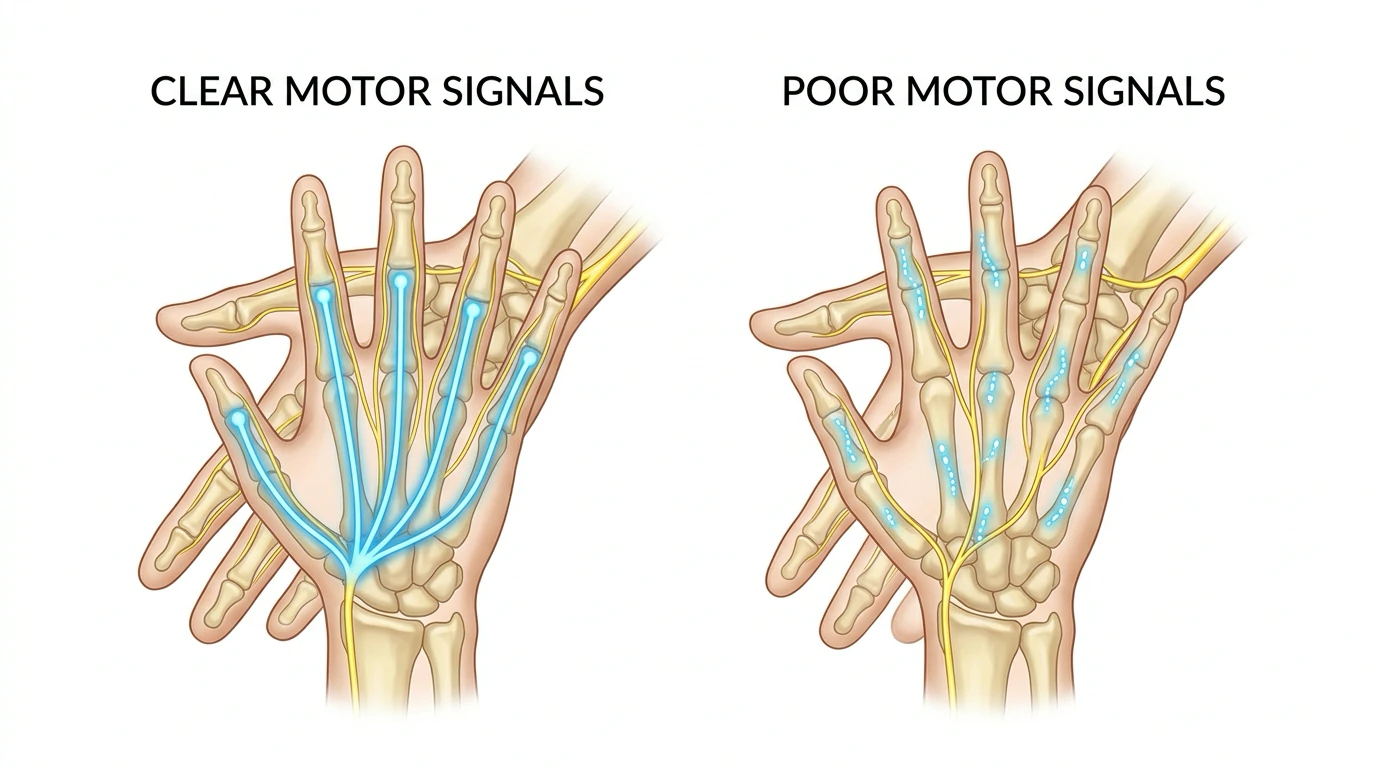
Because myelopathy can overlap with other conditions, the pattern of symptoms and the neurologic exam matter. Hand numbness can come from carpal tunnel syndrome, ulnar neuropathy, cervical radiculopathy, or spinal cord compression, and the treatment depends on the cause. Myelopathy is also different from routine neck strain: strain usually affects pain and movement, while myelopathy suggests the spinal cord is not working normally. That distinction changes the urgency and the treatment discussion.
- Worsening weakness
- New trouble walking
- Repeated falls
- Loss of hand coordination
- Bowel or bladder changes
- Sudden weakness or a major neurologic change
Myelopathy is not always an emergency, but it should not be ignored when symptoms are progressive. The concern is not only pain relief. The concern is spinal cord function.
03How do we diagnose myelopathy?
Diagnosis usually includes a neurologic exam and MRI to evaluate the spinal cord and spinal canal. The exam may check reflexes, strength, sensation, balance, walking, coordination, and signs that suggest spinal cord involvement. MRI can show whether the spinal canal is narrowed and whether the cord is compressed.
The neurologic exam is central because the MRI alone does not describe how you are functioning. One patient may have narrowing on imaging but limited symptoms, while another has clear coordination or walking changes. The goal is to identify whether the symptoms truly come from spinal cord compression, how severe the compression is, and whether it is stable or worsening. The treatment plan should connect the image with the exam.
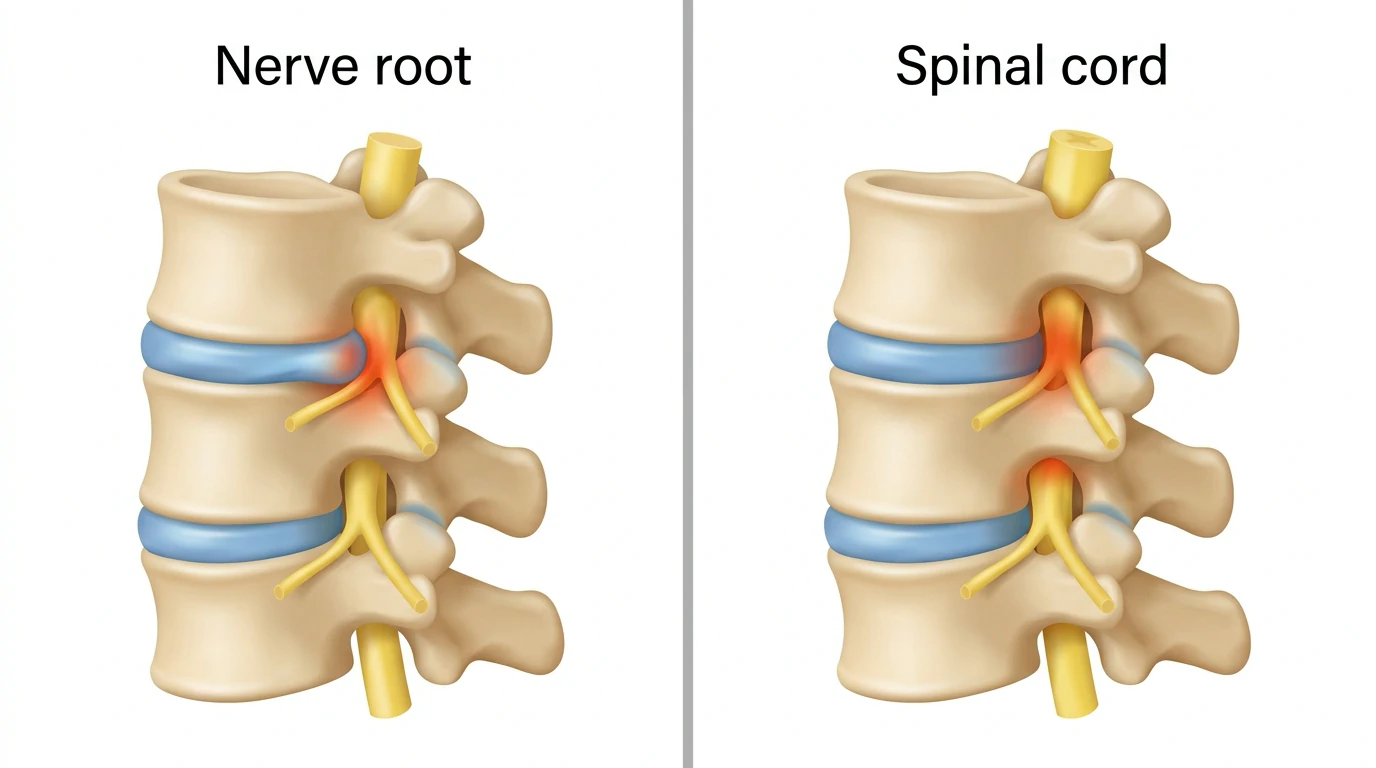
Additional testing may be useful when hand numbness, weakness, or walking problems could come from more than one condition. A patient can have both cervical stenosis and peripheral nerve compression, and sorting out the main driver helps avoid treating the wrong problem.
04What are the treatment options?
Treatment depends on severity and progression, and conservative care for myelopathy is different from conservative care for ordinary neck pain. If spinal cord compression is symptomatic or worsening, the discussion often shifts toward whether decompression is needed.
Monitoring may include education about warning signs and repeat evaluation if function changes. Waiting is a clinical decision, not the absence of treatment, and it should come with clear instructions about what changes should prompt follow-up.
Surgery may be considered to decompress the spinal cord and reduce the risk of further neurologic decline. Surgery may help stop progression and may improve some symptoms, but recovery varies, and expectations should be set individually for each patient.
Some patients may be considered for an anterior procedure such as ACDF. Others may need a posterior decompression such as laminectomy. The right procedure cannot be chosen based on the diagnosis alone.
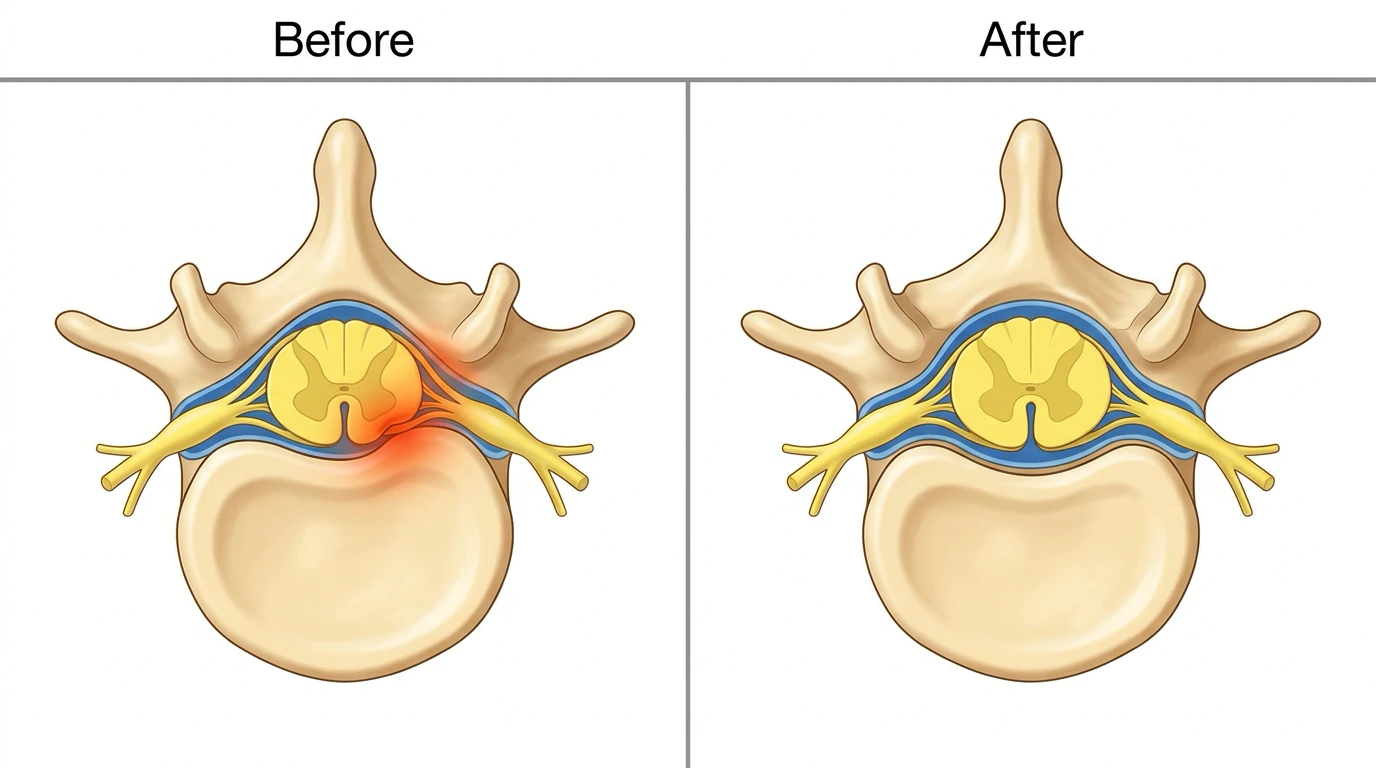
Expectations need to be set carefully. Because myelopathy involves spinal cord function, care aims to understand neurologic risk and protect function whenever possible, not only to relieve pain.
05When should you see a specialist?
See a specialist promptly for hand clumsiness, balance changes, gait trouble, falls, weakness, or imaging that shows spinal cord compression. BSNI can review symptoms, perform a neurologic evaluation, interpret imaging, and explain whether symptoms fit myelopathy, radiculopathy, peripheral nerve compression, or another condition. When spinal cord compression is present, we help you understand the level of concern and the treatment options.
Before the visit, it helps to write down changes in walking, balance, hand coordination, falls, handwriting, grip, and bowel or bladder function, and how symptoms have changed over time. Walking distance, falls, hand dexterity, balance, and leg stiffness are often more useful than a pain score alone. Prior MRI reports and images are especially useful because the degree and location of compression guide the discussion.
Useful questions to ask: is the spinal cord compressed, are there signs of myelopathy on exam, are symptoms stable or progressive, what activity precautions are reasonable, and when should surgery be discussed? If surgery is discussed, ask what approach is being considered, what levels are involved, and whether the goal is to prevent worsening, improve symptoms, or both. Clear answers help explain why myelopathy is treated differently from routine neck pain.