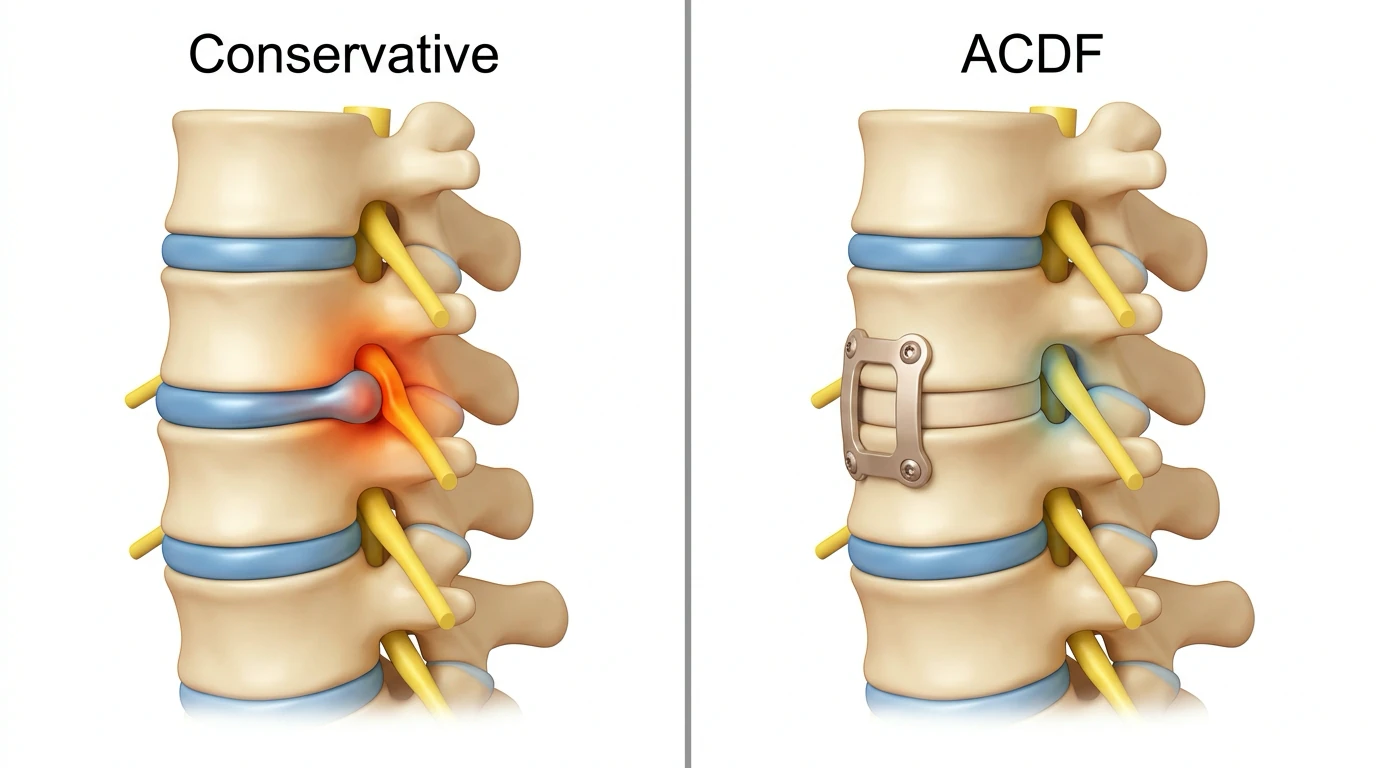
What is it? ACDF explained.
ACDF combines decompression and fusion, and each word in the name describes part of the operation. "Anterior" means the surgeon approaches from the front of the neck. "Cervical" refers to the neck portion of the spine. "Discectomy" means the affected disc is removed. "Fusion" means the treated level is supported so the bones can join together over time.
The goal is to relieve pressure on a cervical nerve root or the spinal cord and stabilize the treated level. ACDF may be considered when a disc, bony narrowing, or a similar cervical spine problem causes symptoms that match the imaging.

What does it treat? Cervical radiculopathy and myelopathy.
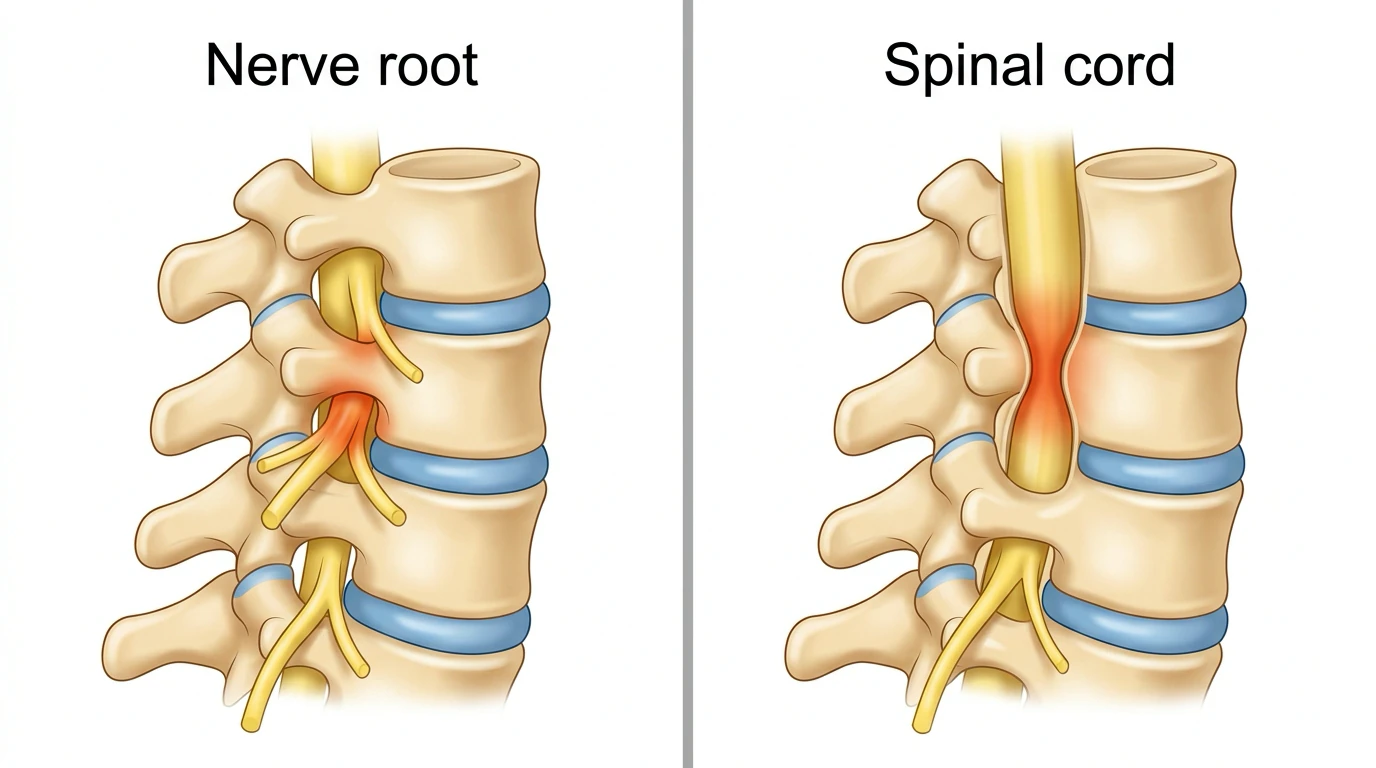
ACDF may be considered for cervical radiculopathy, which can cause arm pain, numbness, tingling, or weakness when a nerve root is compressed. It may also be considered for selected patients with cervical myelopathy, where spinal cord compression affects balance, walking, hand coordination, or strength.
Related conditions include cervical disc herniation, cervical spinal stenosis, degenerative disc changes, and bone spurs. The important question is always whether the compression seen on imaging matches the patient's symptoms and neurologic findings. Radiculopathy and myelopathy are two different clinical situations, and the distinction affects urgency, expectations, and procedure planning.
Who is a candidate? The right patient for ACDF.
The candidacy conversation should identify the main reason for surgery. For some patients, the goal is relieving arm pain from nerve root compression. For others, it is decompressing the spinal cord because myelopathy symptoms are present. Some patients need surgical discussion sooner when symptoms raise neurologic concern, such as progressive weakness or spinal cord compression.
Good candidates
- Arm pain, weakness, or numbness that matches imaging and has not improved enough with conservative care
- Spinal cord symptoms with matching compression on imaging
- Progressive weakness or other findings that raise neurologic concern
Poor candidates
- Symptoms that do not match the imaging
- Pain that appears to come from another source
- Medical risk that is too high for the expected benefit
- Symptoms that are improving with conservative care
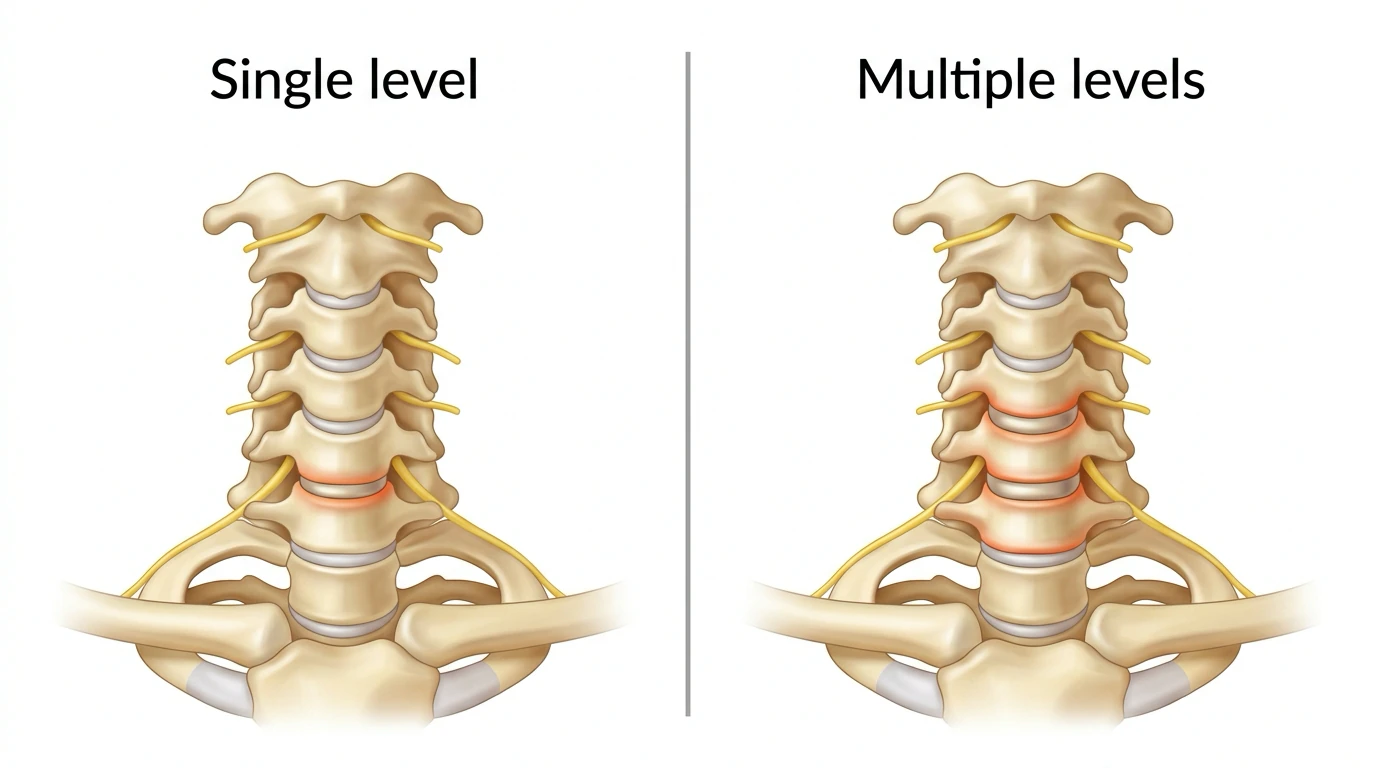
Useful questions to bring to the consultation: which level is being treated, what structure is compressing the nerve or spinal cord, why fusion is needed rather than a different decompression procedure, and which symptoms the surgery is expected to address. The explanation should connect the proposed surgery to a specific level, a specific compressed structure, and a specific symptom or neurologic risk.
How does it work? The procedure follows a precise sequence.
Approach from the front of the neck
The surgeon approaches the cervical spine from the front of the neck at the planned level.
Remove the disc and compressive material
The affected disc and compressive material are removed to create more space for the nerve root or spinal cord.
Place the spacer or graft
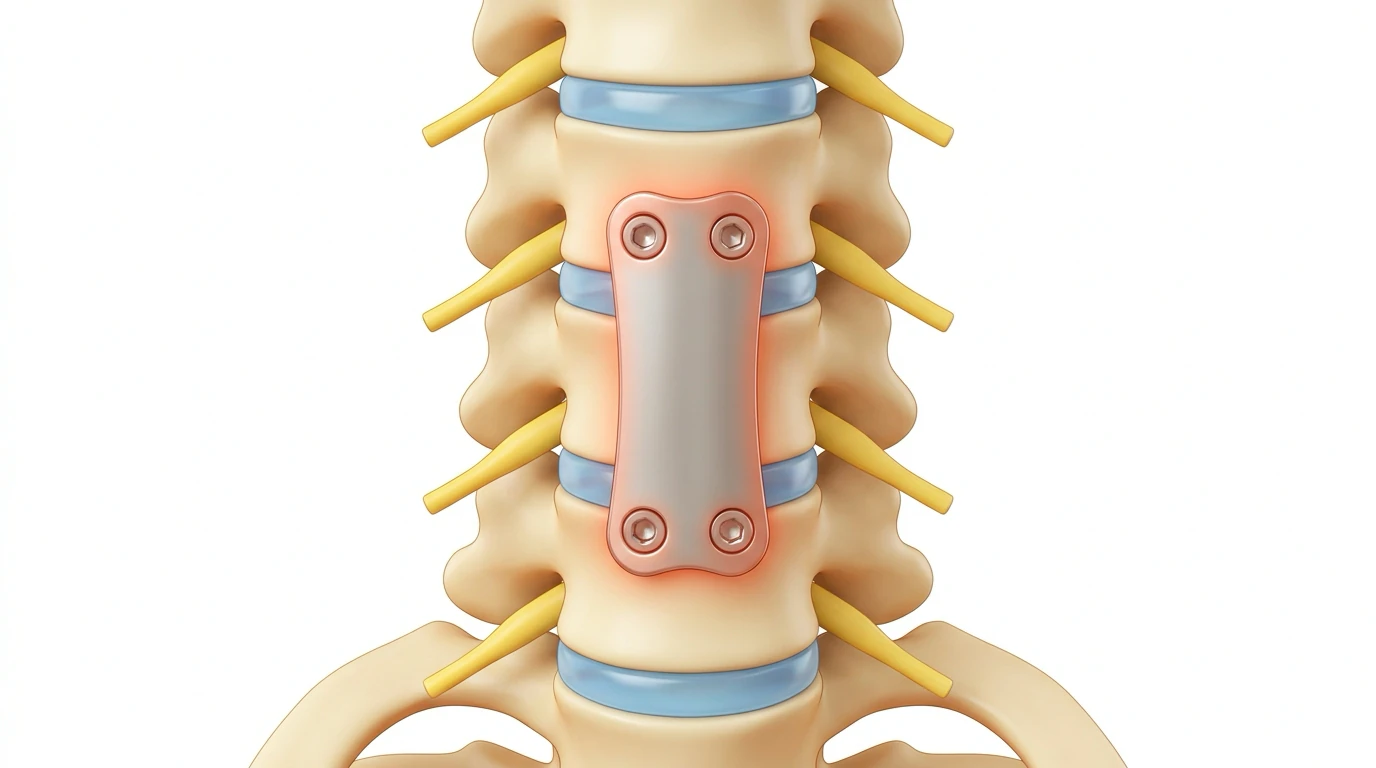
A spacer or graft is placed to support fusion at the treated level.
Stabilize the level
Fixation may be used to stabilize the level while the fusion develops. Details vary by the number of levels, anatomy, and surgical plan.


What is recovery like? Short-term healing and longer-term fusion monitoring.
Recovery varies by number of levels, nerve or spinal cord symptoms before surgery, swallowing symptoms, fusion healing, and overall health. Some patients mainly need time for the incision to heal and for a gradual return to activity. Others need closer neurologic follow-up because nerve or spinal cord symptoms can recover slowly or incompletely.
Some symptoms may change early, while nerve or spinal cord symptoms can take longer to show how much they will improve. Collar use, driving, lifting, work, therapy, and imaging follow-up are surgeon-specific decisions; general online recovery timelines should not replace that guidance.

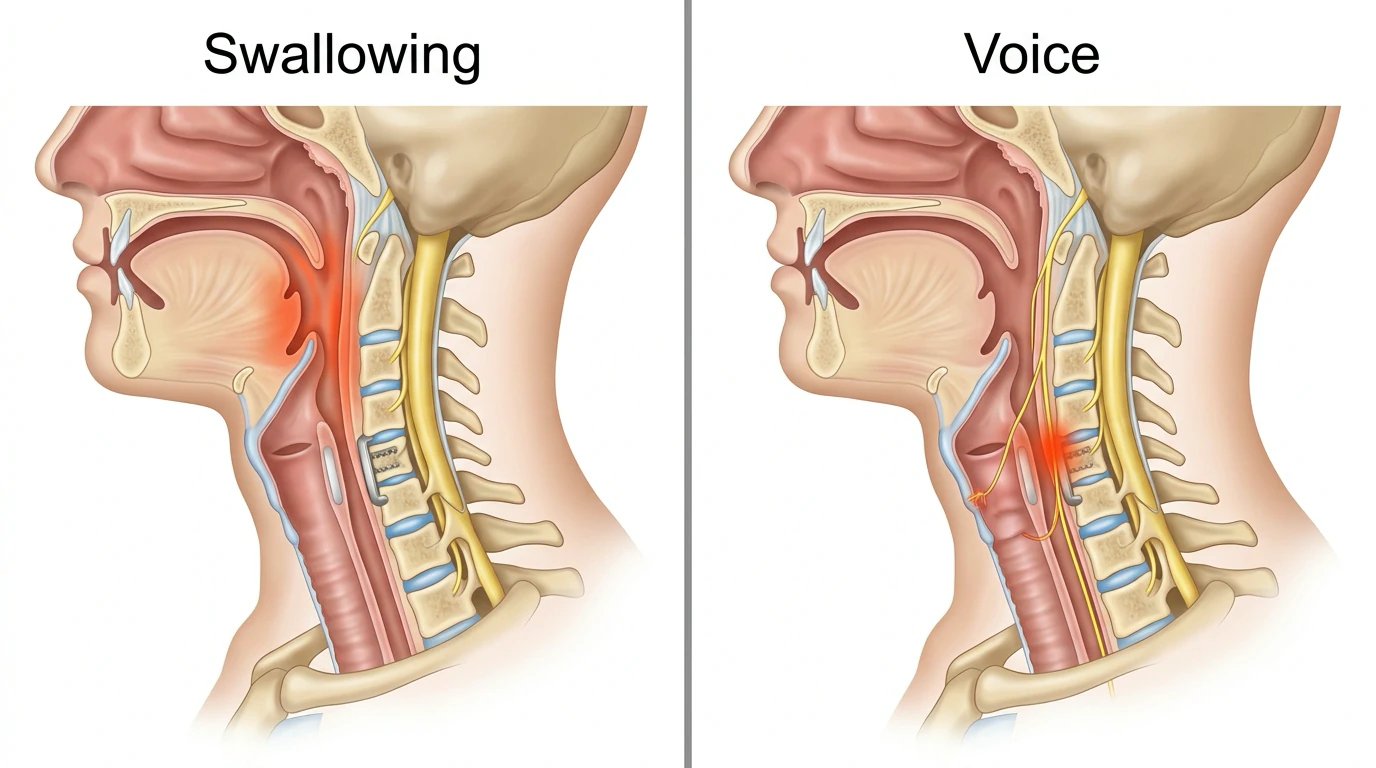
Report swallowing difficulty, voice changes, worsening neurologic symptoms, fever, wound concerns, or new severe pain according to the care team's instructions.
What are the risks? Risks worth discussing.
Risk depends on patient factors, anatomy, number of levels, and the planned procedure. The purpose of the preoperative discussion is to understand both the reason for surgery and the tradeoffs.
Infection and bleeding
Risks common to spine surgery, discussed in light of your health history.
Swallowing or voice changes
Specific to the front-of-neck approach; usually discussed in every ACDF consultation.
Nerve or spinal cord injury
The procedure decompresses neural structures directly; injury is discussed in every case.
Spinal fluid leak
A recognized risk of procedures near the covering of the spinal cord and nerves.
Nonunion and hardware issues
The fusion may not fully heal, and fixation can loosen or fail; both are monitored at follow-up.
Persistent symptoms and anesthesia risks
Symptoms not caused by the treated level may not improve. Anesthesia risk is reviewed separately.
What are the alternatives? Surgery is not the starting point.
Some patients with cervical radiculopathy begin with conservative care such as activity modification, medication when safe, and physical therapy. In selected patients, an epidural steroid injection may be discussed for nerve-related arm pain. Other surgical options may be considered depending on anatomy and alignment.
Before choosing ACDF, you should understand why fusion is being recommended rather than continued nonsurgical care or a different decompression procedure, and why the front-of-neck approach is being used.