
01What is spinal stenosis?
Spinal stenosis is narrowing around the nerves or spinal cord. It can develop from arthritis, disc degeneration, bone spurs, thickened ligaments, spinal alignment changes, or congenital narrowing.
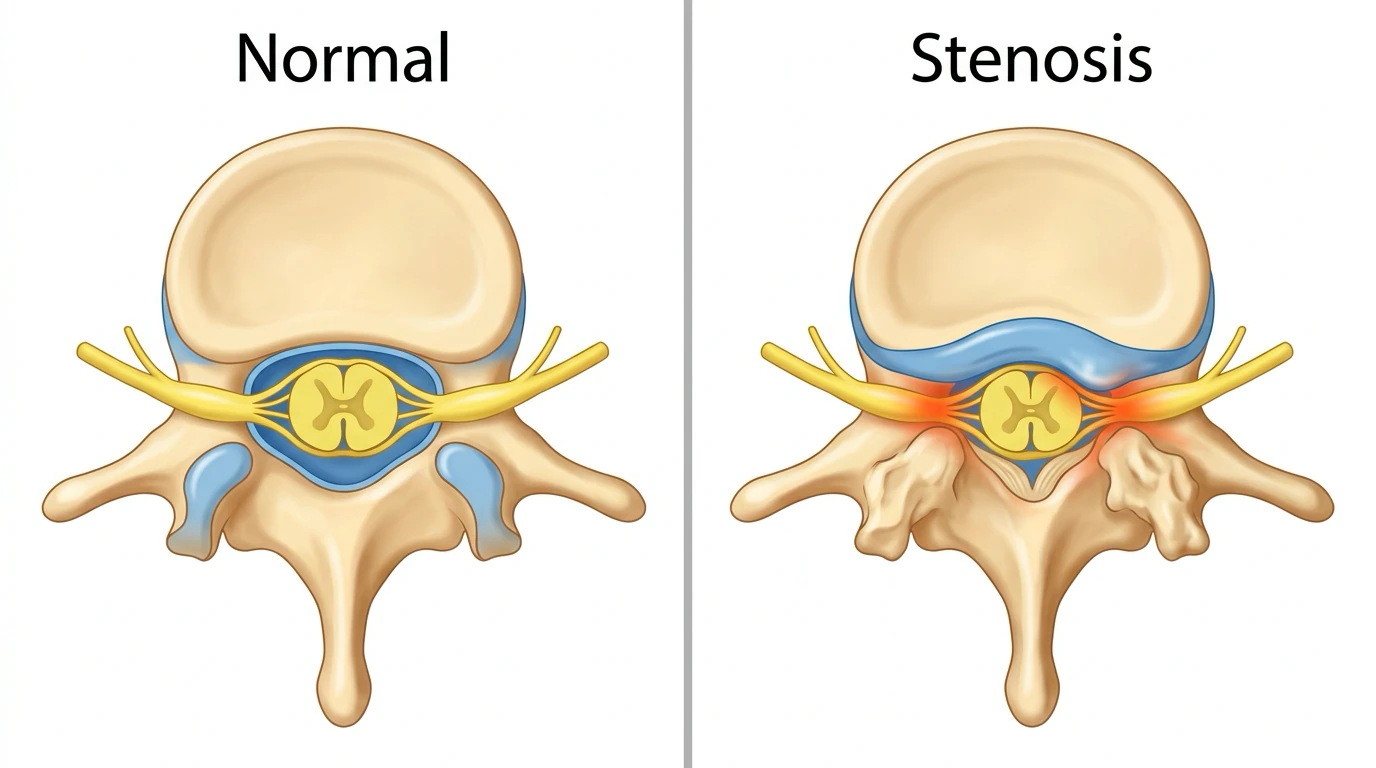
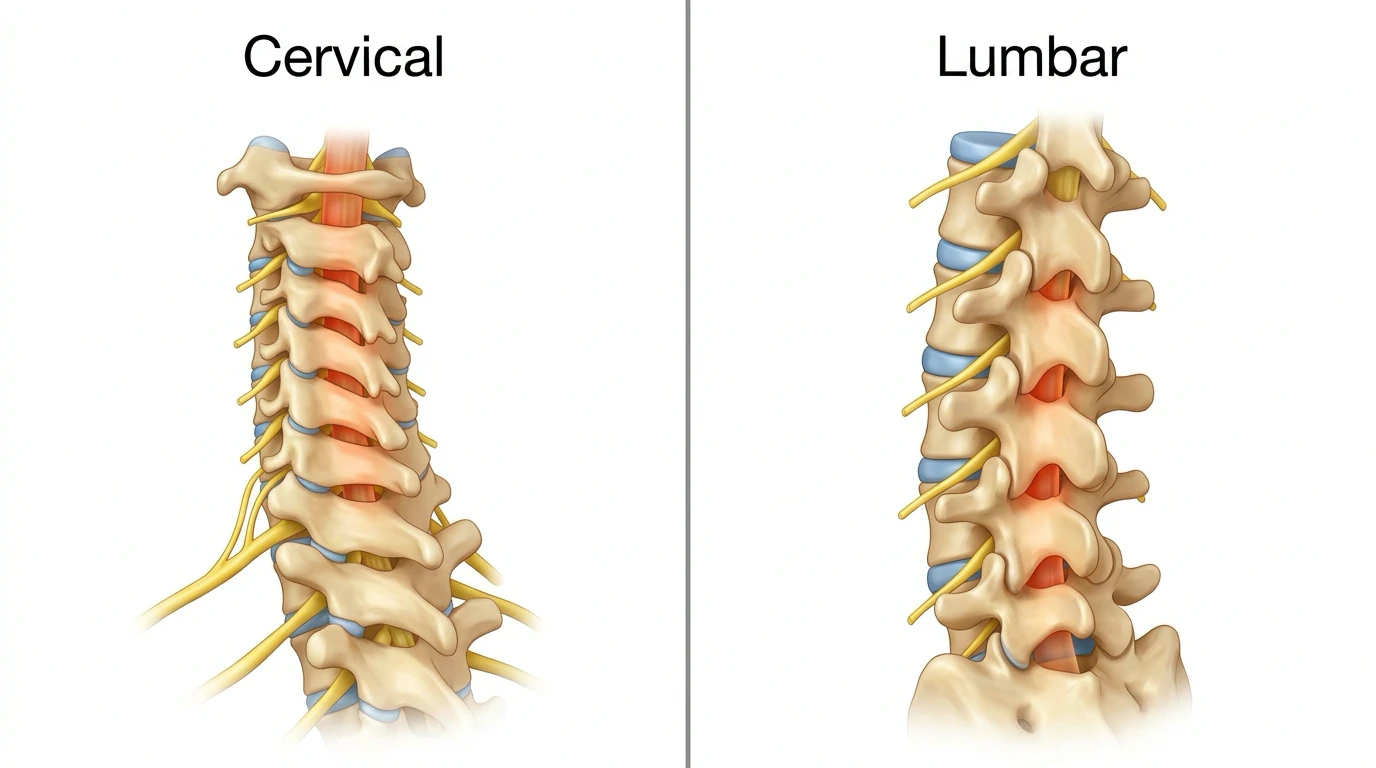
In the lumbar spine, stenosis usually affects nerve roots in the lower back. This can cause buttock or leg symptoms, especially with standing or walking. In the cervical spine, stenosis can affect nerve roots or the spinal cord. Spinal cord compression can lead to myelopathy, which may affect hand function, balance, walking, or leg control.
Because the neck and lower back can create different symptom patterns, it is important not to treat all stenosis the same way.
02Cervical spinal stenosis symptoms
Cervical spinal stenosis may cause neck pain, shoulder or arm symptoms, numbness, tingling, weakness, hand clumsiness, balance changes, or walking problems. If the spinal cord is compressed, symptoms can show up below the level of compression, including in the legs.
Patients may notice trouble buttoning clothing, changes in handwriting, dropping objects, stiffness, falls, or a sense that walking is less steady. These symptoms can be more important than pain level because they may suggest spinal cord involvement.
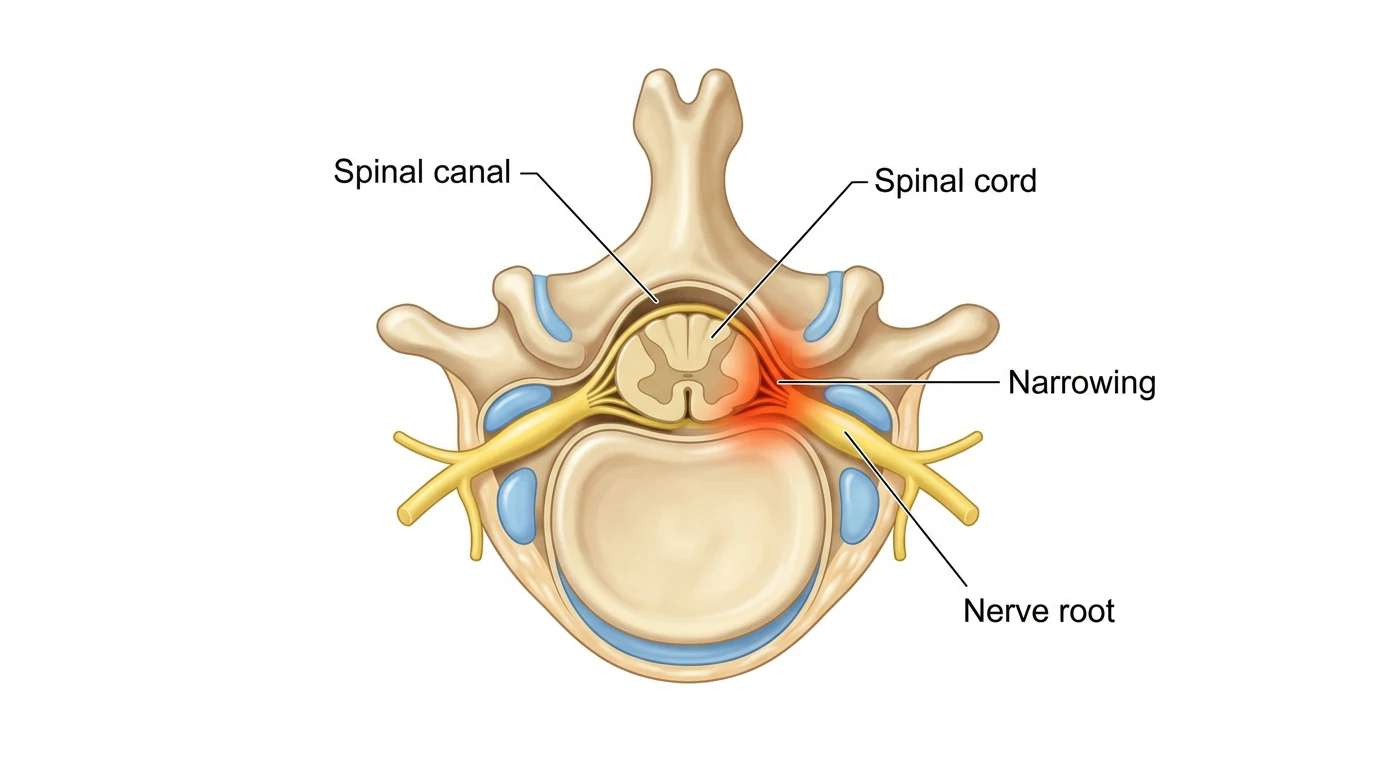
Cervical stenosis can involve a nerve root, the spinal cord, or both. Nerve root symptoms often travel into the shoulder, arm, or hand. Spinal cord symptoms may affect coordination, gait, balance, and leg function. This distinction matters because spinal cord symptoms usually require closer attention than neck pain alone.
03Lumbar spinal stenosis symptoms
Lumbar spinal stenosis may cause low back pain, buttock pain, leg pain, numbness, weakness, or heaviness with standing and walking. Some patients feel better when sitting or leaning forward because that position may reduce irritation around the compressed nerves.
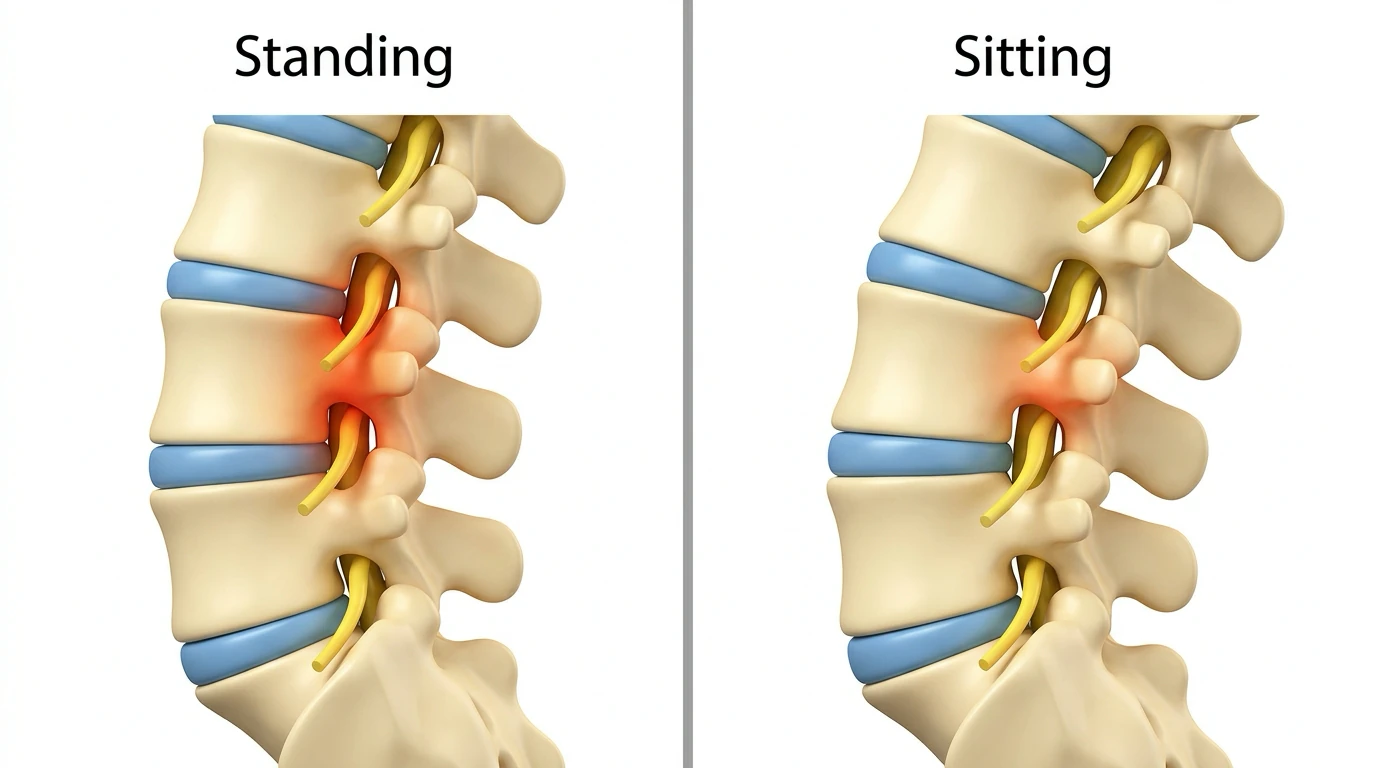
The walking limitation can be frustrating. Patients may be able to walk only a certain distance before leg symptoms build. Others notice symptoms during standing tasks, then relief after sitting.
Lumbar stenosis symptoms can overlap with hip arthritis, vascular problems, peripheral neuropathy, and disc herniation. The exam and imaging help identify whether the symptoms are most consistent with nerve narrowing in the lower back or another condition.
- Progressive weakness
- New bowel or bladder changes
- Major balance changes or repeated falls
- New or worsening hand clumsiness
- Symptoms suggesting spinal cord compression
Lumbar stenosis can be painful and limiting, but cervical stenosis that involves the spinal cord carries a different level of risk. Walking changes, falls, or hand coordination problems should be reviewed carefully.
04How do we diagnose spinal stenosis?
Diagnosis usually starts with a history and neurologic exam. We look at walking tolerance, pain pattern, sensation, strength, reflexes, balance, and signs that could suggest spinal cord compression. For cervical stenosis, the exam looks for signs of myelopathy, such as coordination, balance, gait, reflex, or strength changes. For lumbar stenosis, the evaluation often focuses on leg symptoms, walking tolerance, nerve function, and whether symptoms change with position.
MRI or CT may be used to evaluate narrowing around nerve roots or the spinal cord. X-rays can help assess alignment, arthritis, or instability. The most reliable diagnosis connects the imaging with your symptoms and exam.
Imaging findings are common as people age, so the scan must be interpreted carefully. One patient may have narrowing on MRI that is not the main source of symptoms. Another may have symptoms that line up closely with a specific level of stenosis. The treatment conversation should focus on that match.
05What are the treatment options?
Treatment follows a deliberate progression from least invasive to most invasive, and it depends on the region, symptom severity, and neurologic findings. The sequence is usually different for lumbar leg symptoms than for cervical spinal cord symptoms: stable lumbar stenosis may allow more time for conservative care, while progressive cervical myelopathy often requires a more urgent surgical discussion because the spinal cord is involved.
Mild or stable symptoms may be managed with education, activity changes, and medication when safe, while watching for any change in nerve function.
Therapy may focus on mobility, strength, posture, walking tolerance, and strategies to reduce symptom triggers.
An injection may be discussed when inflammation around a nerve contributes to pain. It does not widen the narrowed canal.
Laminectomy is a common decompression procedure for stenosis. It creates more space around the compressed nerves or spinal cord.
Fusion or cervical decompression procedures may be considered when stability, alignment, or the pattern of compression requires more than decompression alone. The right operation requires specialist review.
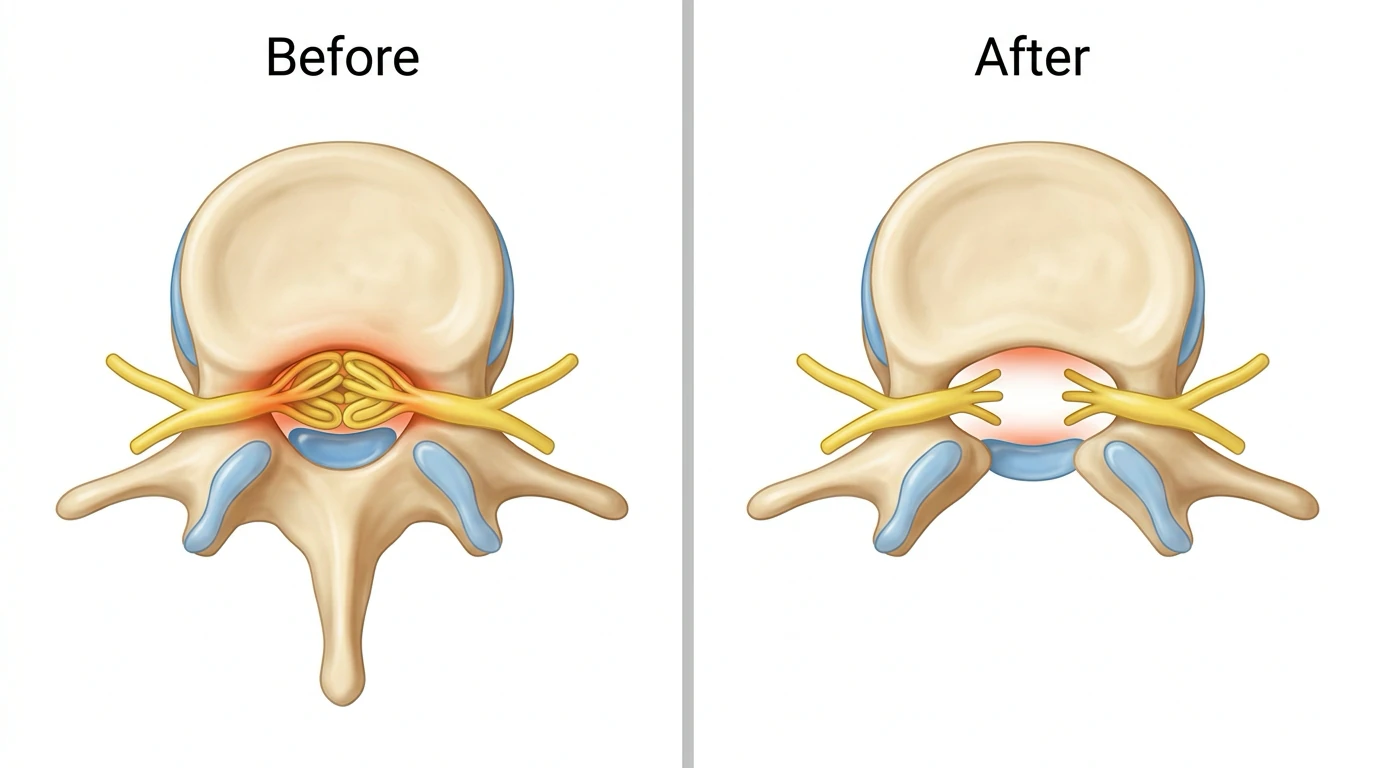
No single treatment fits every stenosis patient. The plan should answer practical questions: which level is narrowed, what structure is compressed, are symptoms stable or worsening, is there weakness, and has conservative care been appropriate for the level of risk?
06When should you see a specialist?
BSNI can review symptoms and imaging, identify whether stenosis is cervical or lumbar, and explain conservative and procedural options. We also help patients understand when symptoms are routine, when they need closer follow-up, and when spinal cord findings require more urgent attention. Patients with both neck and lower back imaging findings should ask which region is driving the most important symptoms, because treating the wrong region can delay the care that actually fits the problem.
Before an appointment, it helps to write down how far you can walk, whether sitting improves leg symptoms, whether hand coordination has changed, whether balance is worse, and whether weakness is present. Bringing prior MRI, CT, and X-ray images helps us compare symptoms with the level and type of narrowing.
Useful questions to ask: is the stenosis affecting nerve roots or the spinal cord, is the main problem cervical or lumbar, are symptoms stable or progressive, and what treatment options fit the current level of risk? Also ask what signs would change the plan. For lumbar stenosis, that may include worsening walking limitation, weakness, or loss of function. For cervical stenosis, hand coordination changes, balance problems, falls, or spinal cord findings may raise the level of concern.