
01What is ulnar neuropathy?
The ulnar nerve travels from the neck region down the arm and into the hand. It helps provide sensation to the small finger and part of the ring finger and controls some hand muscles.
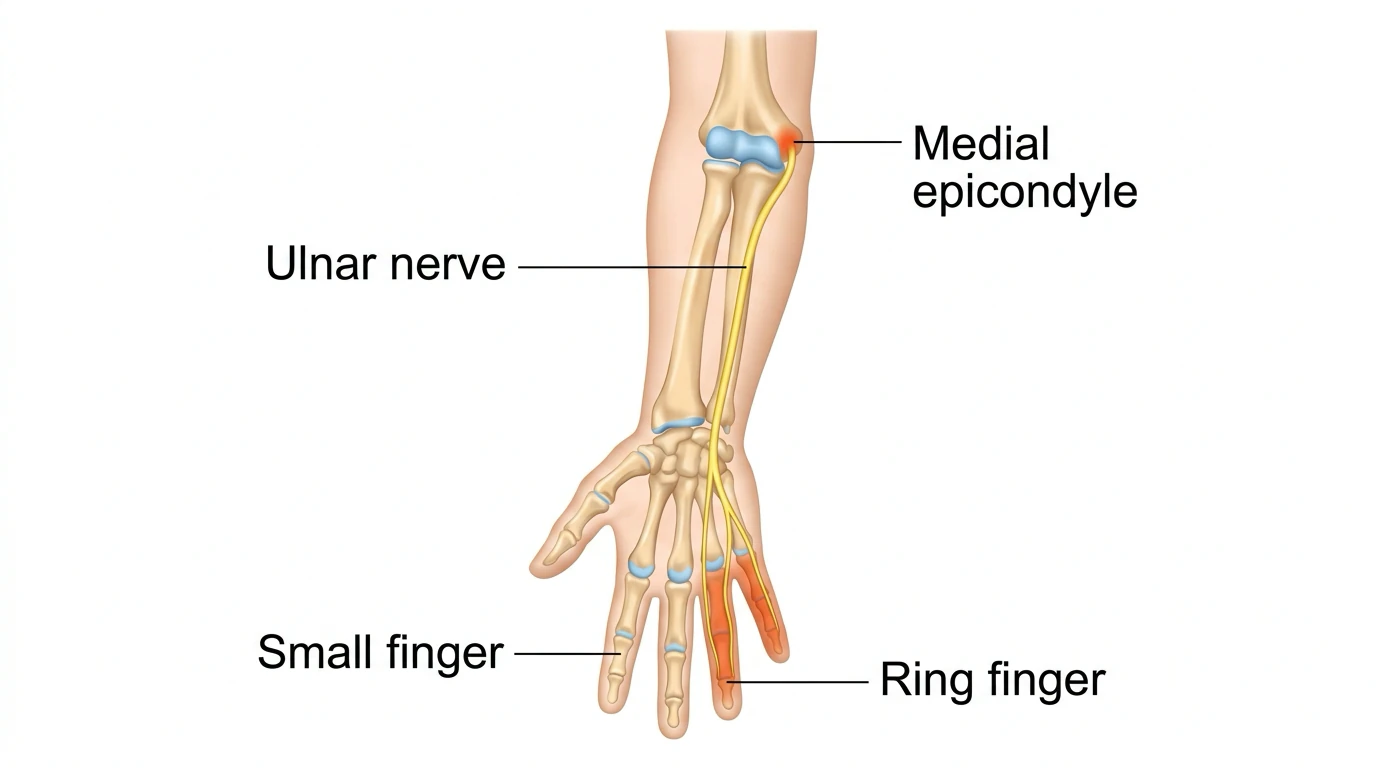
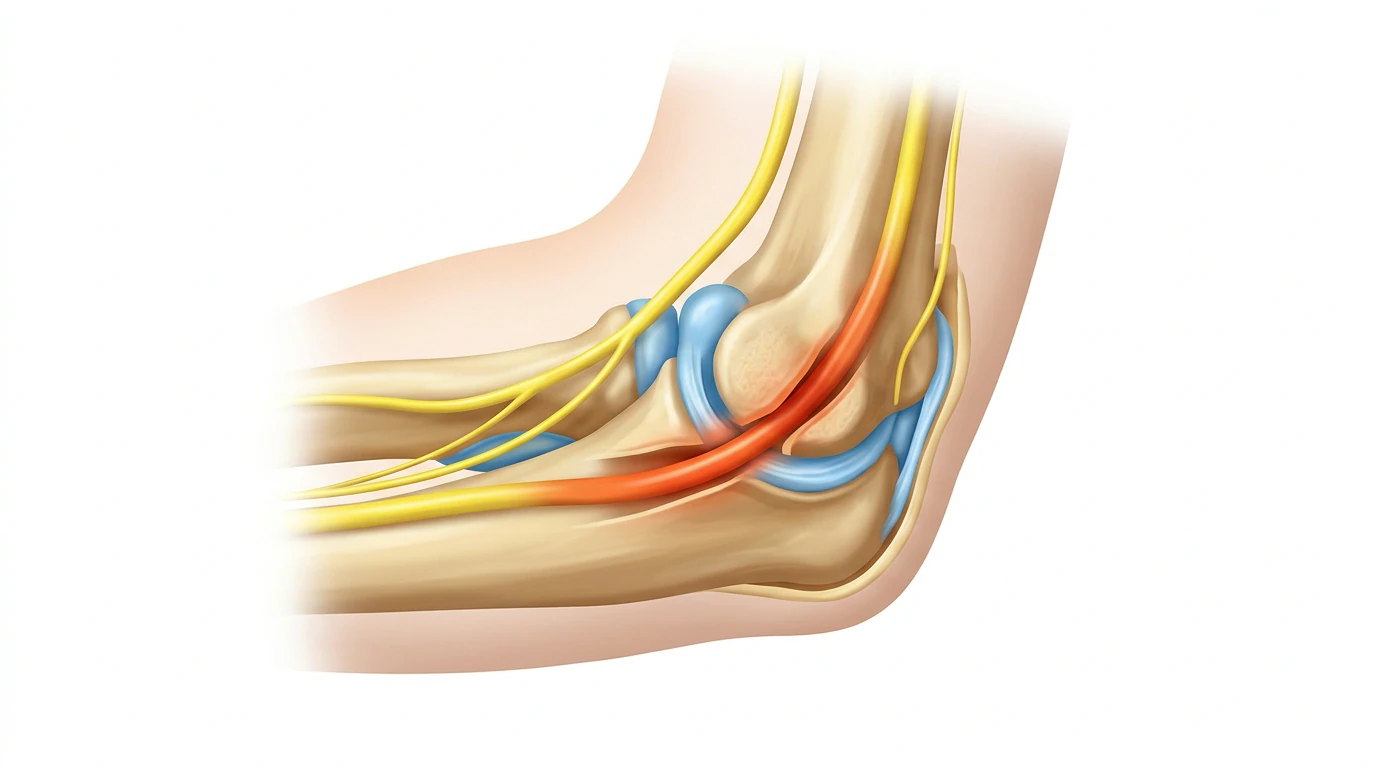
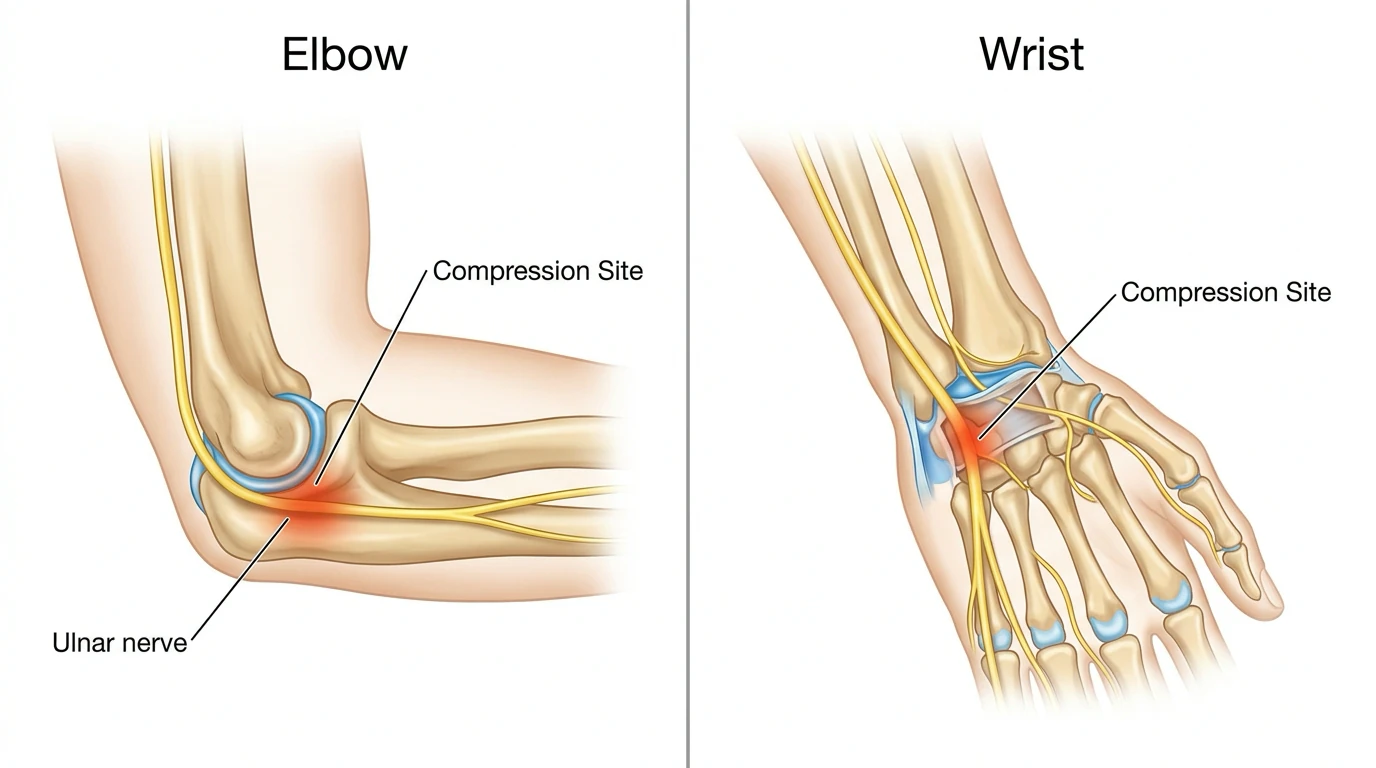
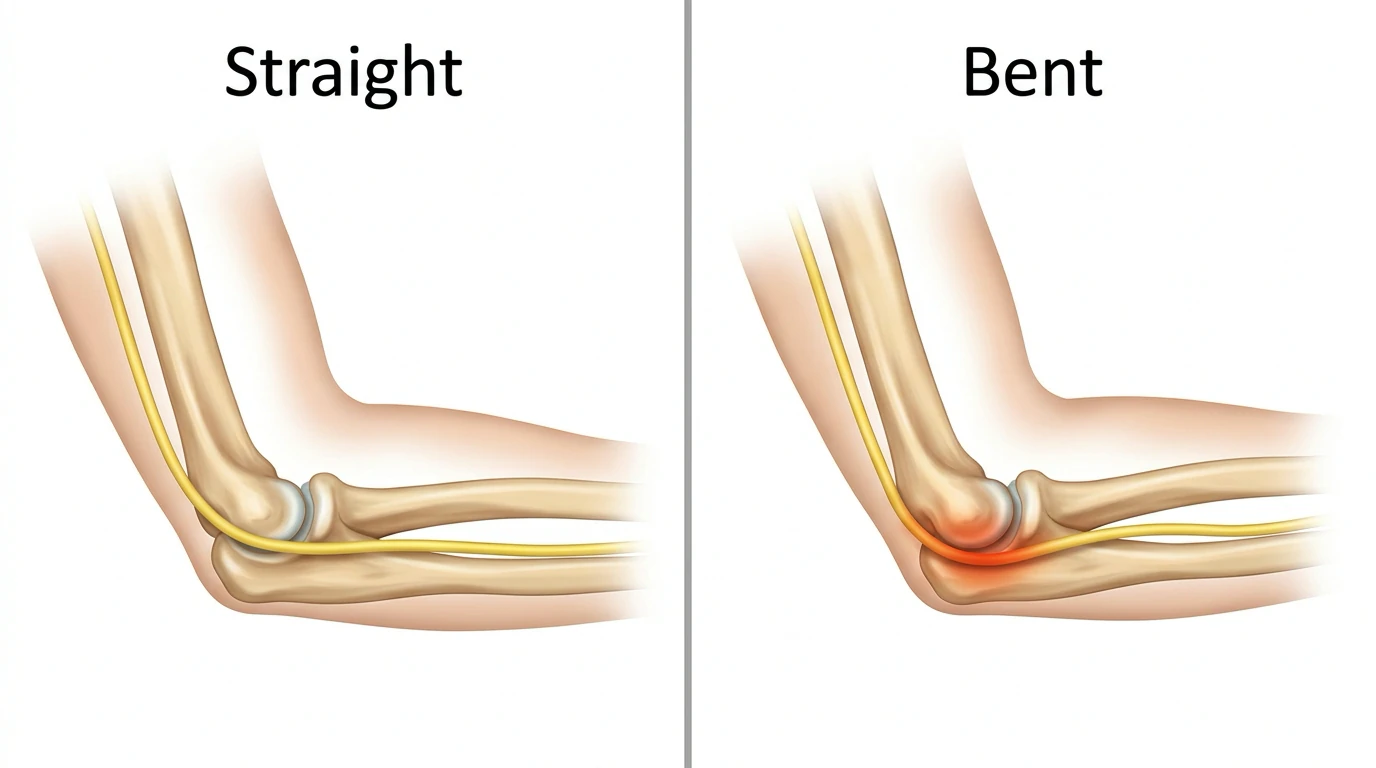
Common compression sites include the elbow, called cubital tunnel syndrome, and the wrist, called ulnar tunnel syndrome or Guyon's canal compression. Symptoms can also overlap with nerve problems coming from the neck, so evaluation may consider the neck, elbow, wrist, and hand.
02What are the symptoms?
Symptoms may include numbness or tingling in the small and ring fingers, elbow or wrist pain, hand weakness, clumsiness, or symptoms that worsen when the elbow is bent. Some patients notice symptoms when leaning on the elbow, sleeping with the elbow bent, gripping, or using the hand for fine motor tasks.
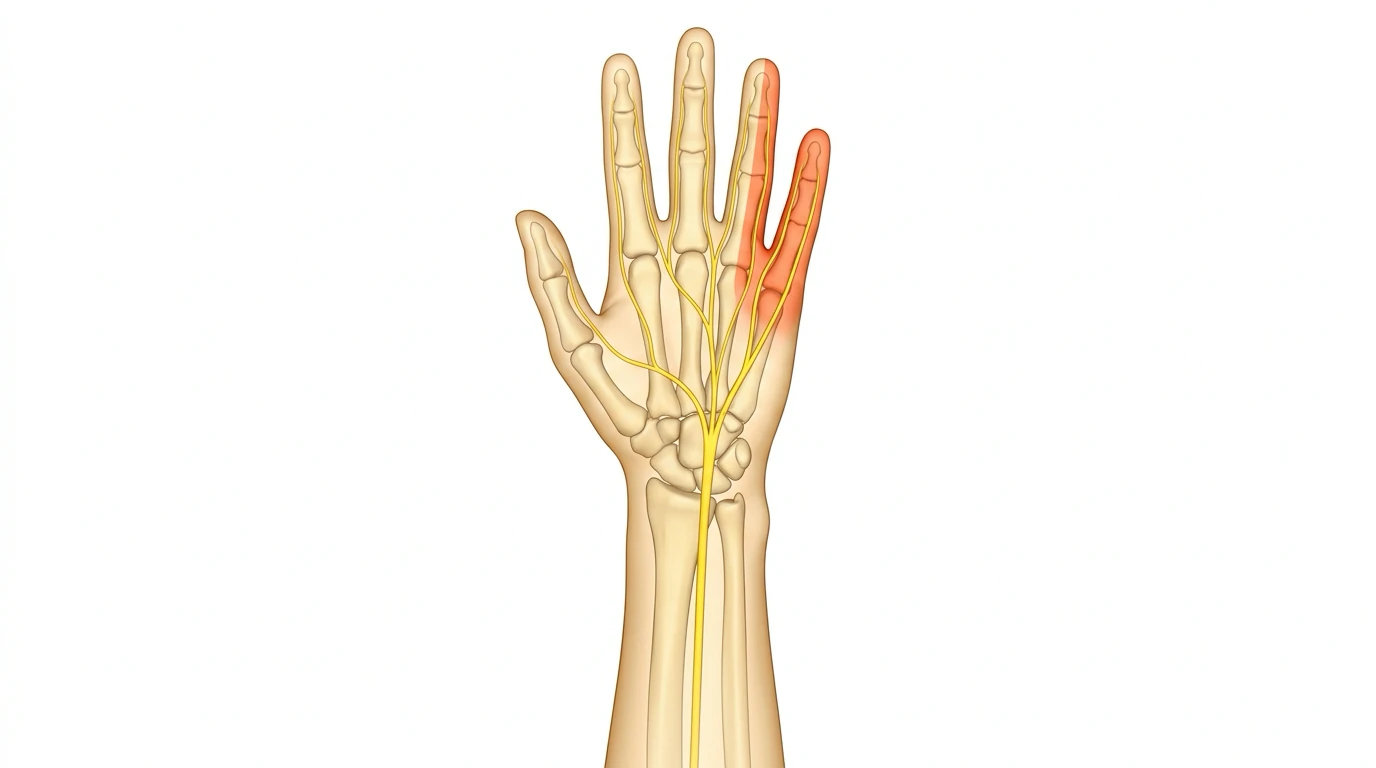
The symptom location is important. Ulnar neuropathy usually affects the small finger and the ulnar side of the ring finger. Carpal tunnel syndrome more often affects the thumb, index finger, middle finger, and part of the ring finger. Cervical nerve root problems can overlap with either pattern. A clear symptom map helps decide where the nerve may be irritated.
Symptoms that come and go with elbow position may suggest cubital tunnel involvement. Symptoms linked to palm pressure or wrist-level compression may suggest ulnar tunnel involvement. Persistent weakness or muscle wasting suggests a more advanced nerve problem and should not be managed only with home positioning changes.
- Persistent numbness
- Hand weakness
- Muscle wasting
- Loss of finger coordination
- Worsening symptoms
The main goal of care is to protect nerve function. Pain relief matters, but strength, sensation, and hand coordination are often the findings that determine how closely symptoms should be followed.
03How do we diagnose ulnar neuropathy?
Diagnosis starts with a symptom history and exam. The exam may include checking small-finger sensation, finger-spreading strength, pinch strength, hand muscle bulk, and whether elbow or wrist positions reproduce symptoms. The goal is to identify where the nerve is irritated and whether the compression is mild, persistent, or causing nerve dysfunction.
Because the ulnar nerve can be affected at more than one site, the evaluation should not assume every small-finger symptom comes from the elbow. The neck, shoulder region, elbow, wrist, and hand may all be considered when the pattern is not straightforward.
X-rays, ultrasound, MRI, or electrodiagnostic testing may be used depending on the suspected compression site and severity. Testing is not needed for every mild case, but it can be useful when symptoms are persistent, severe, or unclear, or when surgery is being considered. If nerve testing is recommended, ask what question the test is meant to answer: it may help locate compression, measure severity, or check whether another nerve condition is present.
04What are the treatment options?
Treatment follows a deliberate progression from least invasive to most invasive, and it depends on where the nerve is compressed. A practical plan should address the positions and activities that irritate the nerve and fit your work, sleep, and daily hand use.
That may mean changing sleep position, avoiding leaning on the elbow, reducing prolonged elbow bending, modifying repetitive pressure on the palm, or using protective padding.
Night splinting, therapy, or nerve-gliding exercises may be considered, along with monitoring of nerve function. Less nighttime tingling, fewer position-related symptoms, and stable strength support continuing this approach.
The goal is to reduce pressure on the nerve. The exact procedure depends on where the nerve is compressed: for elbow-level compression, the discussion may include decompression and whether the nerve needs to be moved; for wrist-level compression, the plan is different. Ask which compression site is being treated and why.
If nonsurgical care is chosen, ask how nerve function will be monitored. Constant numbness, worsening weakness, loss of finger coordination, or muscle wasting should prompt a different discussion. If you work with tools, keyboards, instruments, or repetitive gripping, explain those demands, because they can affect both symptoms and treatment planning.
05When should you see a specialist?
See a specialist for persistent numbness, hand weakness, muscle wasting, loss of finger coordination, or worsening symptoms. Evaluation is also useful when symptoms could be coming from more than one site, such as the neck and the elbow, especially when numbness is not limited to the small and ring fingers or when neck and arm symptoms occur together. BSNI can evaluate the symptom pattern, review testing, and discuss nonsurgical care or decompression options when appropriate.
Before the visit, note which fingers are affected, whether symptoms wake you at night, whether bending the elbow makes symptoms worse, and whether grip, pinch, typing, or tool use has changed. If prior nerve testing or imaging exists, bring those results for review.
Useful questions to ask: where is the nerve most likely compressed, is there weakness or muscle loss, should nerve testing be done, what changes can reduce pressure on the nerve, and what findings would make surgery more appropriate? These questions keep the treatment plan tied to nerve function rather than hand discomfort alone.