
01What is carpal tunnel syndrome?
The carpal tunnel is a narrow passage in the wrist. The median nerve and flexor tendons pass through this space. When tissue swelling or narrowing increases pressure in the tunnel, the median nerve can become irritated or compressed.
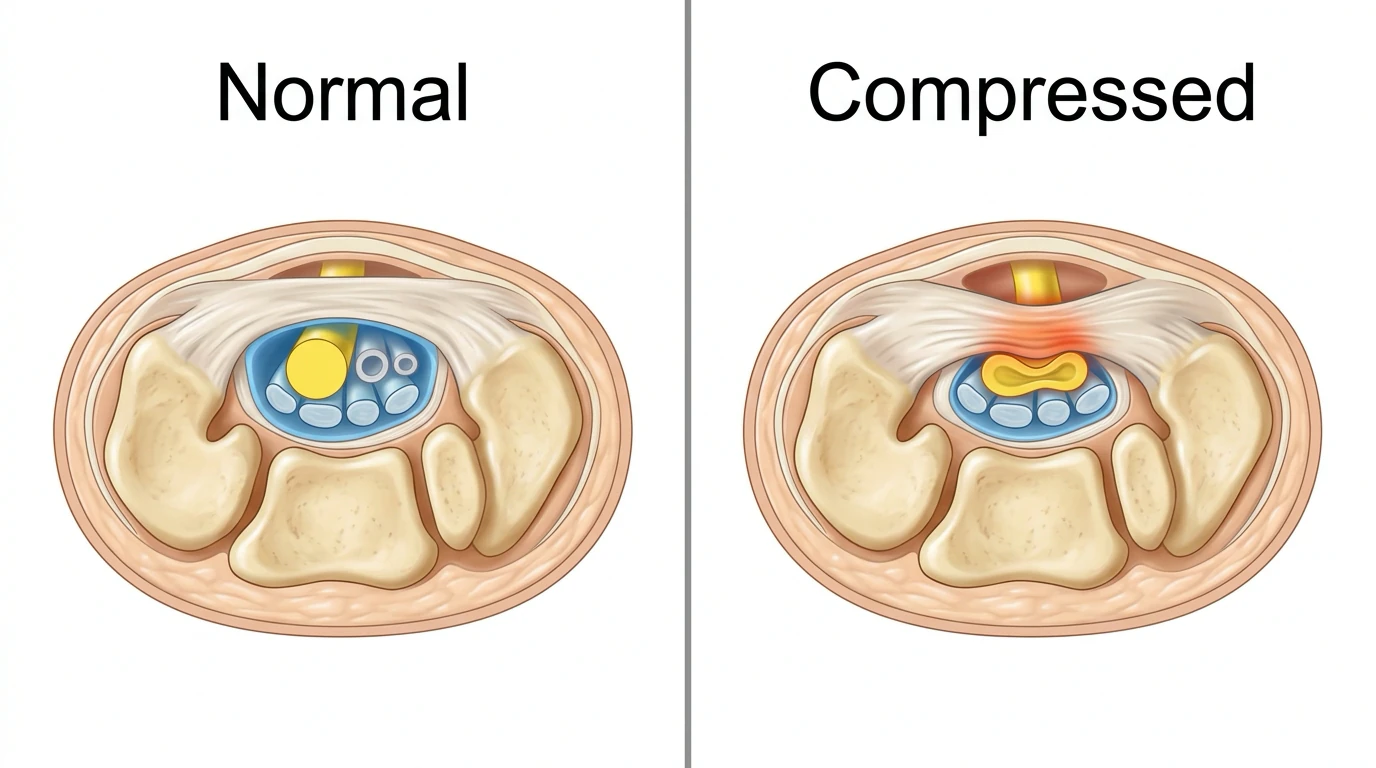
The median nerve provides sensation to the thumb, index finger, middle finger, and part of the ring finger. It also helps control muscles around the base of the thumb. When the nerve is compressed, symptoms may affect sensation, strength, fine motor control, and daily hand use.
Carpal tunnel syndrome can overlap with other nerve problems. Ulnar neuropathy, nerve root irritation in the neck, and other conditions can also cause hand numbness or weakness. The location and pattern of symptoms matter.
02What are the symptoms?
Symptoms often affect the thumb, index finger, middle finger, and part of the ring finger. Patients may notice numbness, tingling, burning pain, symptoms that wake them at night, clumsiness, grip weakness, or dropping objects.

Some patients feel symptoms during activities that involve certain wrist positions or gripping, such as driving, reading, or phone use. Others wake up and need to shake the hand to reduce numbness or tingling. Night waking, difficulty with buttons, dropping objects, and loss of pinch strength are all useful details to share, because they show how much the nerve problem is affecting you beyond a simple pain score.
More advanced compression may cause persistent numbness, worsening weakness, hand clumsiness, or visible muscle loss near the thumb. These findings should be evaluated promptly because they may suggest more significant nerve involvement.
- Numbness that has become constant
- Visible muscle loss at the base of the thumb
- Worsening weakness or hand clumsiness
- Daily hand use becoming harder despite basic measures
Persistent numbness, weakness, or visible muscle loss should not be ignored. Longstanding numbness or weakness can require different expectations than intermittent nighttime tingling.
03How do we diagnose carpal tunnel syndrome?
Diagnosis starts with a history and hand exam. The clinician may check sensation in the fingers, strength around the thumb, muscle bulk, wrist position, and whether certain maneuvers reproduce symptoms. The goal is to determine whether the median nerve is compressed at the wrist, how severe the compression is, and whether it is stable or worsening.
The exact symptom pattern helps separate carpal tunnel syndrome from other nerve conditions. Symptoms mainly in the small finger may point more toward ulnar neuropathy. Neck pain with arm symptoms may raise the question of cervical nerve root irritation. Some patients have more than one nerve problem at the same time, which is why evaluation should not stop at the first label.

Electrodiagnostic testing may be used when the diagnosis is unclear, symptoms are severe, another nerve condition is possible, or surgery is being considered. Testing can help evaluate how the median nerve is working, document nerve function before treatment, and check whether another nerve problem is contributing.
04What are the treatment options?
Treatment follows a deliberate progression from least invasive to most invasive, and the right sequence depends on severity. Mild, position-related symptoms are treated differently from constant numbness, thumb weakness, or visible muscle loss. Conservative care is often reasonable when nerve function appears stable; surgical discussion becomes more important when symptoms are persistent, progressive, or threatening hand function.
Night splinting and avoiding prolonged wrist flexion may reduce pressure on the median nerve. Medication may be considered when appropriate.
Therapy and nerve-gliding exercises may be considered based on symptoms, exam findings, and what your work and home responsibilities ask of your hands.
An injection may be considered for selected patients for short-term symptom relief or to help clarify the diagnosis.
The procedure reduces pressure on the median nerve by releasing the transverse carpal ligament.

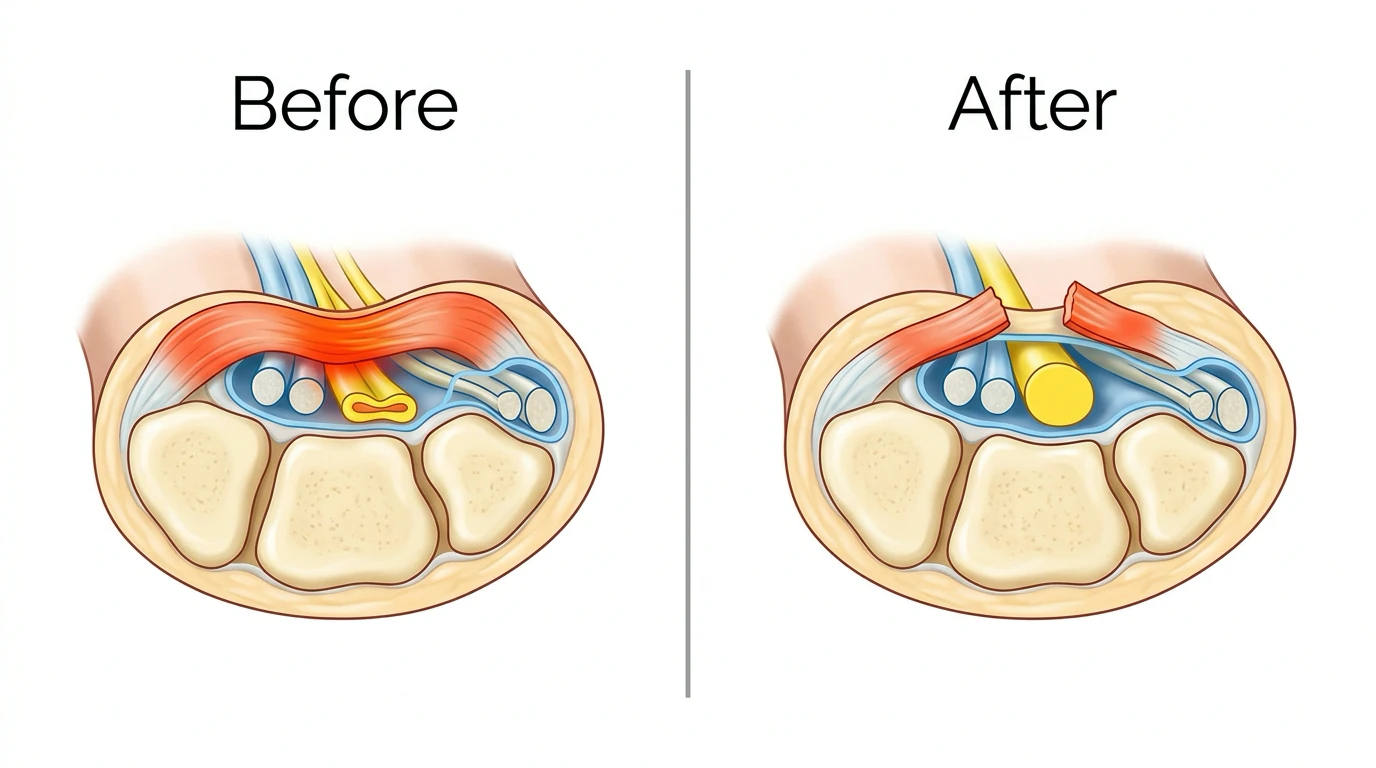
If conservative care is chosen, you should know what improvement looks like and what worsening signs should prompt a return visit. If night splinting helps and strength remains normal, continued nonsurgical care may be reasonable. If numbness becomes constant, grip weakens, or thumb muscle loss appears, the treatment discussion should change.
05When should you see a specialist?
See a specialist if numbness or tingling persists, symptoms wake you at night, hand weakness develops, visible muscle loss appears near the thumb, or daily hand use becomes harder despite basic measures. BSNI can evaluate hand symptoms, review testing when needed, and discuss nonsurgical care or carpal tunnel release when appropriate. The goal is to protect hand function while avoiding unnecessary treatment.
Before an appointment, it helps to write down which fingers are affected, whether symptoms wake you up, what activities trigger symptoms, whether shaking the hand helps, and whether grip or pinch strength has changed. Bring any prior nerve testing if it has already been done. If you use your hands heavily for work or caregiving, discuss those demands early, because the plan may need to account for repetitive gripping, keyboard use, tools, driving, lifting, or nighttime symptoms that interfere with sleep.
Useful questions to ask: do my symptoms truly fit median nerve compression at the wrist, does another nerve condition need to be ruled out, and what signs suggest nerve function is at risk? If surgery is discussed, ask what finding supports carpal tunnel release, whether the compression appears mild or severe, and what symptoms may take longer to improve. If symptoms do not follow the expected pattern, additional evaluation may be needed for a neck nerve problem, ulnar neuropathy, or a broader nerve condition; that does not mean carpal tunnel syndrome is impossible, but the diagnosis should be checked carefully.