
What is it? Carpal tunnel release explained.
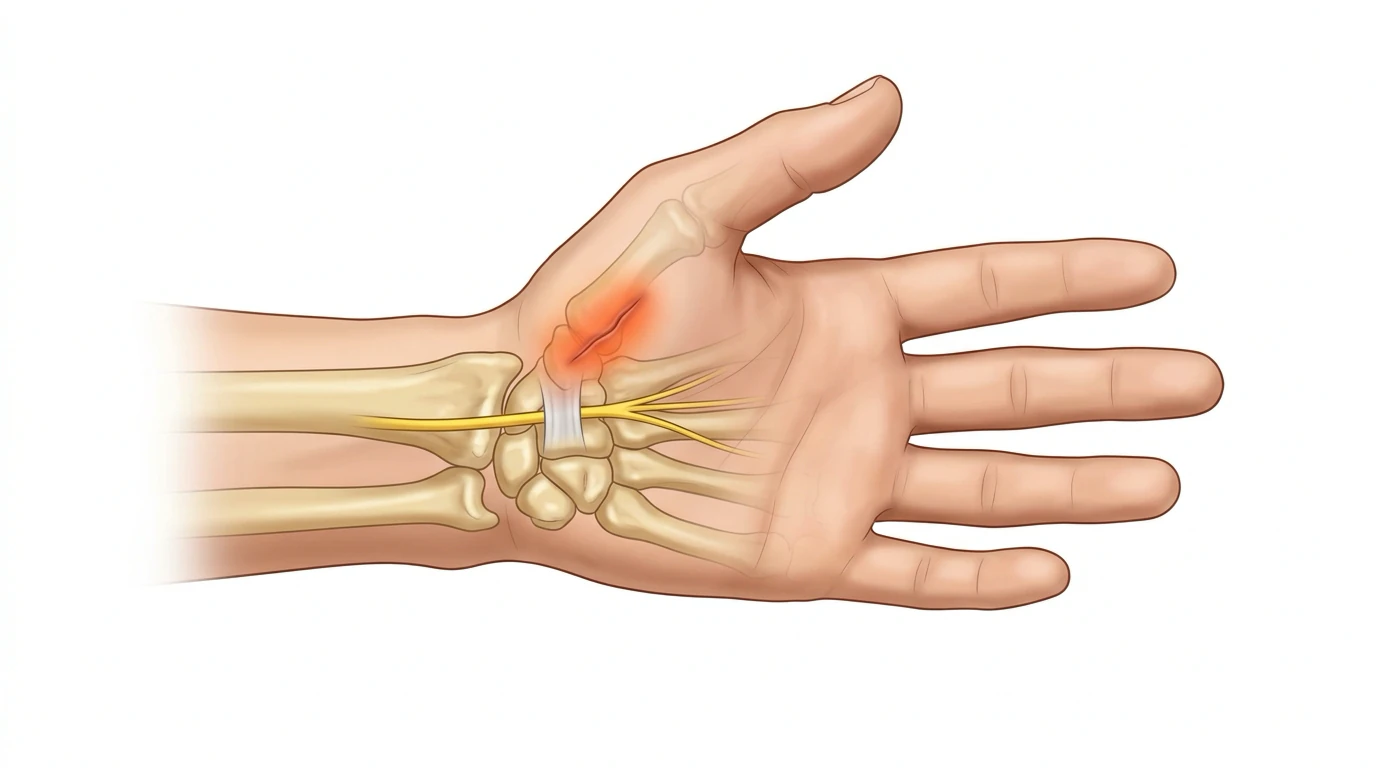
The carpal tunnel is a narrow passage at the wrist that contains the median nerve and tendons. When pressure builds in this space, the median nerve can become irritated or compressed.
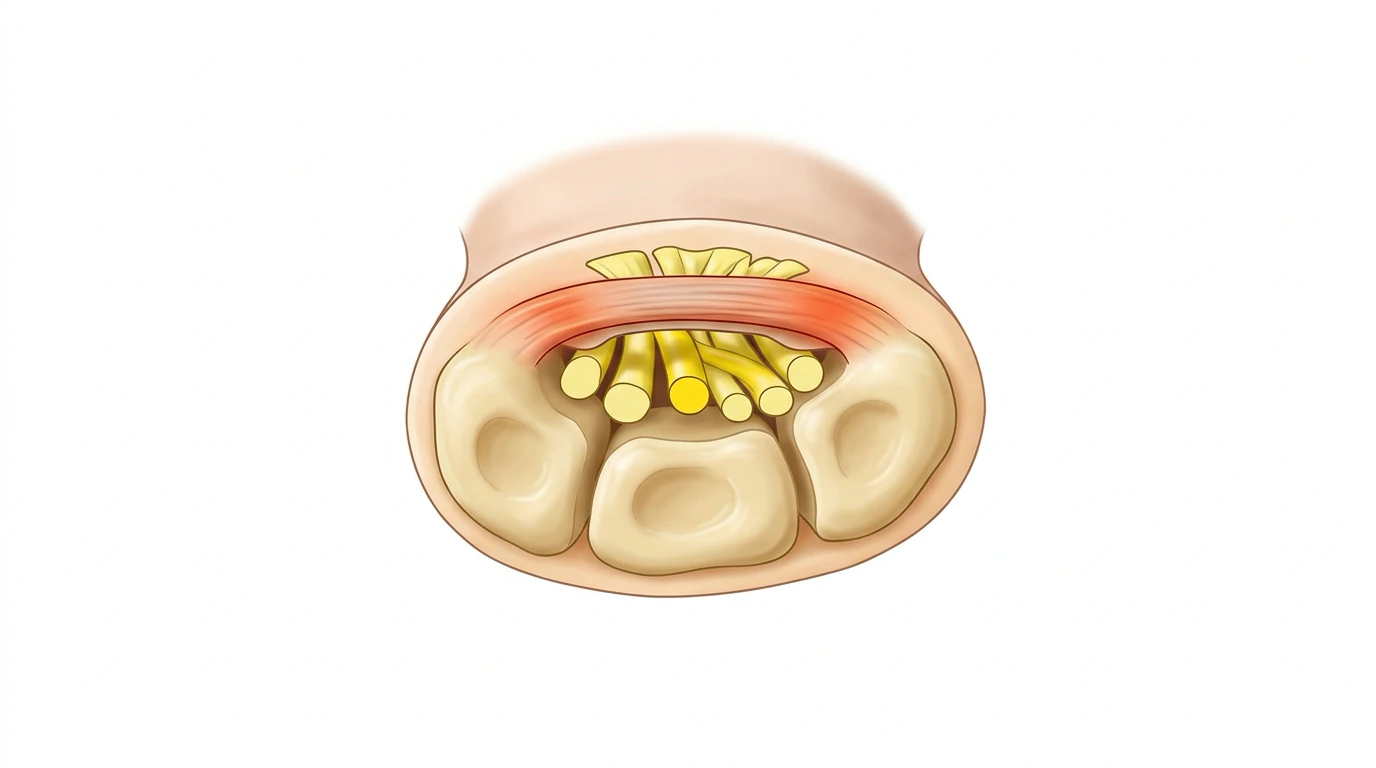

Carpal tunnel release treats selected cases of carpal tunnel syndrome by releasing the transverse carpal ligament, the firm band forming the roof of the tunnel. Releasing this ligament creates more space in the carpal tunnel and reduces pressure on the median nerve.

What does it treat? Carpal tunnel syndrome, once the diagnosis is confirmed.
Symptoms of carpal tunnel syndrome may include numbness, tingling, burning pain, night symptoms, weakness, clumsiness, or dropping objects. Symptoms often affect the thumb, index finger, middle finger, and part of the ring finger.
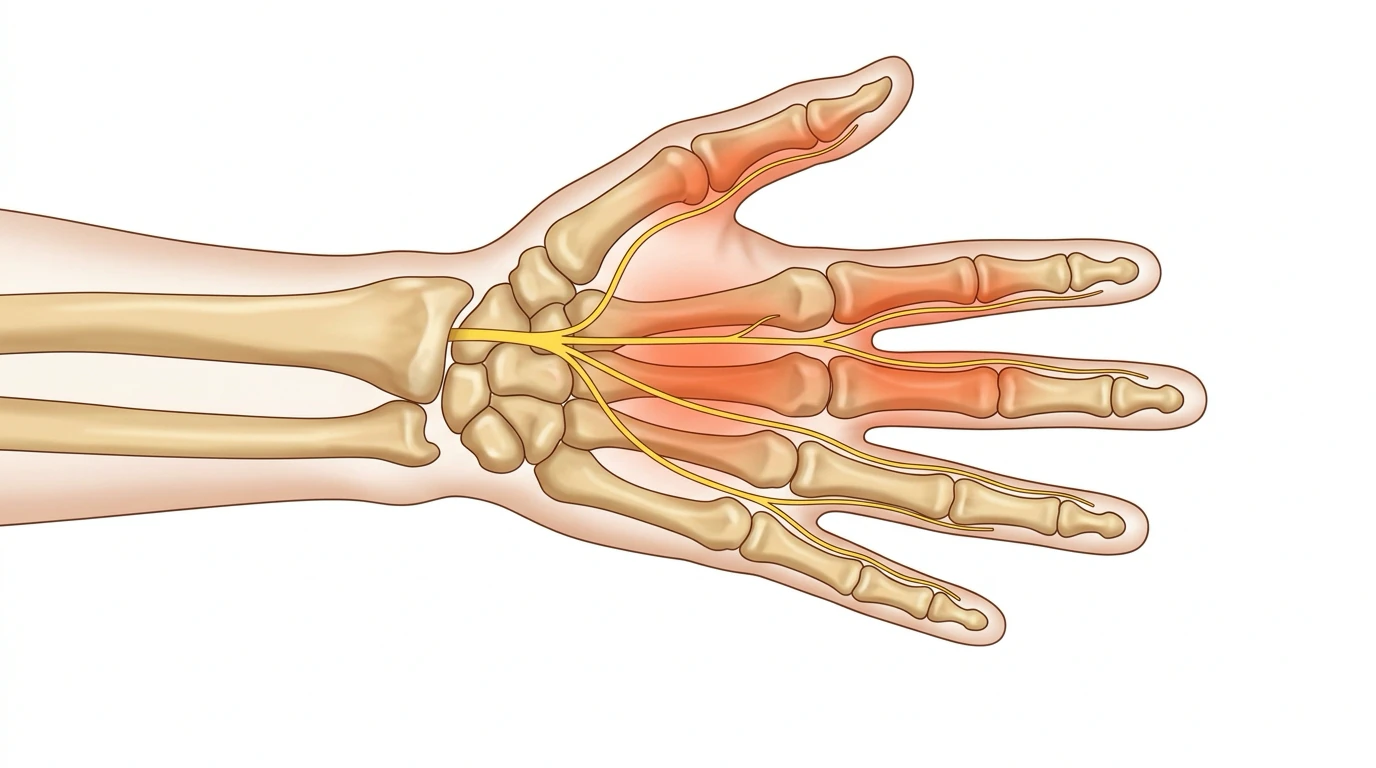
Other nerve problems can mimic carpal tunnel syndrome, including ulnar neuropathy and nerve compression in the neck. That is why evaluation matters before surgery: the workup should confirm that the median nerve at the wrist is the likely source. If symptoms involve the small finger, the neck, or the whole arm, the evaluation may need to consider other nerve problems before proceeding.
Who is a candidate? The right patient for carpal tunnel release.
Candidacy depends on symptom pattern, exam, nerve testing when needed, severity, and response to conservative care. The decision should be based on nerve function, not only on how bothersome symptoms are: intermittent nighttime tingling, constant numbness, weakness, and visible thumb muscle loss can lead to different expectations and different urgency.
Good candidates
- Persistent numbness, tingling, or night symptoms despite conservative care
- Weakness or functional difficulty with the hand
- Nerve test findings that match carpal tunnel syndrome
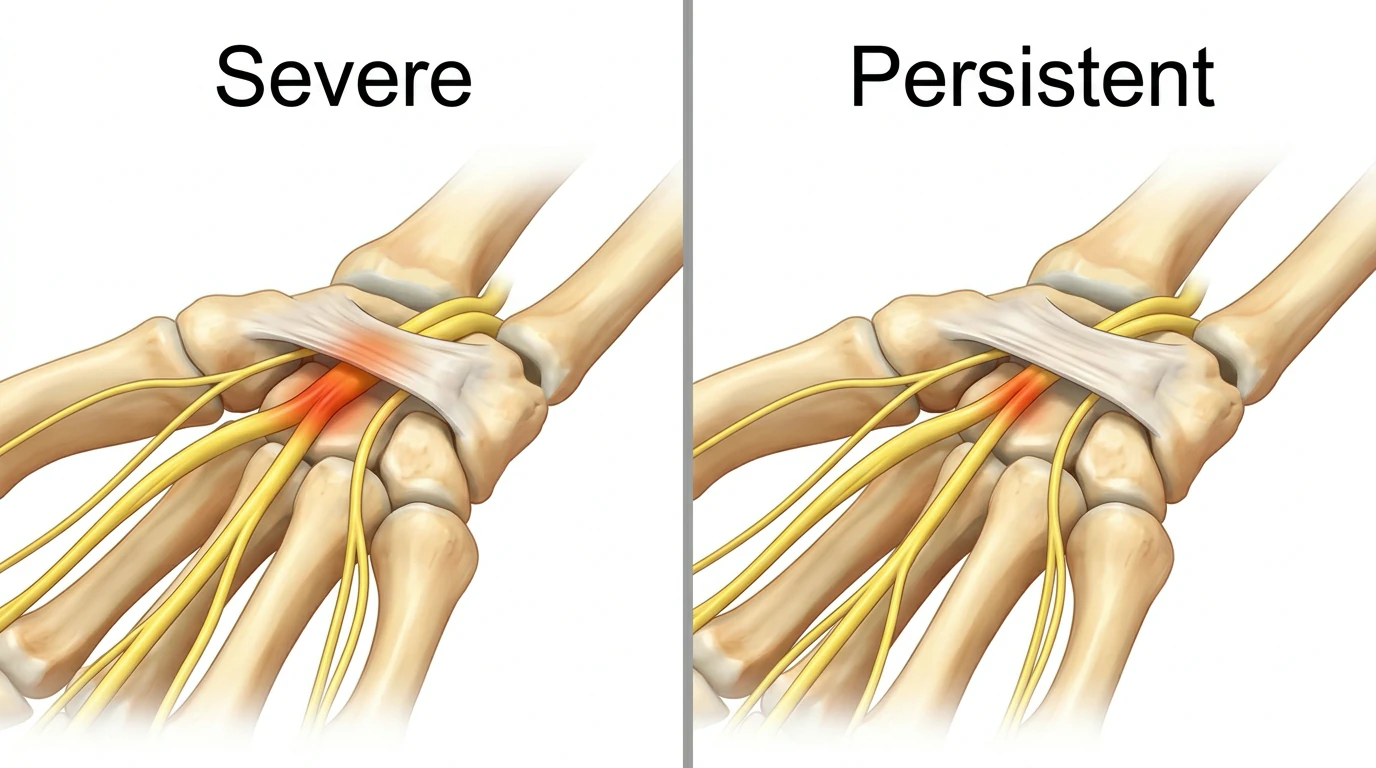
- Severe nerve compression, where surgery may be considered sooner to reduce ongoing pressure
Poor candidates
- Symptoms that come from a different nerve problem, such as ulnar neuropathy or cervical radiculopathy
- Mild symptoms that are improving
- Medical factors that make surgery inappropriate
Useful questions before scheduling: whether nerve testing is needed, whether symptoms suggest another nerve problem, which surgical approach is planned, and what hand-use restrictions apply afterward. If conservative care has not been tried, ask whether it is still reasonable first.
How does it work? The procedure follows a precise sequence.
Preparation
The wrist is prepared. The type of anesthesia is discussed in advance and varies by case.
Access the ligament
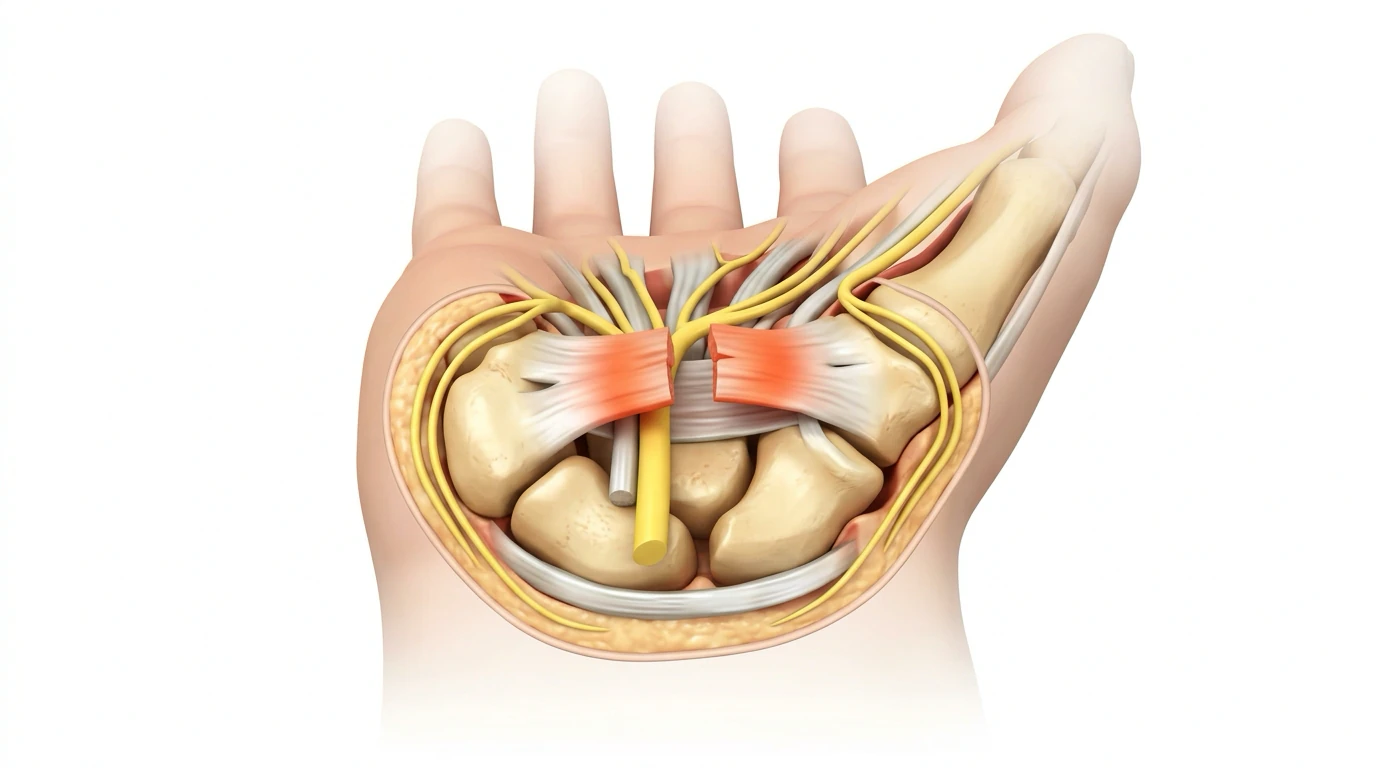
The surgeon accesses the transverse carpal ligament. The approach may be open or endoscopic depending on surgeon preference and patient factors.
Release the ligament
The ligament is released to create more space in the tunnel and reduce pressure on the median nerve.
Close and begin recovery
The incision is closed and the patient receives individualized instructions for wound care and hand use.

What is recovery like? Recovery and what to expect.
Recovery varies by approach, symptom duration, nerve severity, work demands, and patient health. Some soreness, incision sensitivity, stiffness, or temporary grip limitations may occur during healing.
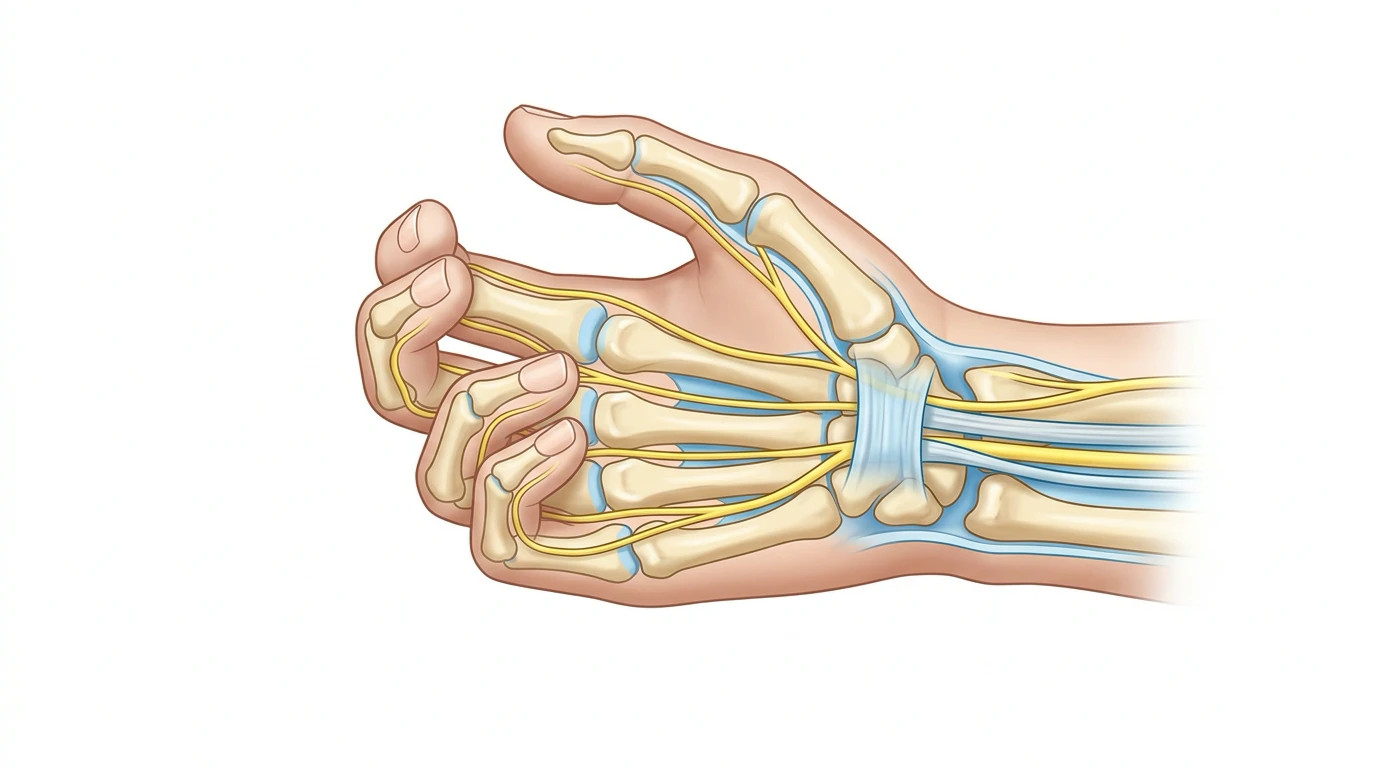
Nerve symptoms may improve at different speeds depending on how long and how severely the nerve was compressed. Pain, tingling, numbness, and strength may not all change at the same speed, and patients with longstanding numbness or weakness need more individualized expectations. It is reasonable to ask which symptoms are expected to improve first, which may take longer, and which could suggest another nerve problem.
Your return-to-activity plan should match what you actually do day to day. Desk work, caregiving, tool use, gripping, lifting, and repetitive tasks place different demands on the healing wrist. Ask how the procedure may affect typing, lifting, gripping, driving, wound care, and use of tools. Report worsening numbness, concerning wound changes, uncontrolled pain, or new weakness according to your postoperative instructions.
What are the risks? Risks worth discussing.
Risk is discussed based on your health, anatomy, and planned approach.
Infection and bleeding
Risks common to hand surgery, discussed relative to your health history.
Scar tenderness and stiffness
Incision sensitivity and stiffness can occur during healing.
Nerve or vessel injury
The surgery is done next to the median nerve; injury is uncommon but discussed in every case.
Persistent symptoms or recurrence
Symptoms can persist or return depending on nerve severity, healing, anatomy, and whether another nerve condition is present.
What are the alternatives? Surgery is not the starting point.
Before surgery, many patients try splinting, activity changes, medication when appropriate, therapy, nerve-gliding exercises, or, in some cases, an injection. Surgery becomes more relevant when symptoms persist despite those measures or when nerve function is at risk.
