
What is it? A cervical fusion from the back of the neck.
The cervical spine is the neck portion of the spine. In a posterior cervical fusion, bone-graft material is placed so bone can grow across the intended levels, and screws, rods, plates, or other fixation may hold the vertebrae in position as they heal. Fusion removes motion at the fused segments; how noticeable that is depends on the levels and extent of the operation.
"Posterior" describes the route: the surgeon reaches the cervical spine from an incision in the back of the neck. This differs from an anterior cervical operation, which reaches the spine from the front of the neck. Neither word alone establishes which operation is safer or appropriate. Approach selection is an individualized surgical decision.

A posterior fusion may be performed with decompression. For example, a laminectomy removes the lamina (the back part of a vertebra) to create more room for the spinal cord or nerves. The fusion then aims to maintain stability while the bone heals.
The term posterior cervical laminectomy and fusion describes this common combination, but the two terms are not interchangeable: fusion stabilizes, while laminectomy removes part of the back of a vertebra to enlarge space. Ask which part of a proposed operation is the decompression and which part is the stabilization.
The operation is not a guarantee of pain relief or neurologic recovery. The right approach depends on the person's symptoms, examination, imaging, alignment, stability, health, and goals.
What does it treat? Problems that affect stability or need decompression.
A clinician may discuss fusion when a cervical problem has created or may create instability, or when decompression from the back of the neck is part of the operative plan. Depending on the clinical situation, spinal fusion may be used in the setting of degenerative narrowing, a fractured vertebra, infection, tumor, or another condition affecting stability. These are categories for evaluation, not a list that establishes a diagnosis or requires surgery.
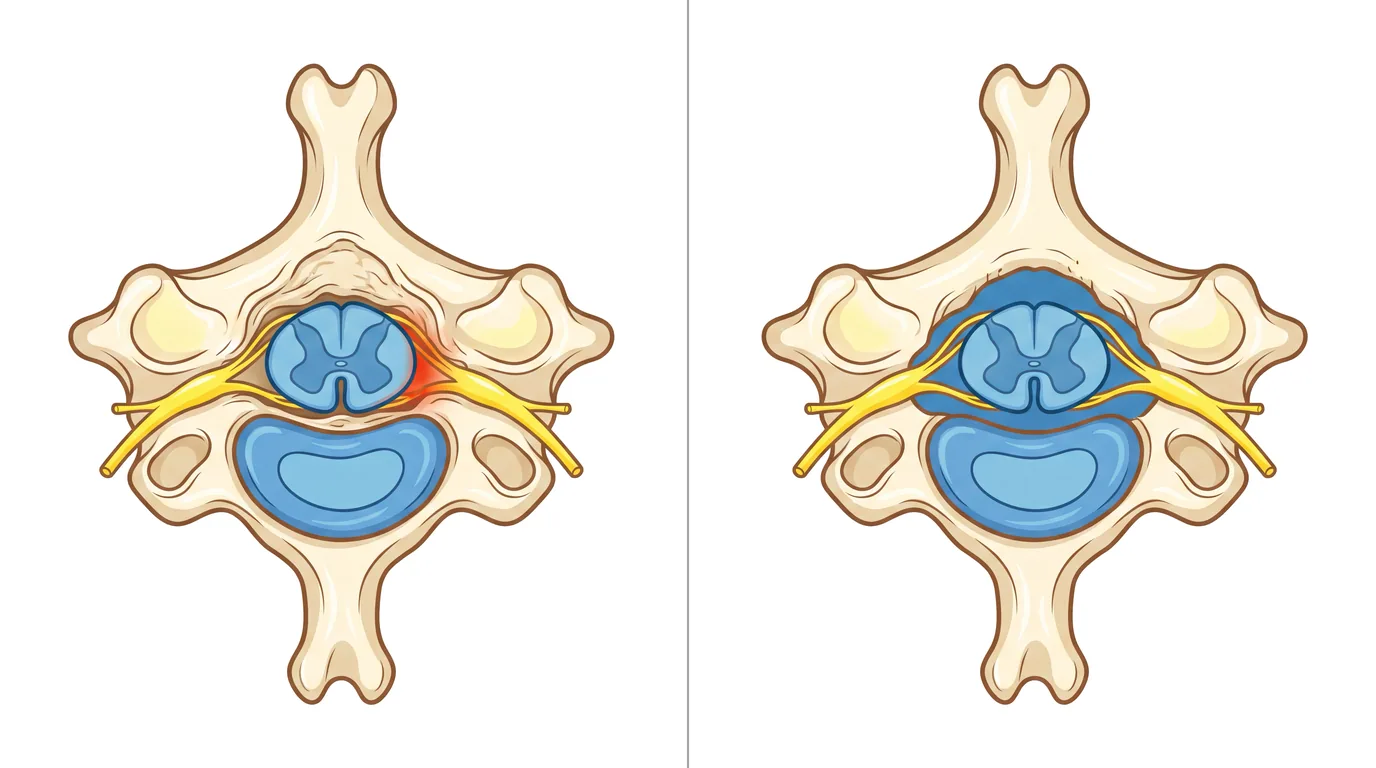
In degenerative cervical myelopathy, the spinal cord is affected by cervical disease. A clinical practice guideline for this condition recommends surgery for moderate or severe disease. For mild disease, it supports either surgery or a supervised trial of structured rehabilitation, with surgery if neurologic function worsens or fails to improve. That guideline covers degenerative cervical myelopathy broadly; it does not establish a need for posterior fusion specifically.
Posterior fusion can also be discussed when a decompression would leave too little stability, when pre-existing instability or deformity needs consideration, or when a prior cervical operation has not produced a stable fusion. The available patient sources do not provide a universal level count, alignment measurement, or imaging rule that determines when posterior fusion is required. A surgeon must explain what the proposed procedure is intended to address in the individual case.
Who is a candidate? A clinical judgment, not a scan result.
Candidacy is a clinical judgment, not something a symptom or scan can establish by itself. A consultation may consider the location, duration, and progression of pain, numbness, weakness, clumsiness, or balance changes; the neurologic examination; imaging; alignment, stability, the number and location of affected levels, bone quality, prior surgery, and general health; and what the person values, what improvement is realistic, and which alternatives remain.
May be considered when
- The neurologic examination suggests nerve-root or spinal-cord involvement
- MRI, CT, X-rays, or other imaging findings correspond to the symptoms and examination
- Alignment, stability, the affected levels, bone quality, prior surgery, and general health have been weighed
- The person's values, realistic improvement, and remaining alternatives have been discussed
May not be the right fit when
- The only reason is neck pain, an abnormal imaging finding, or a diagnosis label
- The operation may not address the suspected pain source
- Another approach may better reach the compression or correct the alignment
- Spinal-cord compression is present without myelopathy or radiculopathy, where the guideline suggests counseling and follow-up rather than prophylactic surgery
A person may be referred for a surgical opinion without being a surgical candidate. A second review, additional imaging, observation, rehabilitation, or another procedure may be reasonable depending on what the evaluation shows. Do not interpret a referral, an MRI phrase, or a procedure name as a recommendation.
The clinician should explain whether the concern is spinal-cord compression, nerve-root compression, instability, deformity, or another process, and what evidence connects it to the symptoms. Ask whether continued observation or structured rehabilitation is reasonable, whether decompression without fusion could be considered, and whether an anterior procedure or another motion-sparing option is relevant. These are discussion topics, not recommendations.
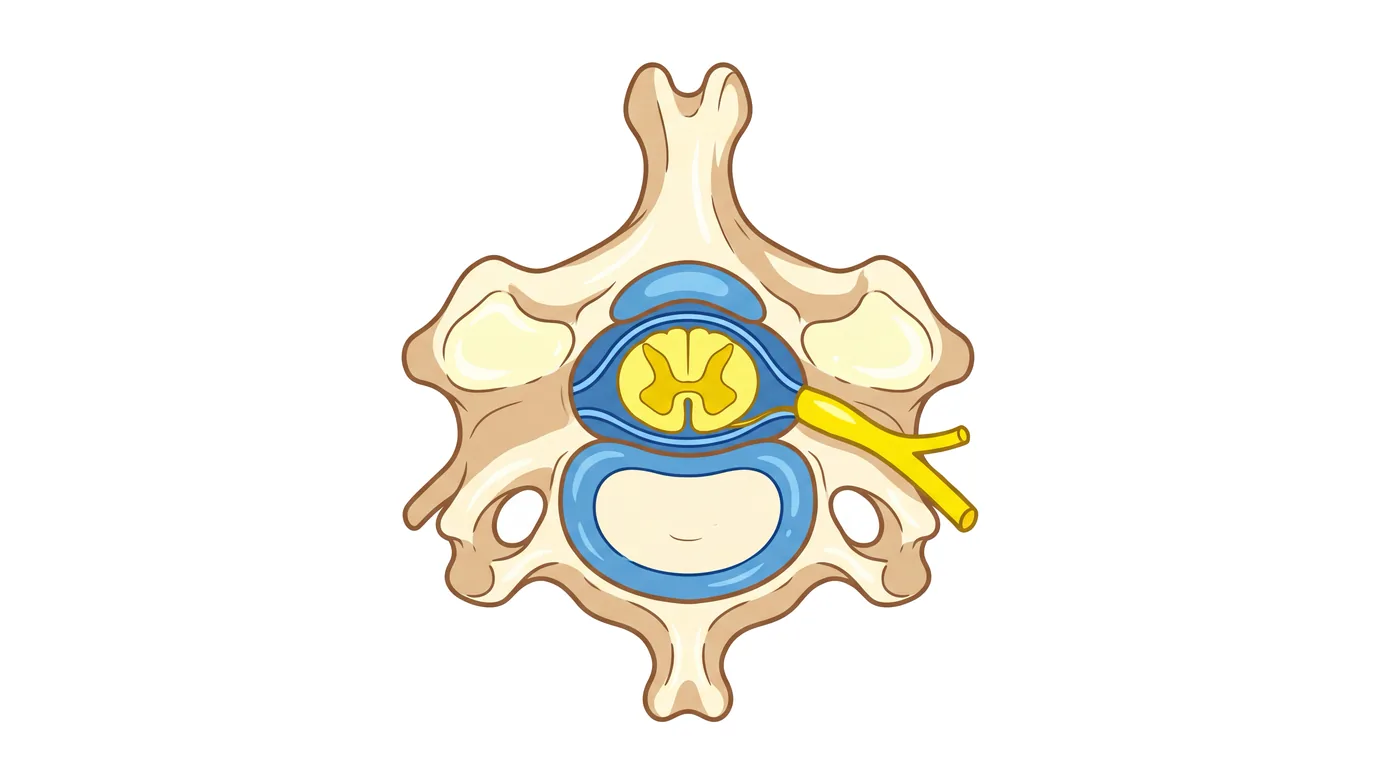
Health factors may affect preparation and bone healing. Tell the surgical team about nicotine or tobacco use, diabetes, osteoporosis, medicines that affect bleeding, allergies, and other medical conditions. AAOS lists smoking and diabetes among the factors linked to pseudarthrosis (a fusion that does not become solid); only the treating team can explain how a given factor affects your risk.
How does it work? Decompression when needed, then fixation and graft.
Review and plan
Before surgery, the team reviews the history, neurologic examination, and imaging. The operative plan identifies the levels and whether decompression, instrumentation, bone graft, or another procedure is included.
Incision at the back of the neck
The incision is made at the back of the neck to reach the planned cervical levels.
Decompress if needed
If decompression is needed, the surgeon removes selected bone or tissue to enlarge the space.
Place fixation and graft
Fixation and graft are then used to support stability while fusion develops.
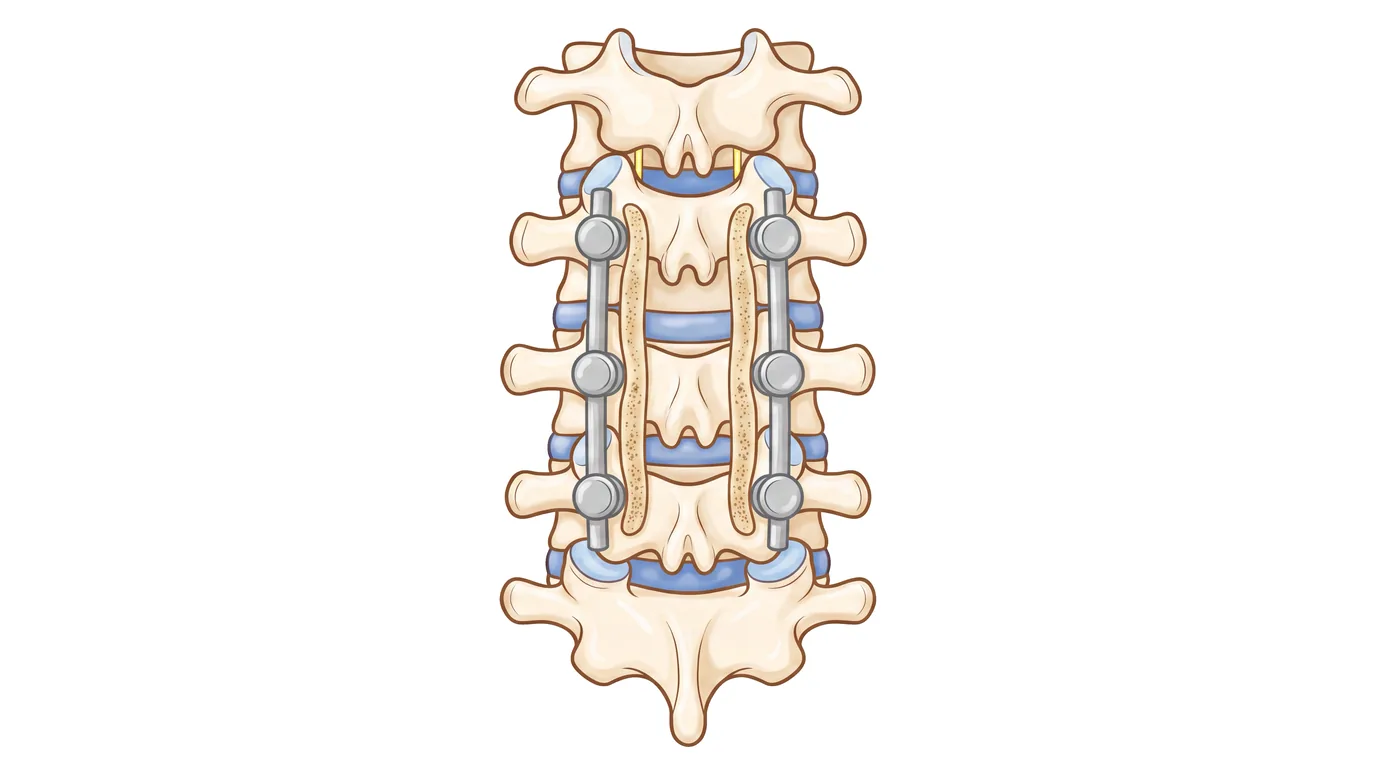
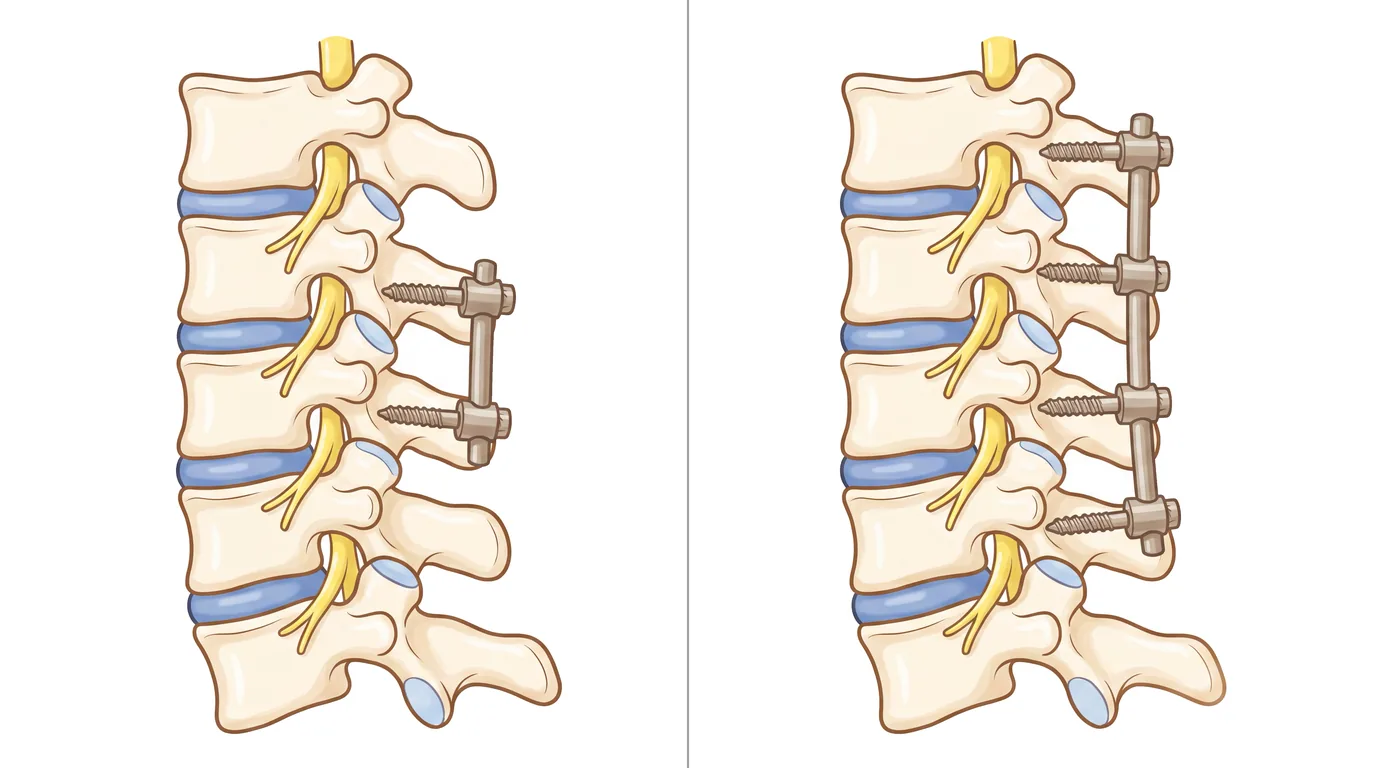
Hardware can provide immediate structural support, but hardware is not the same as a completed biological fusion. Bone healing takes time, and follow-up imaging may be used to assess alignment, implants, and healing. Feeling better does not by itself prove that the bone has fused.
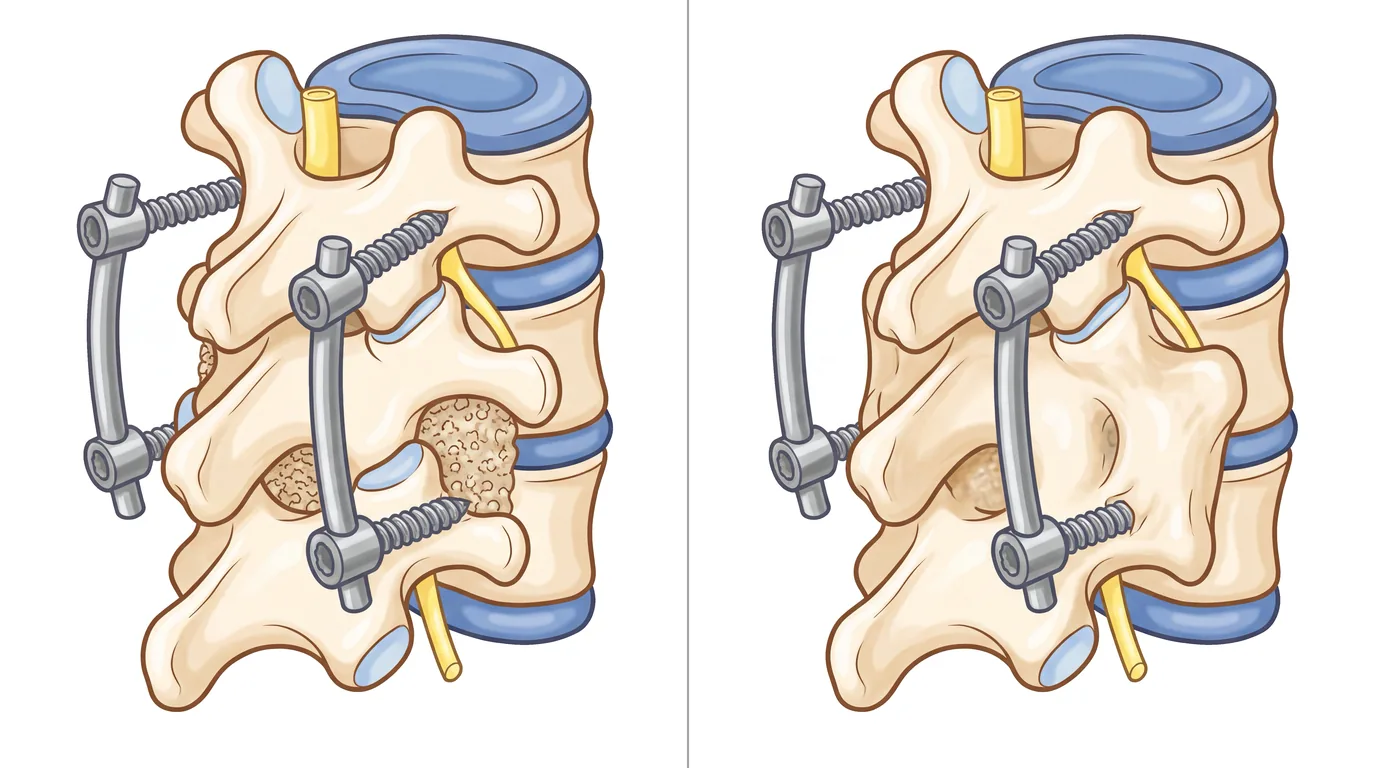
The phrase "posterior cervical fusion surgery" can describe several different operations. Ask for the exact levels, whether a laminectomy or another decompression is planned, the graft material, the fixation plan, and what could cause the plan to change.
What are the goals? Stability and support, not a guaranteed result.
The intended goals may include stabilizing an unstable segment, supporting a decompressed spinal cord or nerve root, protecting alignment, or addressing a condition in which fusion is part of the treatment plan. In degenerative cervical myelopathy, the guideline's surgical recommendation is directed at treating the disease and preventing deterioration; it does not promise complete neurologic recovery or establish that posterior fusion is the right technique for every patient.
Technical fusion and patient-reported improvement are different outcomes. Symptoms can persist, improve gradually, or change for reasons that require follow-up. Fusion can also reduce motion at the operated levels. Ask which goal is primary, which symptoms are most likely to change, which may remain, and how the team will assess progress.
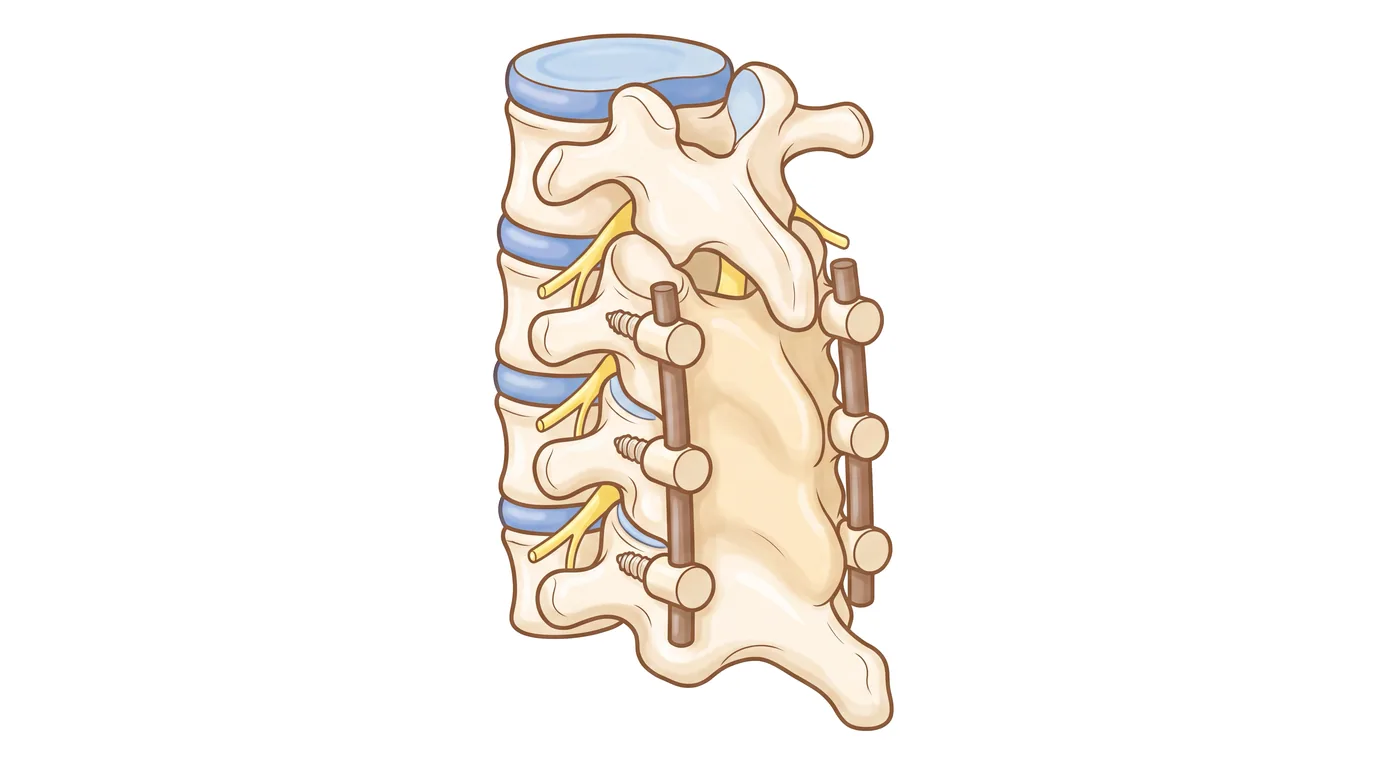
What is recovery like? Gradual healing with individualized limits.
Recovery varies with the reason for surgery, number of levels, whether decompression or revision is included, baseline neurologic function, bone health, general health, and complications. General discharge guidance notes that recovery after laminectomy and fusion is longer than after some less extensive spine procedures.
The same guidance says bones may need at least 3 to 4 months to heal well and healing may continue for at least a year. Those figures are general guidance, not a timetable specific to posterior cervical surgery or a promise about return to work.
Early recovery commonly involves wound care, prescribed pain control, gradual walking, and limits on lifting or strenuous activity. The surgeon may prescribe a brace, but a brace is not appropriate for every person. Do not copy a lifting limit, driving date, work date, exercise plan, medication change, or physical-therapy schedule from another patient or an online article.
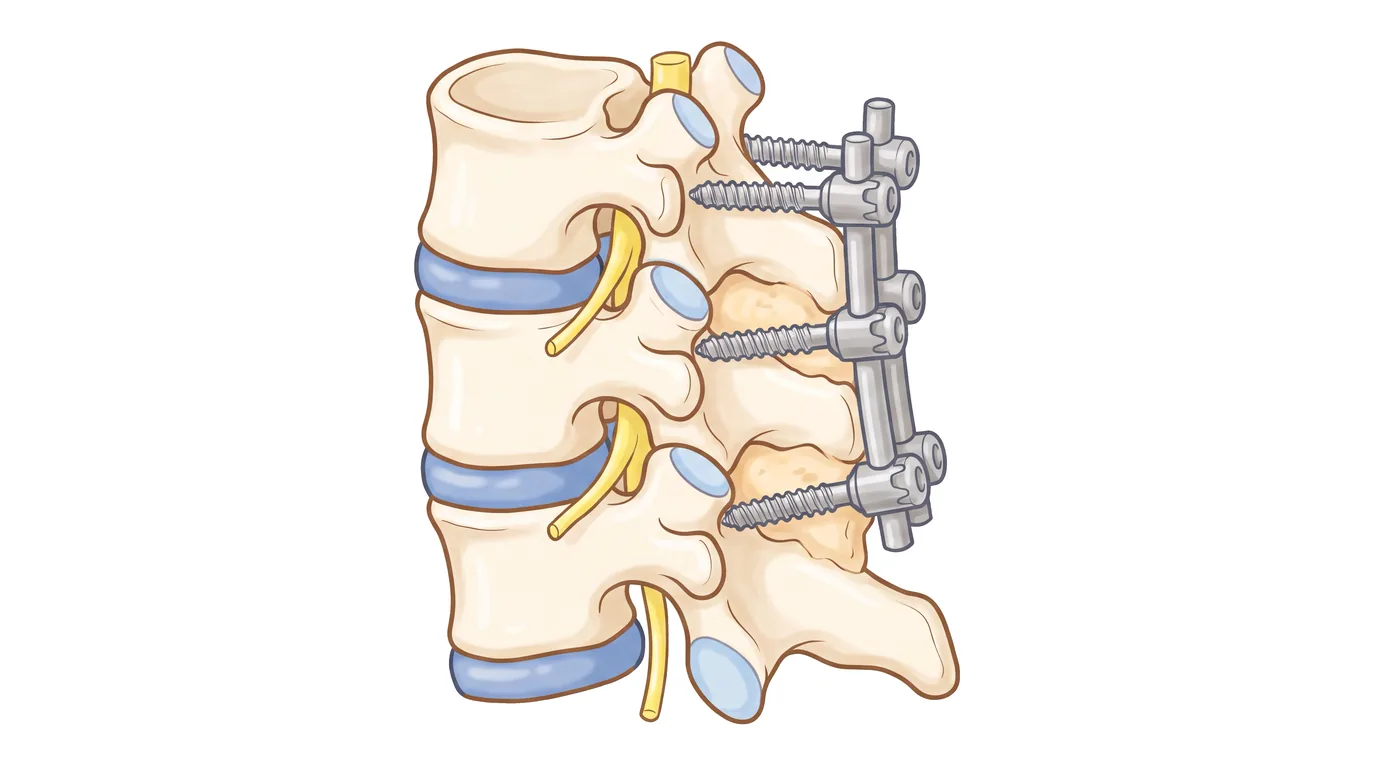
Follow-up may include a wound check, neurologic assessment, and imaging to evaluate alignment, hardware, and fusion. Avoid nicotine or tobacco, because AAOS and MedlinePlus identify tobacco use as harmful to spinal-fusion healing. Ask before restarting aspirin, anticoagulants, anti-inflammatory medicines, supplements, or other medicines; the answer depends on the operation and your medical history.
When should I call the care team? Warning signs after surgery.
Use the operating team's discharge instructions first. After spine surgery, contact the surgeon promptly for fever or chills, increasing redness, warmth, swelling, wound opening or drainage, increasing pain, a persistent severe headache, or a change in sensation in the arms. MedlinePlus also lists chest pain, shortness of breath, swelling or calf pain, and difficulty urinating or controlling bowel movements as reasons to contact the doctor.
Seek emergency help for severe breathing trouble, chest pain with shortness of breath, sudden or rapidly worsening weakness, loss of bowel or bladder control, or another symptom that makes waiting unsafe. These warning signs are not a complete list. If the surgical team gave you a more specific emergency plan, follow it.
What are the risks? Risks worth discussing.
Spinal fusion has general and procedure-specific risks. Risk depends on the diagnosis, levels, technique, health, bone quality, prior surgery, and other factors that need individual discussion.
Infection or wound problems
Follow-up may include a wound check; report redness, drainage, or fever promptly.
Bleeding
Blood loss is a risk to ask about, along with medicines that affect bleeding.
Blood clots
Clots can become dangerous if they travel to the lungs; ask about blood-clot prevention.
Nerve or blood-vessel injury
Includes the possibility of new or worsening neurologic symptoms.
Recurrent or persistent symptoms
Symptoms or pain can persist or return; ask what would happen if they do.
Pseudarthrosis
The intended bone fusion does not become solid. Smoking and diabetes are among the associated factors.
Hardware problems
Implants can loosen, break, or develop another problem.
Additional surgery
A further operation may be needed; ask how this applies to your plan.
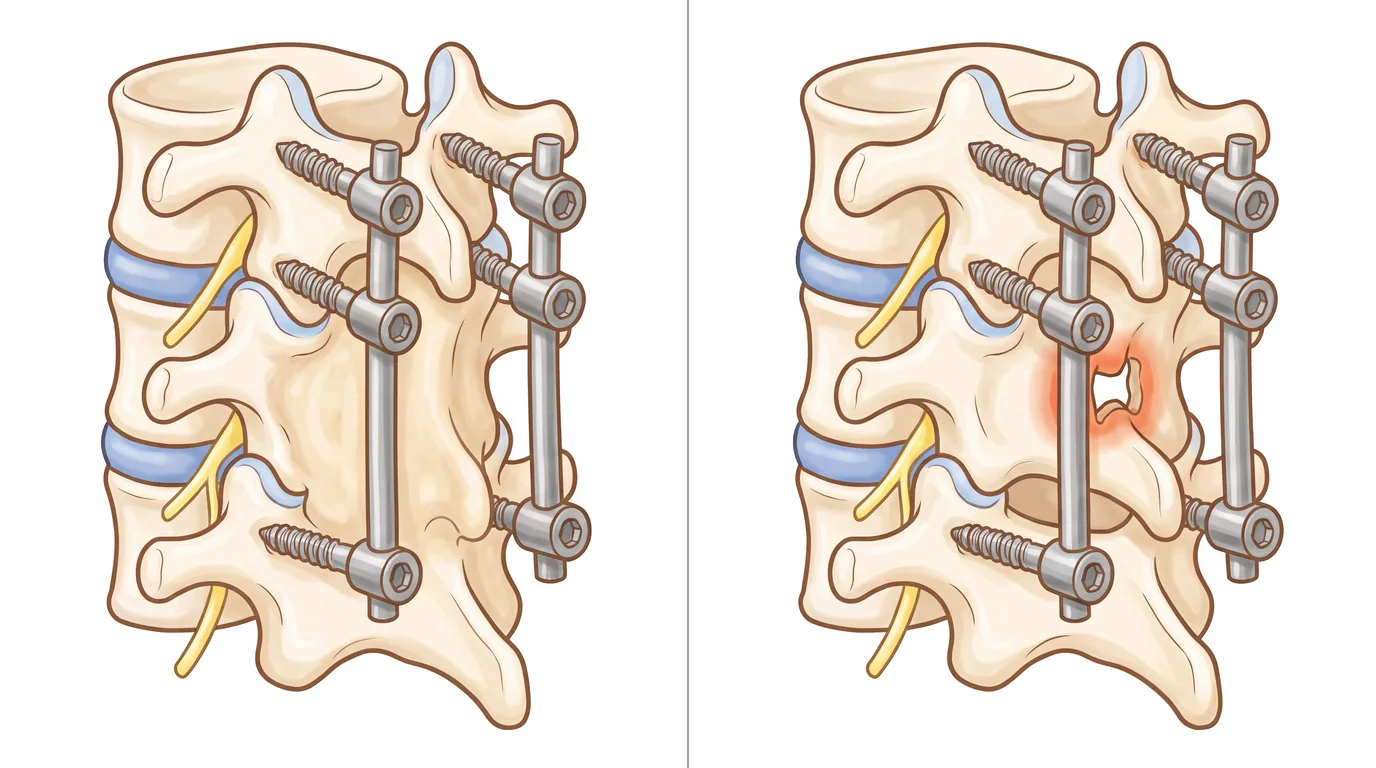
Fusion changes motion at the treated levels. The sources do not support a single complication percentage for this operation, and this page does not provide one.
Ask about risks that are especially relevant to the proposed operation, including neurologic injury, wound or hardware complications, nonunion, blood loss, blood-clot prevention, and what would happen if symptoms persist. Do not treat a general list as an estimate of your personal risk.
What are the alternatives? The right option depends on the findings.
Depending on the diagnosis and findings, alternatives may include observation with follow-up, structured rehabilitation, medication or activity adjustments, decompression without fusion, an anterior cervical operation, or a motion-sparing procedure. The choice is not determined by the word "posterior" or by the presence of a scan finding. It depends on the location and cause of compression, alignment, stability, symptoms, examination, and goals.

An anterior cervical discectomy with fusion (ACDF) is a different approach, not another name for posterior fusion. Similarly, "posterior cervical laminectomy and fusion" often refers to a combined operation; a laminectomy alone and a fusion alone are different procedures. Ask what each proposed component is meant to accomplish.
The option of no surgery can be a legitimate part of shared decision-making for selected patients. In the degenerative cervical myelopathy guideline, mild disease may be managed with surgery or a supervised rehabilitation trial, while the guideline does not recommend prophylactic surgery for cord compression without myelopathy or radiculopathy. These statements do not replace a current examination or apply to every cervical condition.
What should I ask my surgeon? Questions to bring to your consultation.
- What diagnosis or structural problem is the fusion intended to address?
- Which cervical levels would be decompressed and fused, and what evidence connects them to my symptoms?
- Why is a posterior approach being considered instead of an anterior approach, decompression without fusion, or observation?
- What is the main goal: stabilization, decompression support, alignment, protection of neurologic function, or another goal?
- Which symptoms might improve, which may remain, and what uncertainty should I understand?
- What are my individual risks of infection, neurologic injury, blood clots, nonunion, hardware problems, and further surgery?
- Will I need a brace, and what are my personalized limits for lifting, driving, work, bathing, exercise, and rehabilitation?
- When will follow-up occur, and how will imaging assess healing?
- Which medicines, nicotine products, vitamins, or supplements should I stop or restart, and when?
- Who should I contact after hours, and which symptoms require emergency care?
If you are in Rhode Island, you can request a consultation to discuss your symptoms and options. For urgent symptoms after surgery, contact your surgical team or emergency services instead of using a form.
