
01What is degenerative disc disease?
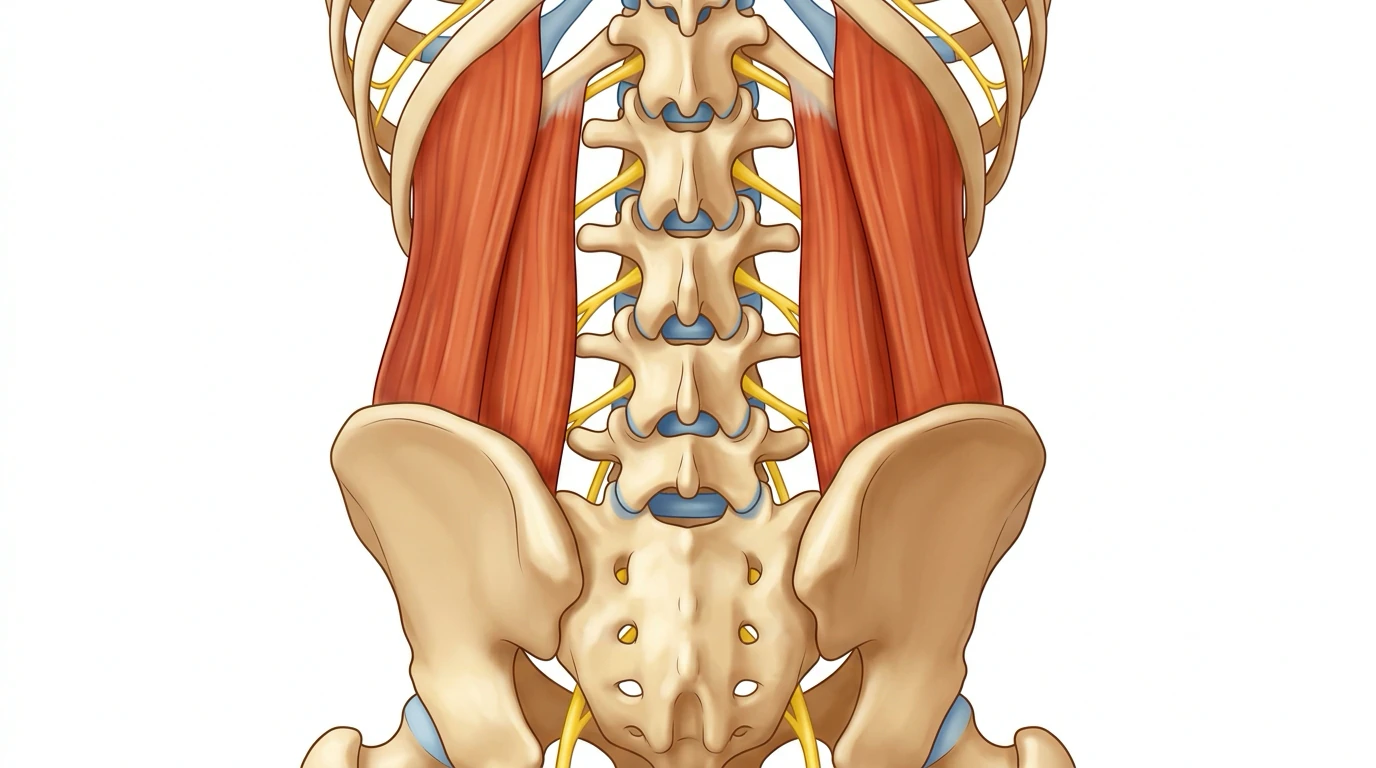
Spinal discs sit between the vertebrae and help cushion movement. Over time, discs can lose water content, shrink, develop small tears, or change shape. These changes are often described as disc degeneration.
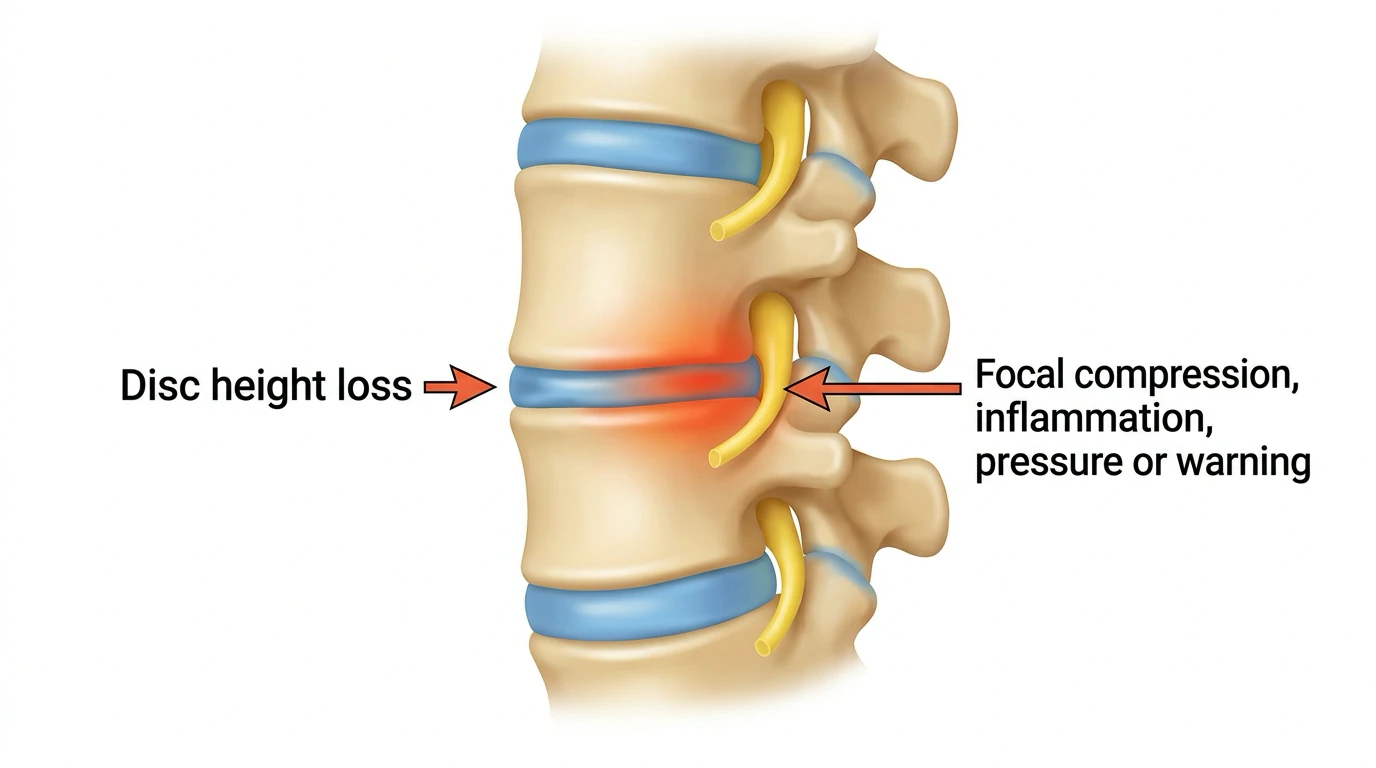
Degenerative disc disease is not a simple diagnosis where the imaging alone explains everything. Many people have disc degeneration without significant symptoms. When symptoms do occur, they may come from the disc itself, nearby joints, narrowing around nerves, inflammation, or related conditions such as disc herniation or spinal stenosis.
Degenerative disc disease can occur in the neck, called cervical degenerative disc disease, or in the lower back, called lumbar degenerative disc disease. Symptoms and treatment options depend on the region involved.
02What are the symptoms?
Symptoms may include neck pain, low back pain, stiffness, muscle tightness, pain that worsens with certain positions, or pain that improves with position changes. If disc changes contribute to nerve irritation, symptoms may include arm or leg pain, numbness, tingling, or weakness.
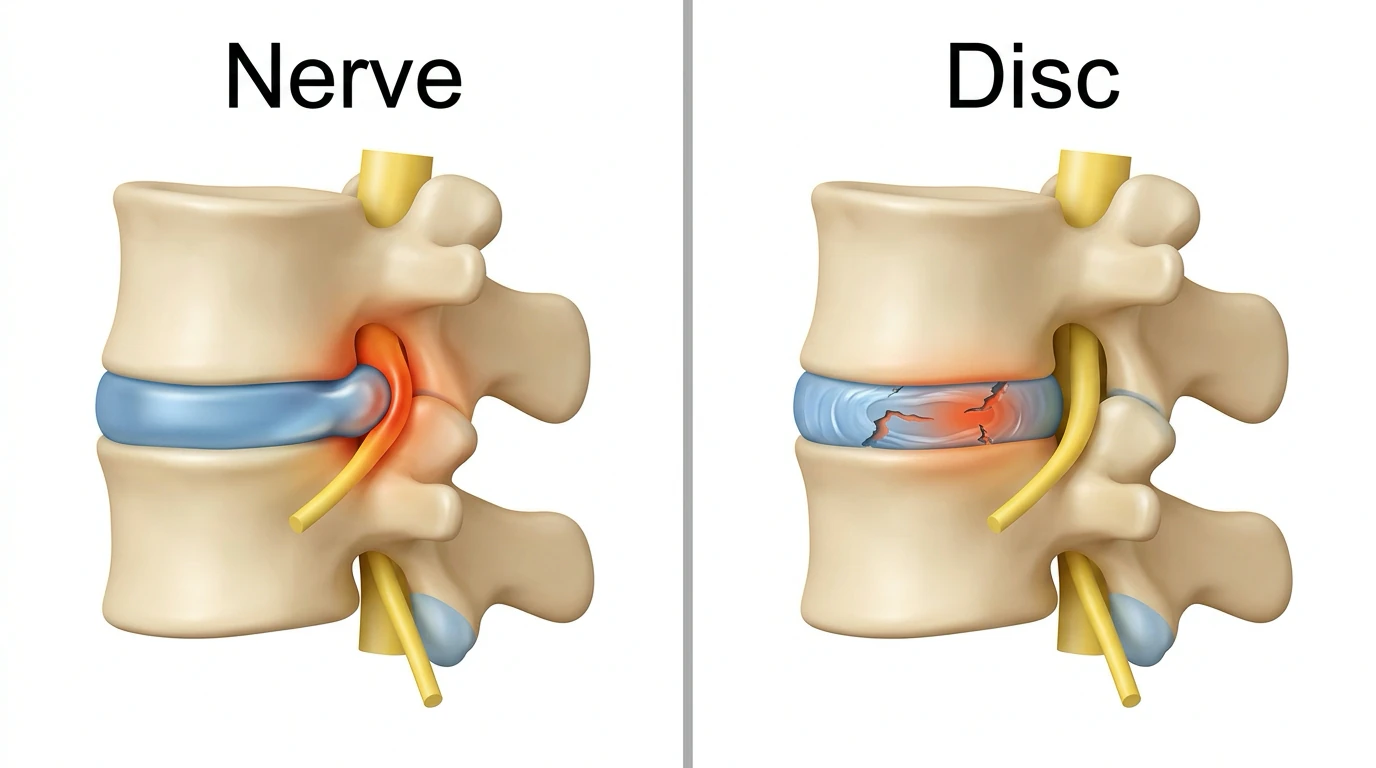
Lumbar degenerative disc disease may cause lower back pain or symptoms that travel into the buttock or leg when nerve irritation is present. Cervical degenerative disc disease may cause neck pain, shoulder pain, arm symptoms, or, when spinal cord compression is present, balance or coordination problems.
Pain severity does not always match the amount of disc wear seen on imaging. Some people with advanced imaging changes have limited pain, while others with smaller changes have significant symptoms. That is why the clinical exam matters.
03What causes degenerative disc disease?
Disc degeneration is often related to aging and normal wear over time. Discs can lose height and flexibility, which may change how force moves through the spine. Smoking has also been associated with accelerated disc degeneration in patient education sources.
Degenerative changes can contribute to other spine problems. Loss of disc height and joint changes may lead to arthritis, bone spurs, spinal stenosis, or nerve irritation. A degenerating disc may also be more likely to bulge or herniate.
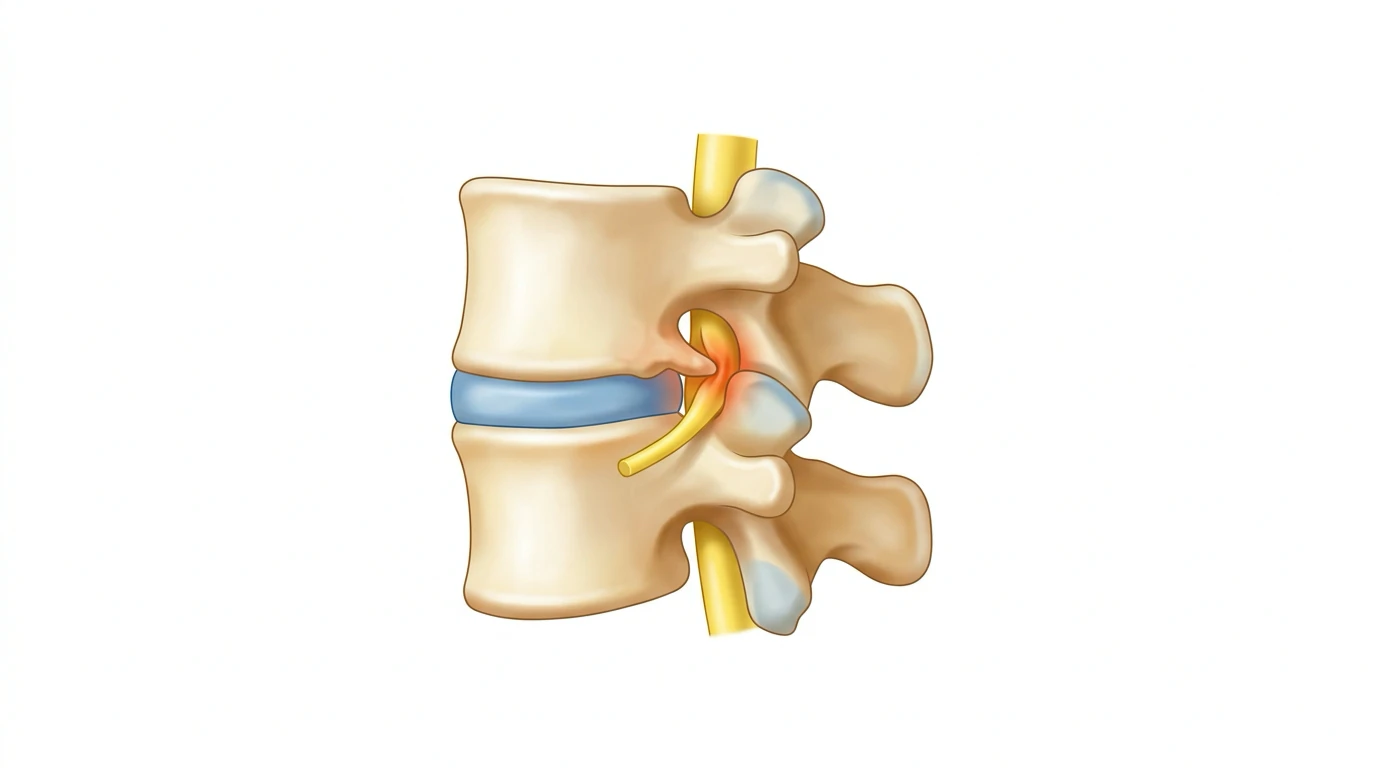
The important point is that degeneration is a structural description, not a treatment plan. The care plan should focus on your symptoms, neurologic findings, function, and goals.
04How do we diagnose degenerative disc disease?
Diagnosis usually starts with a history and physical exam. We look at pain location, movement triggers, neurologic findings, strength, sensation, reflexes, walking, and whether symptoms suggest nerve root or spinal cord involvement. For neck symptoms, the exam may look for arm nerve patterns or spinal cord signs. For lower back symptoms, the exam may look for sciatica, walking limits typical of stenosis, hip problems with overlapping symptoms, or weakness.
X-rays may show disc height loss, alignment changes, or arthritis. MRI may be used when nerve symptoms, persistent pain, or surgical planning questions are present. Imaging is most useful when interpreted alongside your symptoms and exam.
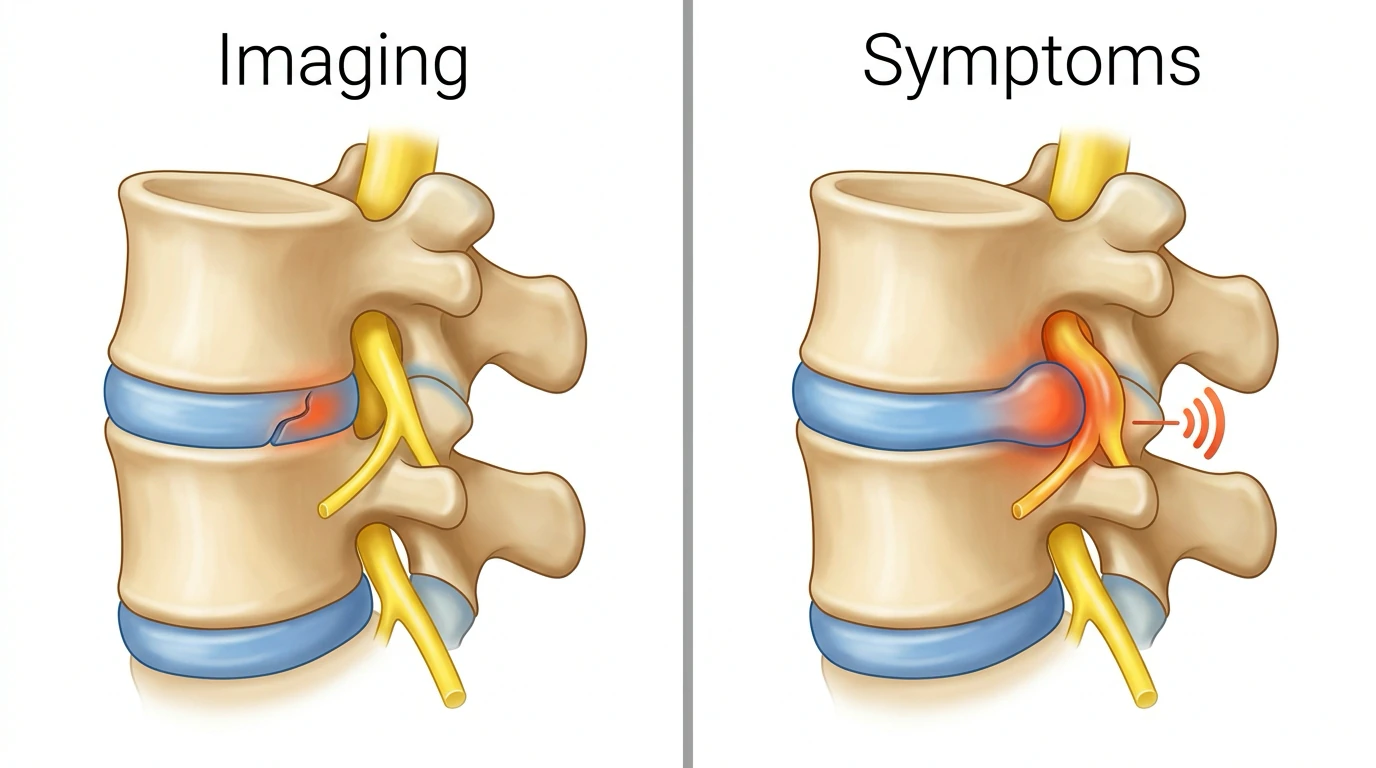
The challenge is that disc degeneration is common. A finding on MRI does not automatically prove the pain source. The evaluation should ask whether the pain pattern, exam, and imaging all point to the same level or whether another condition may better explain symptoms.
05What are the treatment options?
Treatment follows a deliberate progression from least invasive to most invasive, and it should also consider function. A patient with manageable stiffness needs a different plan than a patient with disabling nerve pain, progressive weakness, or walking limitation. The goal is to match the intensity of treatment to the actual problem rather than treating every degenerative MRI finding the same way.
Early care may include education, activity modification, medication when safe, and posture and movement changes.
Therapy may focus on mobility, core or neck support, strength, posture, and safer movement patterns.
Injections may be discussed when inflammation around a nerve contributes to symptoms.
Surgery is not the default treatment for degenerative disc disease. Options may include decompression, fusion, or disc-related procedures, depending on the anatomy, the region of the spine, and the exact source of symptoms.
When the main symptom is pain, treatment often focuses on function as much as imaging. Sleep, walking, work, sitting tolerance, lifting, and daily activity all help show whether the plan is helping. Those practical markers can be more useful than repeatedly focusing on the phrase degenerative disc disease.
06When should you see a specialist?
BSNI can help determine whether degenerative disc disease is the likely source of symptoms or whether another condition is contributing. We review imaging, perform a neurologic evaluation, and explain conservative options, injection evaluation, or surgical consultation when appropriate. Our goal is to avoid treating the MRI alone.
Before a visit, it helps to write down where pain occurs, what positions or activities worsen it, whether pain travels into an arm or leg, and whether numbness, tingling, weakness, balance changes, or walking limits are present. Also list prior therapy, medications, injections, imaging, or surgery.
Useful questions to ask: does the imaging match the symptoms, is there nerve compression, is the problem mainly disc-related or joint-related, and what treatment options are reasonable before surgery? Also ask what findings would change the plan, such as new weakness, worsening nerve pain, walking limits, or signs of spinal cord involvement. That makes follow-up concrete.