
What is it? Posterior lumbar interbody fusion explained.
Each word in the name describes the operation. "Posterior" means the approach is from the back. "Lumbar" refers to the lower spine. "Interbody" means the disc space between vertebral bodies is part of the fusion area.

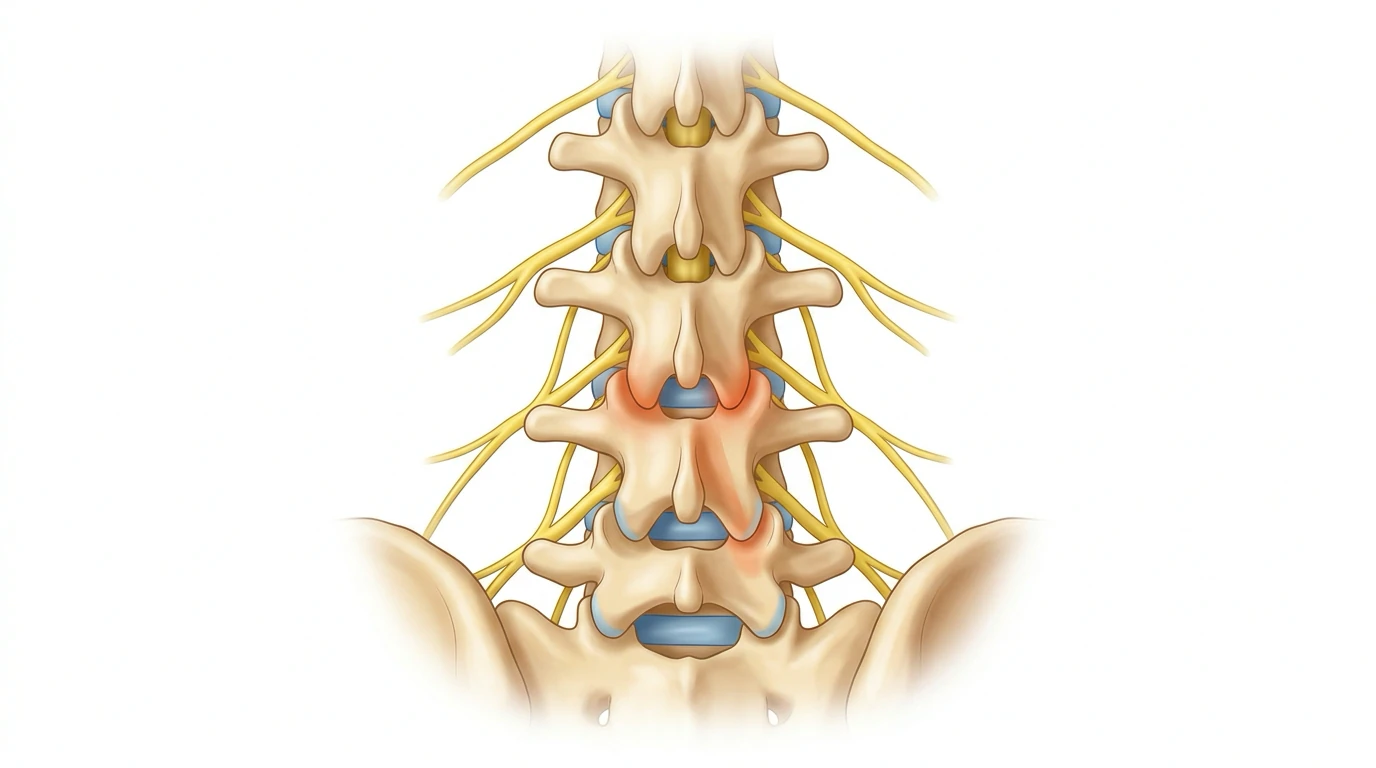
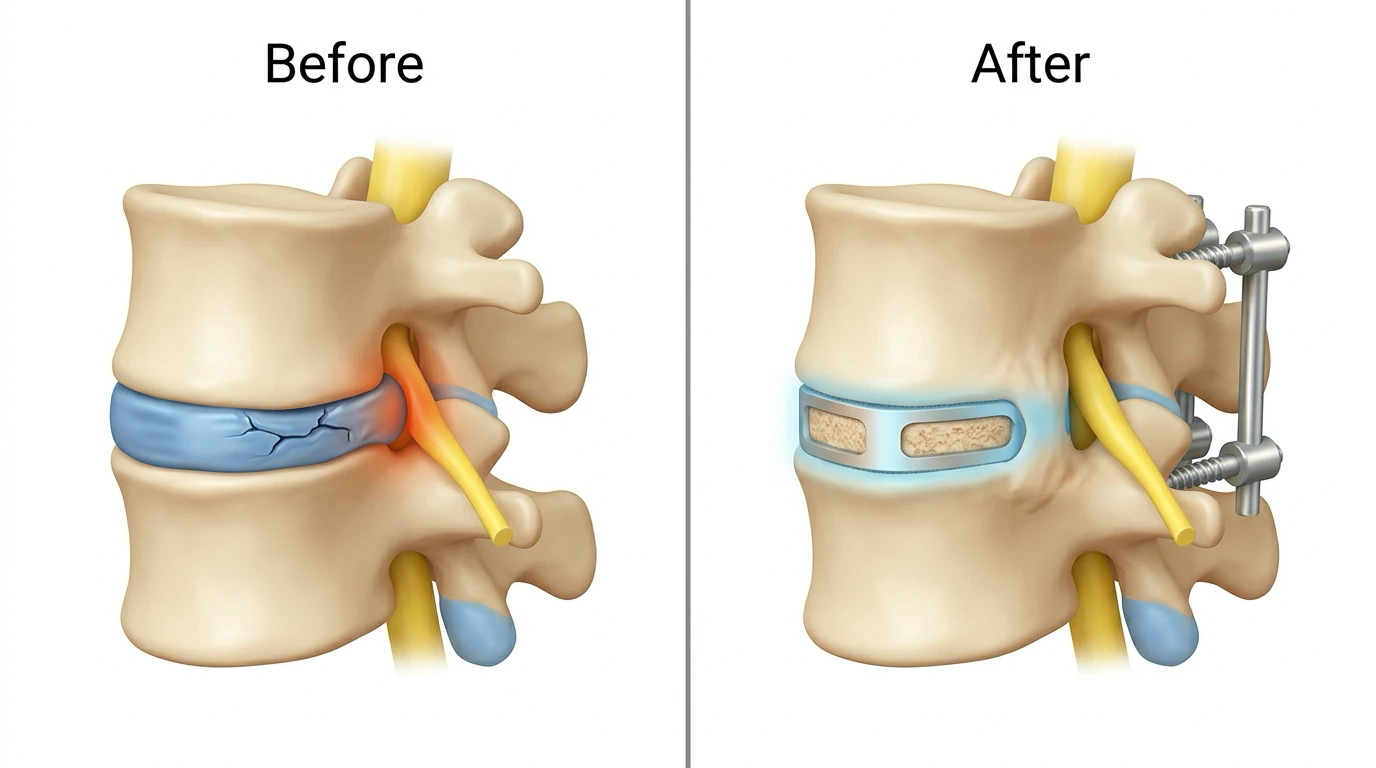
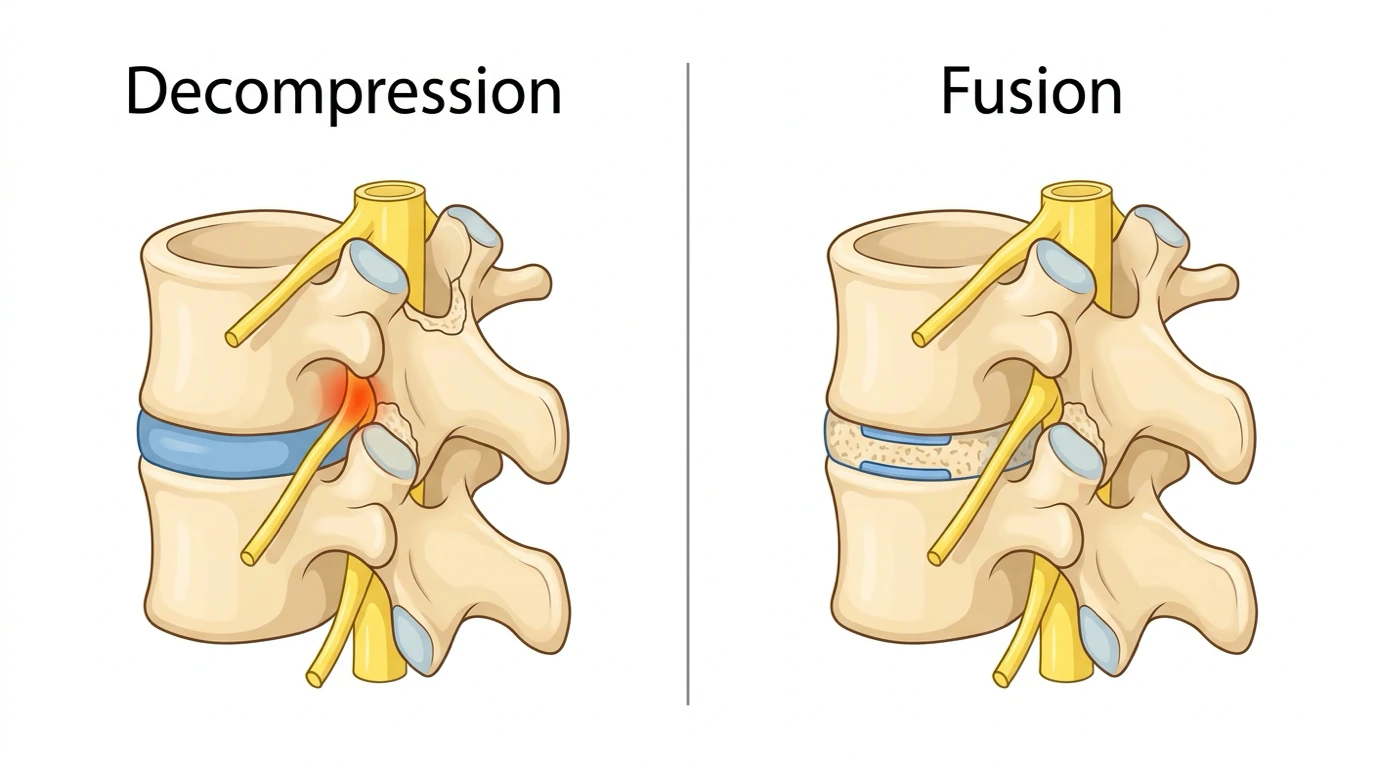
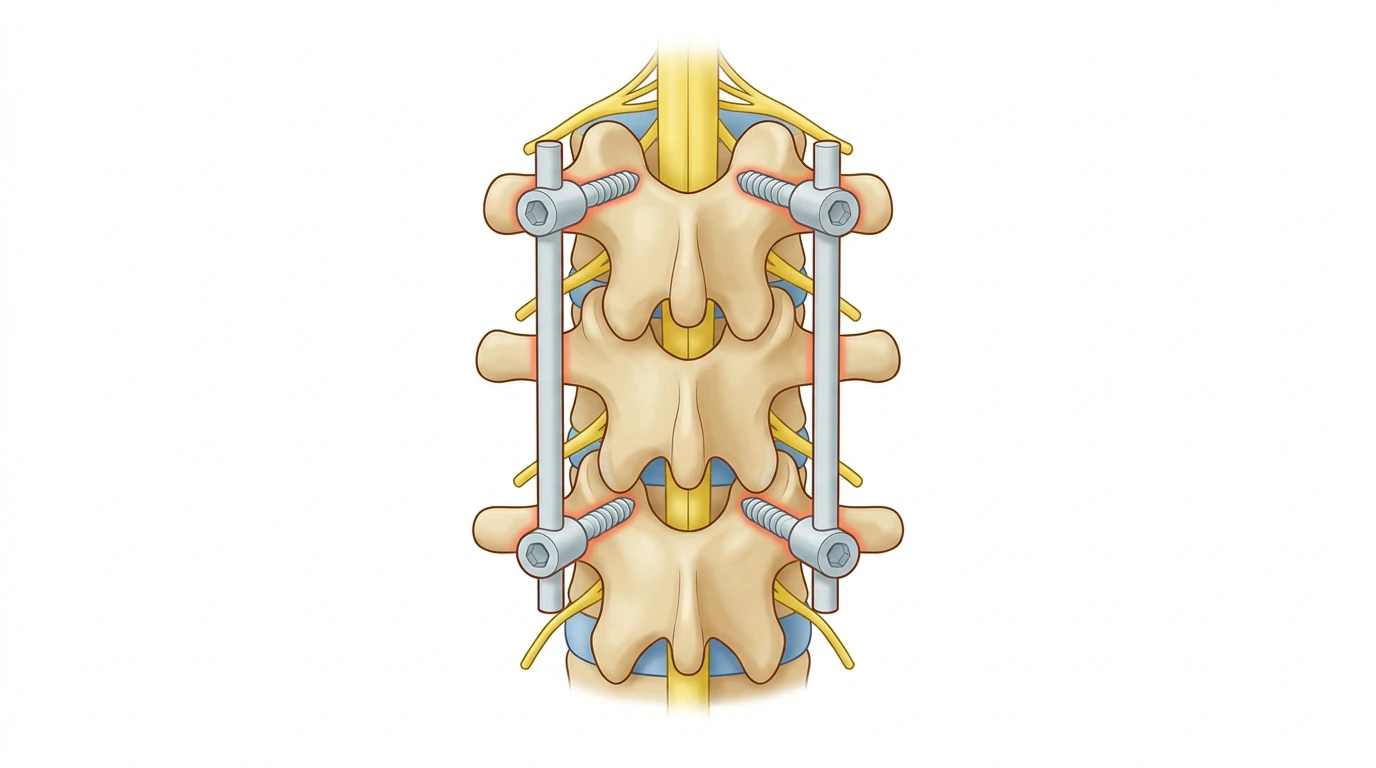
During PLIF, damaged disc material is removed, an interbody spacer or graft material is placed, and instrumentation may be used to stabilize the segment while fusion develops. The goal is to stabilize the treated level and address nerve compression when decompression is part of the plan. Because fusion changes motion at the treated level, it is a structural decision, not a general back pain treatment.
What does it treat? Structural problems, not routine back pain.
PLIF may be considered for selected lumbar structural problems such as instability, degenerative disc disease, spondylolisthesis, stenosis, or recurrent disc problems. It is most appropriate when the clinical picture supports fusion rather than decompression alone or conservative care alone.
The decision depends on imaging, neurologic findings, spinal stability, prior treatment, and patient goals. Fusion should never be framed as the default treatment for back pain.

Who is a candidate? The right patient for PLIF.
The candidacy discussion should explain why fusion is being considered instead of decompression alone, injection, therapy, or continued conservative care. Because fusion is a structural procedure, the reason should be tied to a specific finding: instability, disc space collapse, recurrent compression, alignment, or another identified problem.
Good candidates
- A clear lumbar structural problem supported by both imaging and symptoms
- Instability, spondylolisthesis, or disc space collapse where stabilization addresses the problem
- Recurrent disc problems or nerve compression where fusion is part of the appropriate plan
Poor candidates
- Symptoms that do not match the imaging
- Pain that appears to come from another source
- Conservative care that is still appropriate and untried
- Medical risk that outweighs the expected benefit
Useful questions to bring to the consultation: which level is being fused, whether decompression is also planned, what problem the fusion is meant to solve, what conservative care has already been tried and why it is no longer enough, and which risks are specific to your health and anatomy.
How does it work? The procedure follows a precise sequence.
Approach from the back
The surgeon approaches the lumbar spine from the back at the planned level or levels.
Decompress when needed
Nerve pressure is relieved when decompression is part of the plan.
Remove the disc and place the spacer
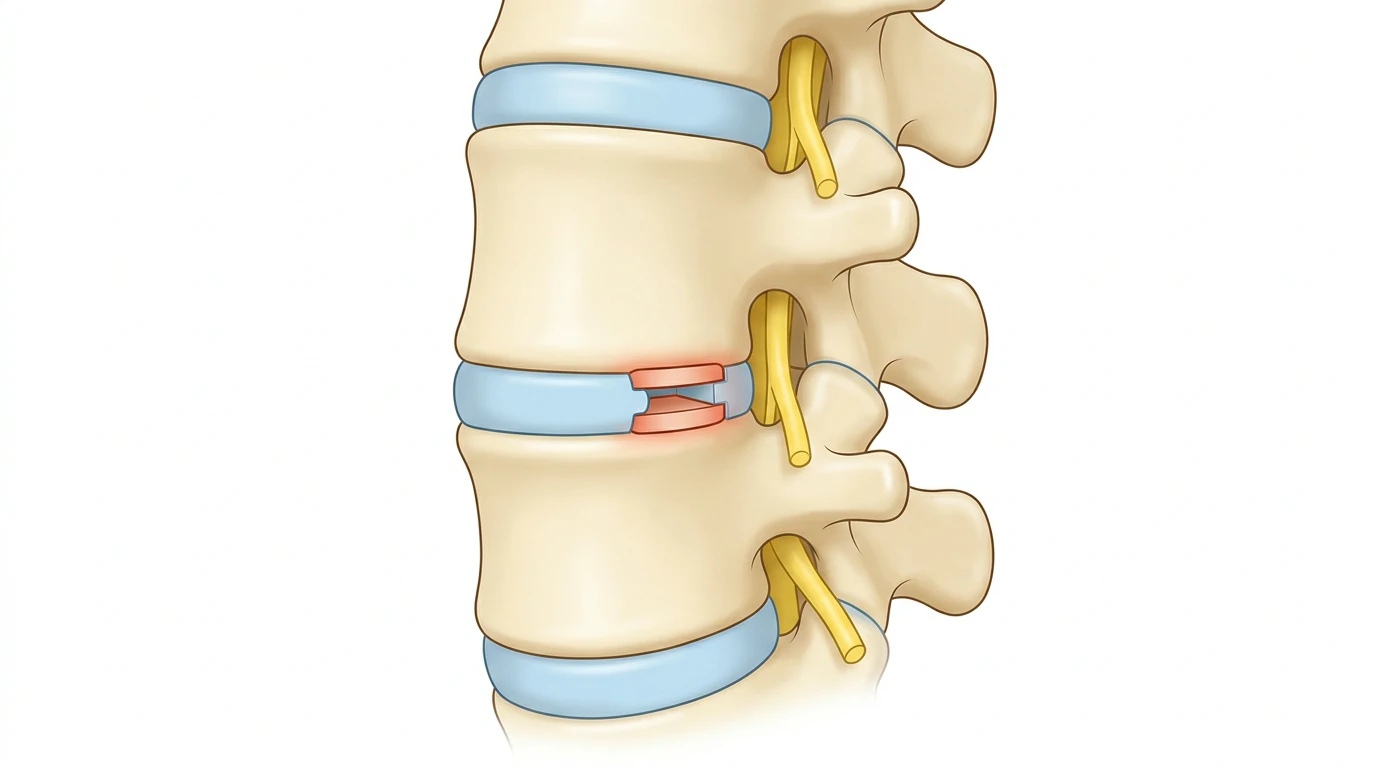
The damaged disc is removed and an interbody spacer or graft material is placed in the disc space.
Stabilize the segment
Instrumentation is used when appropriate to hold the segment stable while the fusion matures.
What is recovery like? Recovery tracks both symptoms and bone healing.
Recovery after fusion is gradual and depends on bone healing, the number of levels treated, overall health, and whether decompression was also performed. Nerve symptoms may recover at a different pace than incision pain or back soreness.
Fusion recovery includes monitoring both symptoms and bone healing. Activity limits apply while the fusion matures, and follow-up imaging may be part of the surgeon's monitoring plan. Work demands, bone health, smoking status, other medical conditions, and the number of levels treated all affect planning, so recovery expectations should be individualized rather than taken from a checklist.

If leg symptoms are part of the reason for surgery, ask how the decompression fits with the fusion. If back pain or instability is the main issue, ask how the fusion is expected to address that structural problem. Each part of the operation has its own goal, and you should know which symptom each part is meant to treat.
For general background on getting back to walking, see walking after spinal surgery and our physical therapy guide after lumbar fusion.
What are the risks? Risks worth discussing.
Fusion surgery requires discussion of bone healing and long-term stress on nearby levels in addition to the risks of any spine operation.
Infection and bleeding
Risks common to spine surgery, discussed in light of your health history.
Nerve injury and spinal fluid leak
Recognized risks of working near the spinal nerves during decompression and spacer placement.
Hardware problems
Instrumentation can loosen or fail and is monitored at follow-up.
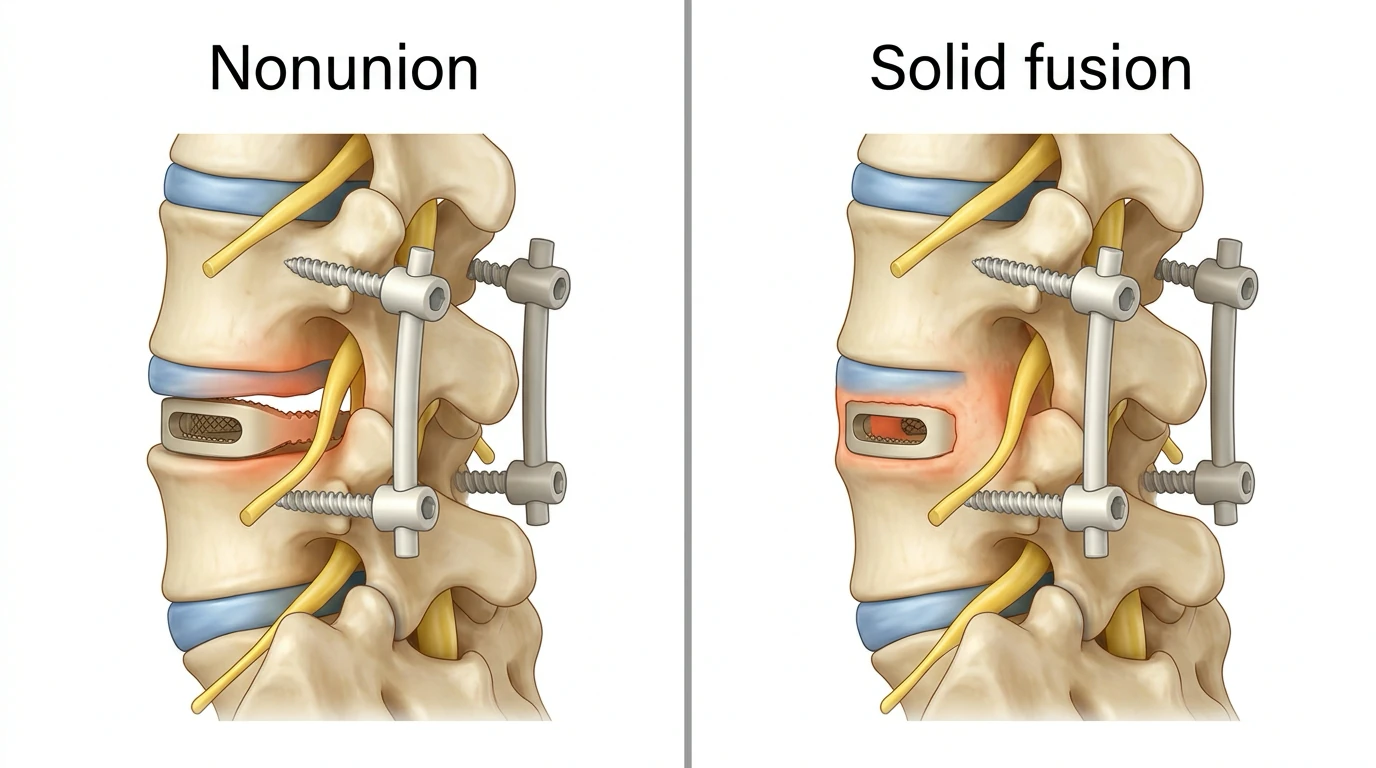
Nonunion
The bones may not fully join. Bone health and smoking status affect healing.
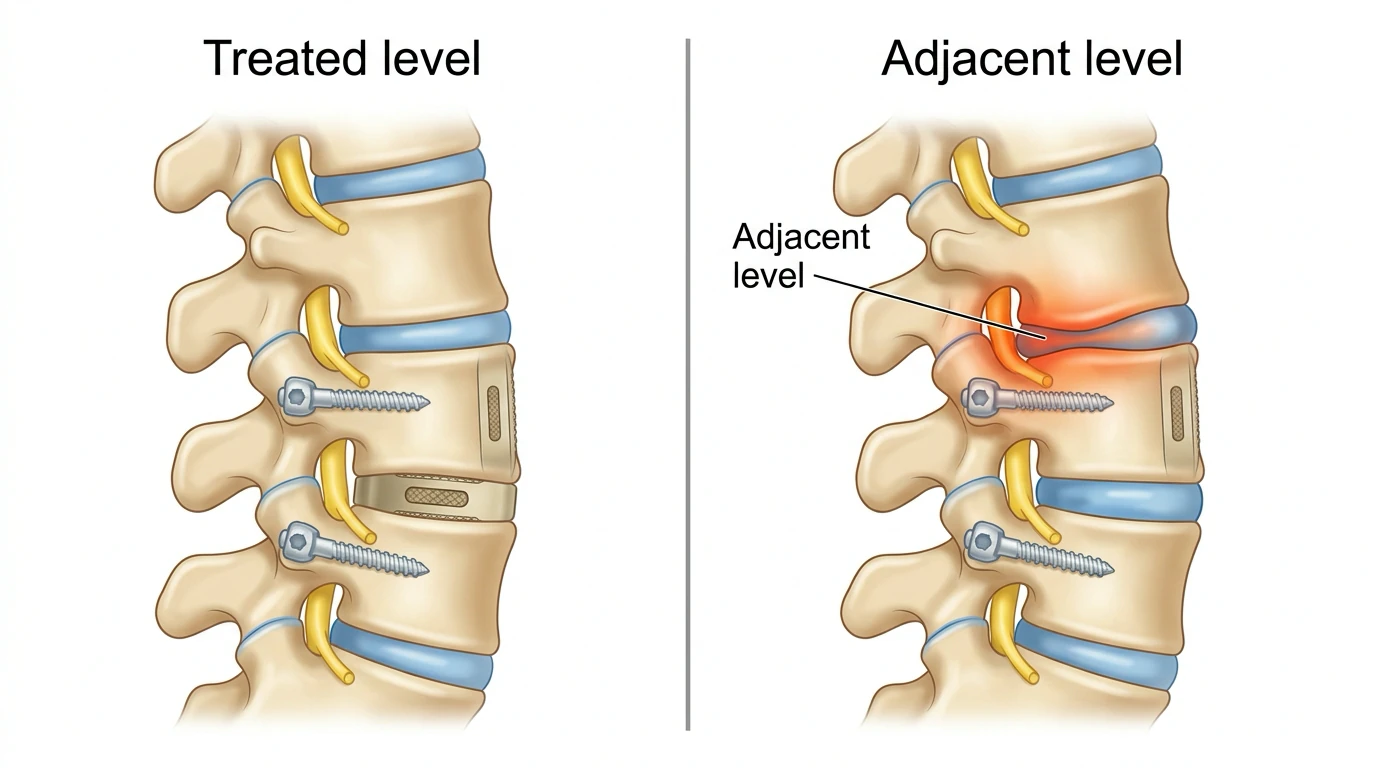
Adjacent segment problems
Fusion changes motion at the treated level, which places long-term stress on nearby levels.
Persistent pain and anesthesia risks
Symptoms not caused by the fused level may not improve. Anesthesia risk is reviewed separately.
The preoperative discussion should clarify the goal of surgery, which symptoms fusion is expected to address, and which symptoms may not be caused by the fused level.
What are the alternatives? Fusion is the last option considered, not the first.
Alternatives may include conservative care, epidural steroid injection for selected nerve-related pain, decompression without fusion, discectomy, or laminectomy depending on the diagnosis. The right option depends on stability, compression pattern, symptoms, and neurologic findings. A clear comparison of these options is part of an honest fusion discussion.
