
What is it? ALIF surgery explained.
"Anterior lumbar fusion" describes a family of lumbar fusion operations reached from the front of the body. The term often refers to anterior lumbar interbody fusion, or ALIF surgery, in which a damaged disc space is prepared and an interbody implant and bone graft are placed to help the adjoining vertebrae fuse.
A lumbar fusion joins selected vertebrae so that they heal into a more stable segment. In an anterior approach, the surgeon reaches the lumbar disc space through an incision in the lower abdomen or a retroperitoneal corridor rather than approaching from the back. The abdominal contents and major vessels in front of the spine must be moved or protected to reach the disc.

The same name does not mean every operation is identical. Levels, exposure (open or minimally invasive), graft or implant choices, and supplemental posterior fixation can differ. The diagnosis, symptoms, neurologic examination, imaging, prior operations, vascular anatomy, bone quality, and overall health all affect the discussion.
"Fusion" describes the intended biological joining of bone. It does not by itself name the diagnosis being treated or predict pain relief. Fusion also removes motion at the treated segment, although a limited fusion does not necessarily eliminate overall spinal movement.
What does it treat? Selected structural problems in the lower spine.
Published clinical descriptions of ALIF include degenerative disc disease, spondylolisthesis (slippage of one vertebra relative to another), degenerative scoliosis or other deformity, pseudarthrosis after a prior fusion, and adjacent-segment disease. Other indications may be considered in selected cases. Having one of these diagnoses does not by itself mean an anterior approach is appropriate.
An anterior operation may be discussed when restoring disc height, foraminal height, or lumbar alignment is part of the surgical goal. Restoring space can sometimes help enlarge a nerve-root opening indirectly, but an anterior operation is not automatically a substitute for direct posterior decompression when bone or other tissue is compressing nerves in the canal or lateral recess.

A lumbar MRI finding can be relevant without being the sole reason for surgery. A clinician should compare the image with the person's pain pattern, neurologic examination, standing radiographs or other imaging when needed, prior treatment, and functional goals. A different pain source, including the hip, sacroiliac region, or another spinal level, may require a different plan.
Who is a candidate? Who may be considered for anterior lumbar fusion.
A candidacy discussion is not a recommendation. The question is not simply "Do I have a worn disc?" It is "What specific problem is the fusion intended to change, how does that problem explain my symptoms, and why is an anterior corridor being proposed?"
May be considered when
- The suspected pain generator or instability has a credible relationship to symptoms and examination
- Imaging shows a structural problem the proposed operation is designed to address
- The goals are clear, such as stabilizing a segment, restoring disc or foraminal height, or correcting part of a deformity
- Nonsurgical options, observation, or another procedure have been considered when clinically appropriate
- Health, bone quality, vascular anatomy, prior abdominal operations, and personal preferences have been reviewed
May not be the right fit when
- The problem needs direct posterior decompression
- Vascular anatomy prevents the proposed level from being reached safely
- Prior abdominal or retroperitoneal surgery has created scarring or another exposure concern
- Severe medical illness, active infection, poor bone quality, or an unstable or complex deformity changes the risk-benefit discussion
- Symptoms do not match the imaged level, the main pain source is elsewhere, or symptoms are mild or improving
These are not universal exclusions; they are reasons for procedure-specific evaluation. Anterior lumbar fusion should not be presented as a default response to an abnormal MRI or nonspecific low-back pain. A consultation should also separate the goals of reducing mechanical back pain, relieving a nerve symptom, restoring alignment, and preventing progression. A procedure can achieve one goal without guaranteeing every hoped-for outcome.

Evaluation commonly combines symptom history, a neurologic and musculoskeletal examination, review of prior care, and imaging selected for the clinical question. X-rays may show alignment or motion; MRI can show discs, nerves, and other soft tissues; CT can clarify bone and hardware. Additional vascular imaging may be ordered when the exposure or anatomy calls for it. No single image decides candidacy by itself.
Before consenting, ask the clinician to connect each proposed level to a symptom or structural goal. Clarify whether the operation is intended mainly for back pain, leg symptoms, instability, deformity, disc-space collapse, or a combination, and what would make the team recommend observation, decompression alone, a posterior or lateral route, or no operation.
How does it work? The ALIF procedure, step by step.
The approach is planned around the lumbar level and the structures in front of it. The exact steps depend on the level, anatomy, and operation.
Plan the corridor
The surgeon and any other members of the operative team identify a corridor through the lower abdomen or retroperitoneal space to the planned level.
Protect abdominal contents and vessels
Abdominal contents and the major vessels in front of the spine are moved or protected to reach the disc.
Remove the disc and prepare the space
The disc material is removed and the endplates are prepared.
Place the implant and graft
A cage or other interbody implant containing bone graft or another graft material is placed in the disc space.
Add fixation when needed
Screws, plates, or posterior instrumentation may be added from the front, the back, or both when the planned construct needs more stability.
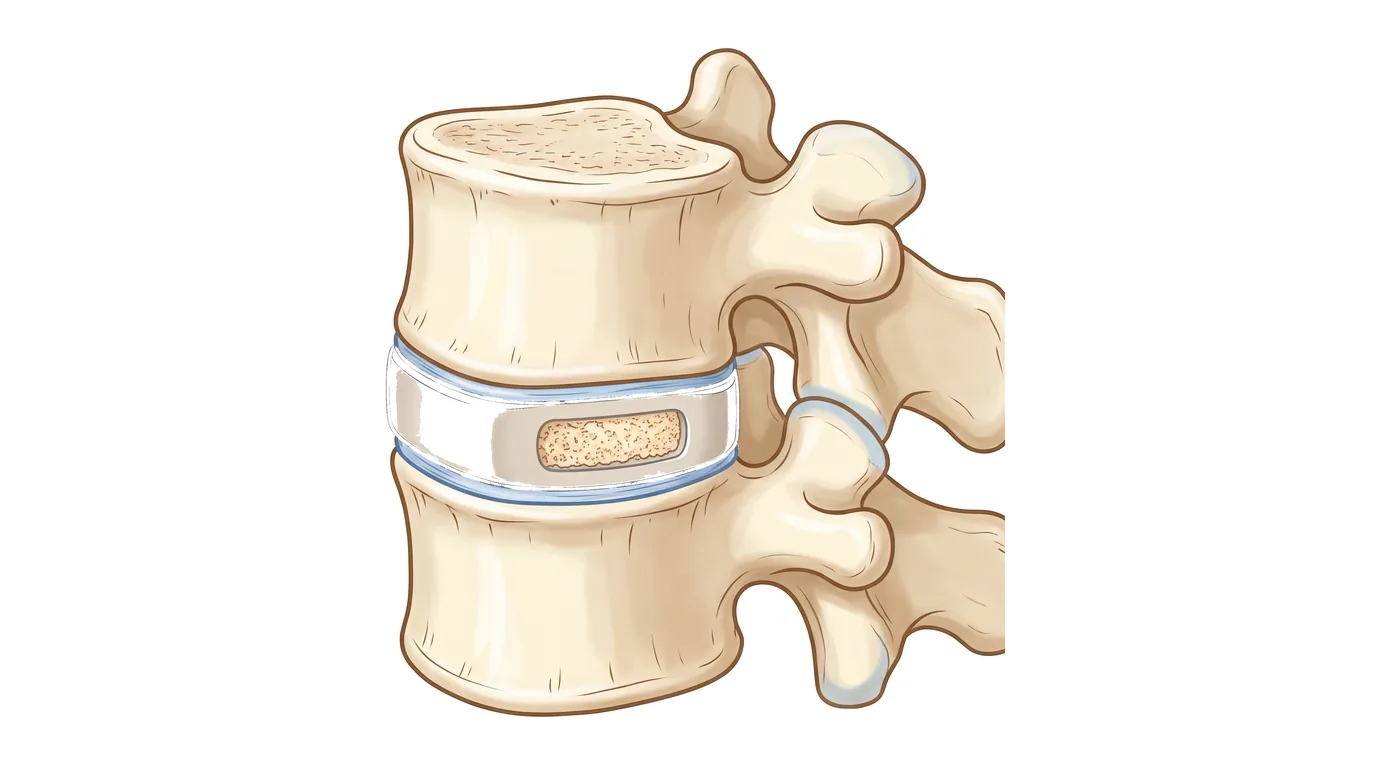
Compared with a posterior-only corridor, an anterior route can expose the front of the disc space and avoid direct dissection through posterior spinal muscles. That potential technical advantage has to be weighed against the fact that large blood vessels, abdominal structures, the ureter, and sympathetic nerves are near the exposure. "Anterior" describes the route; it is not a claim that the approach is safer or better for every patient.
The planned operation may be a single-level ALIF, a multilevel fusion, or a combined or staged operation. A posterior procedure may be added for fixation or direct decompression. Ask the surgeon to write down the levels, the approach, whether a second corridor is planned, the graft product, and the intended clinical goal.

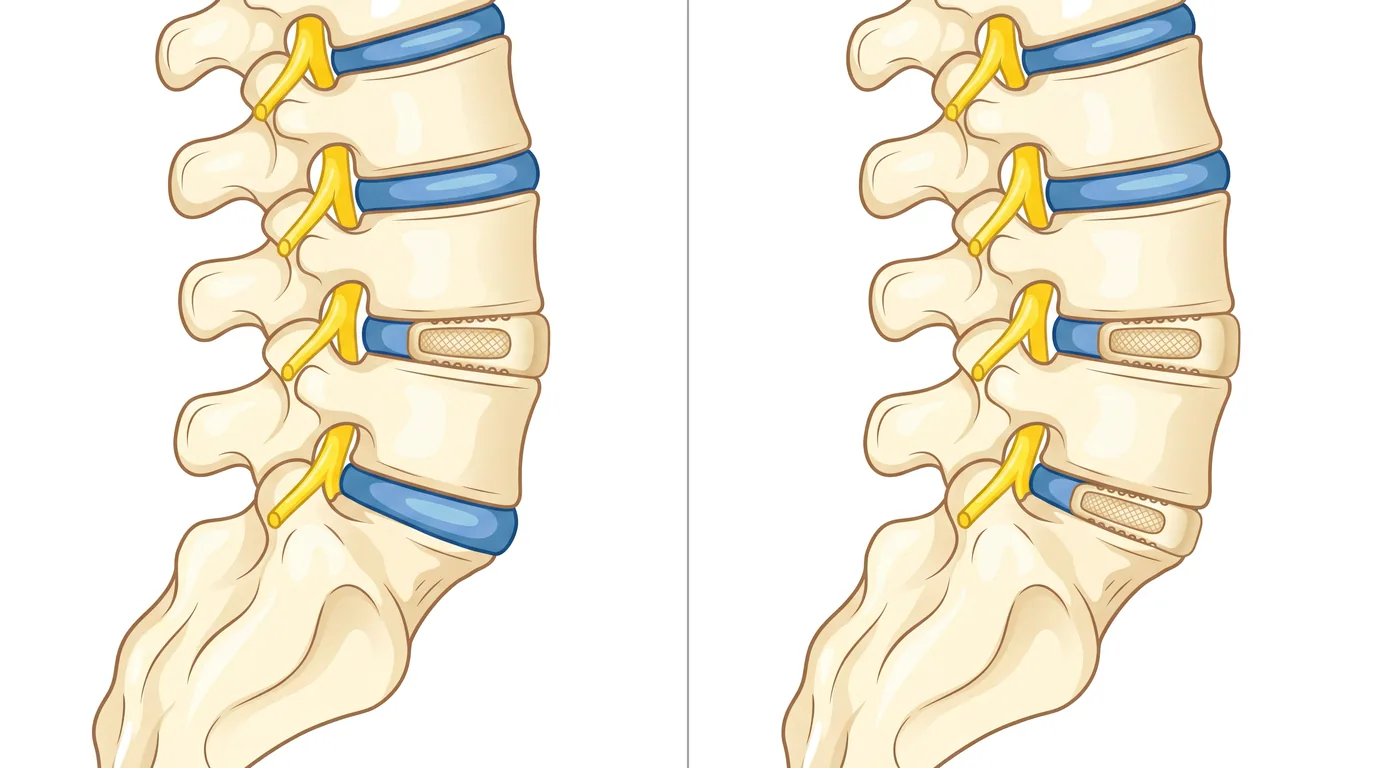
What are the goals? Stability, height, and alignment, not guarantees.
Potential goals of ALIF surgery include stabilizing painful motion or instability, restoring disc and foraminal height, improving part of the lumbar alignment, supporting a fusion, or contributing to nerve decompression when the anatomy and plan fit. These are intended effects, not guaranteed results.
Technical findings and patient-reported improvement are different outcomes. A solid fusion on imaging does not by itself prove that every symptom will resolve, and an early symptom change does not by itself prove that the fusion is biologically complete. Ask what outcome is being measured, when it will be assessed, and what uncertainty remains.
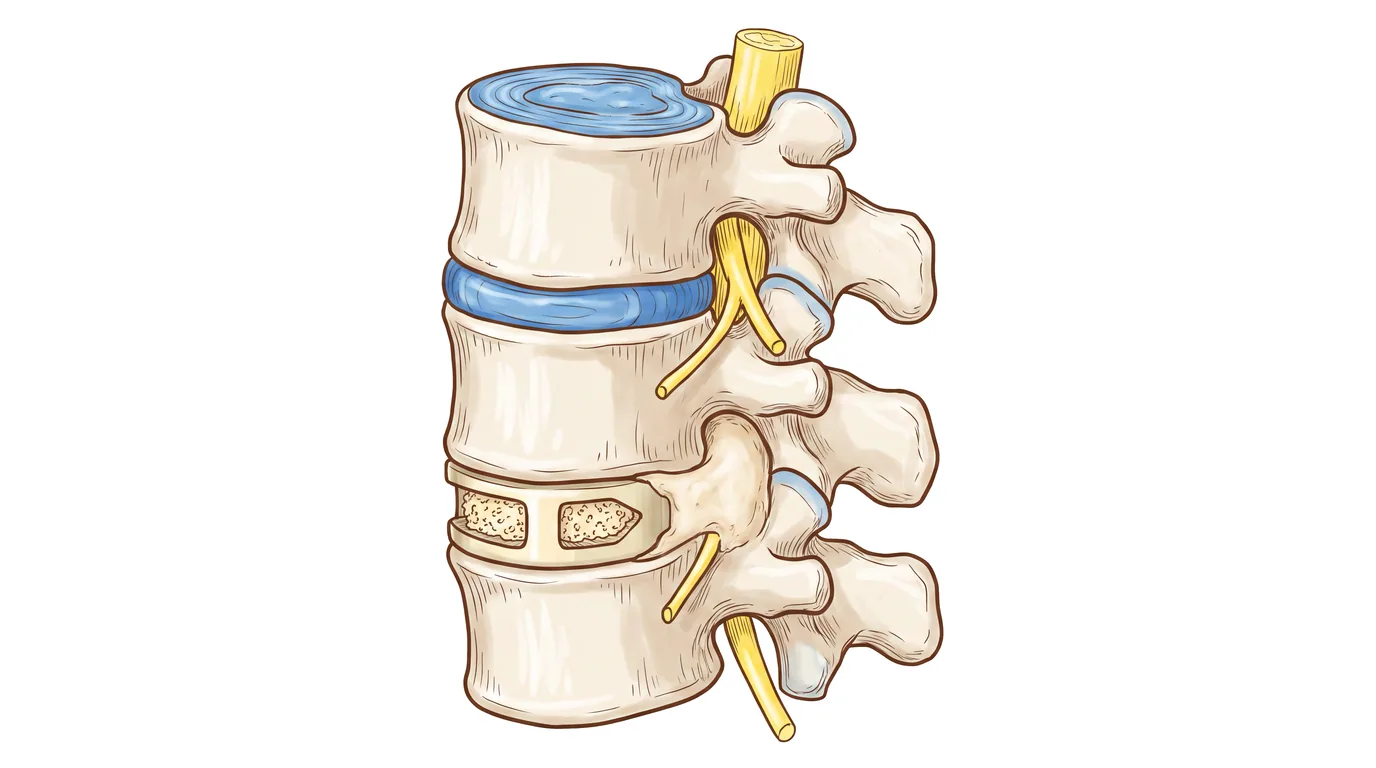
What is recovery like? ALIF recovery depends on the operation and on healing.
ALIF recovery varies with the number of levels, whether posterior fixation or decompression is added, the diagnosis, health and bone quality, symptoms, and healing. Walking is commonly introduced early, with activity increased gradually as the treating team permits. Soreness, fatigue, constipation, and abdominal discomfort can occur during early recovery.
Comfort can improve before the fusion is solid. AAOS describes bone healing as taking several months and notes that activity is generally advanced gradually; physical therapy may be recommended when the surgeon considers it appropriate. These are general principles; they do not set a start date, lifting limit, driving date, work clearance, or exercise program for any one patient.
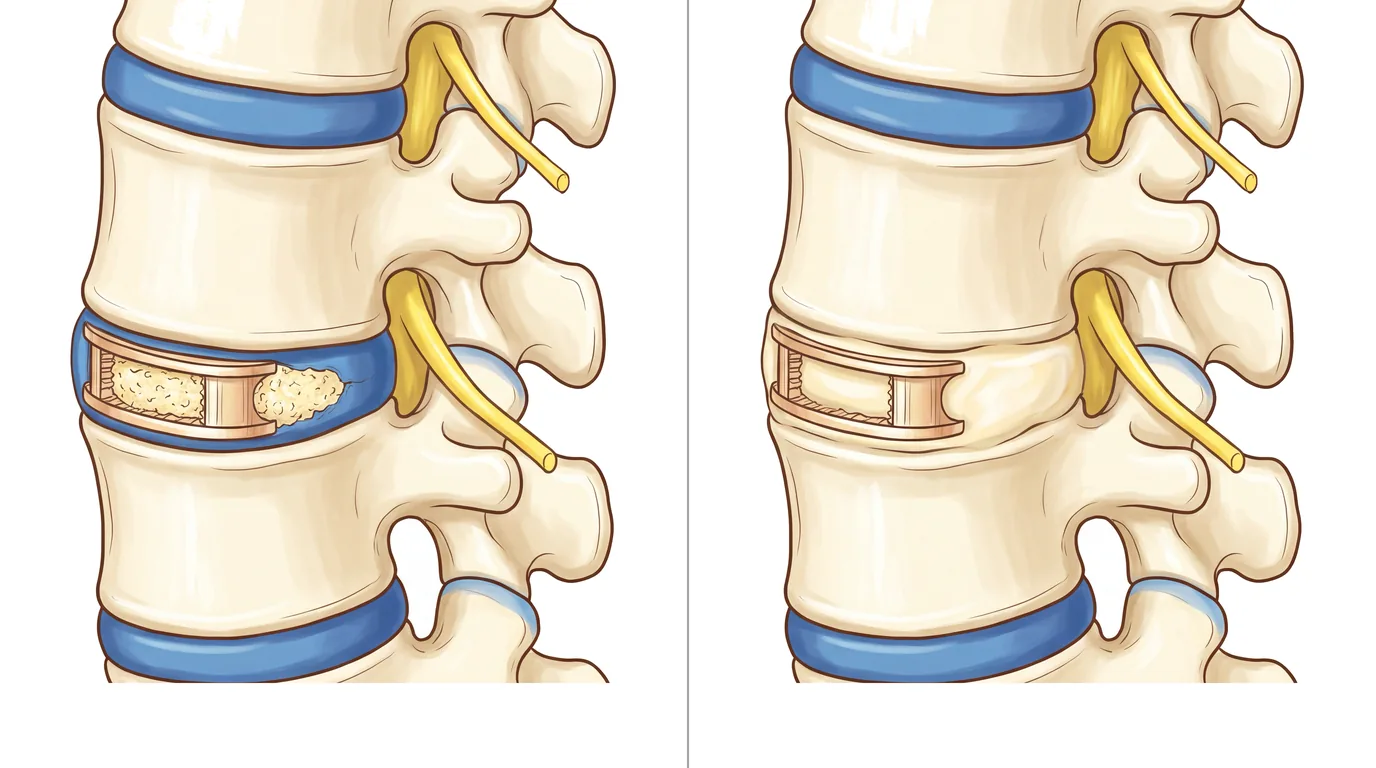
Follow-up may address the incision and abdominal symptoms, neurologic status, pain and function, medications, activity restrictions, and evidence of healing. Imaging and the timing of follow-up vary by operation. Do not substitute another patient's timeline for written instructions from the treating team. Ask who to call after discharge and what symptoms should be reported the same day.
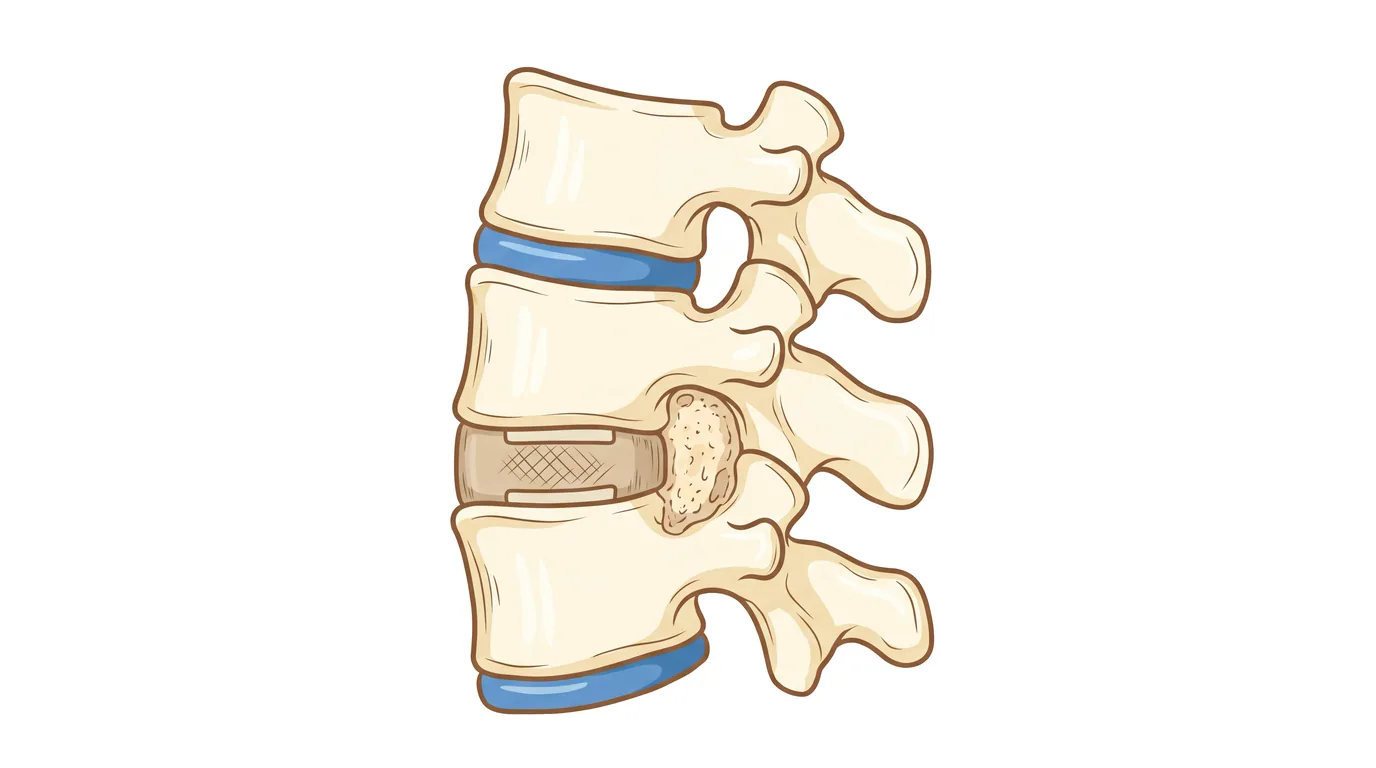
When should I call the care team? Warning signs that should not wait.
After surgery, follow the discharge instructions and seek urgent advice for new or worsening leg weakness, new loss of bladder or bowel control, or numbness in the saddle area. Those neurologic symptoms can signal serious nerve compression and should not be watched at home while waiting for a routine visit.
Contact the surgical team urgently for:
- Fever or persistent wound drainage
- Increasing redness or wound separation
- Severe or increasing abdominal pain or swelling
- Persistent vomiting or inability to pass stool or gas
- A cold or unusually painful leg, or new calf swelling
- Chest pain, sudden shortness of breath, coughing blood, or fainting
- Heavy bleeding
Emergency services may be appropriate for severe breathing or circulation symptoms, major bleeding, or rapidly worsening neurologic symptoms.
What are the risks? Anterior lumbar fusion risks to discuss.
All major operations can involve risks, and an anterior approach adds risks related to the exposure because the major blood vessels in front of the lumbar spine may need to be mobilized. In a peer-reviewed cohort, vascular injury, ileus, incisional hernia, wound infection, and retrograde ejaculation were among the complications recorded. Results from that single-team cohort are not a universal rate for current practice or a prediction for any one patient; published rates vary with the level, definitions, patient selection, revision status, and operative team.
General surgical risks
Infection, bleeding, anesthesia or medical complications, nerve injury, implant problems, and persistent or recurrent symptoms can occur with any major operation.
Nonunion (pseudarthrosis)
The bones may fail to fuse. Smoking, diabetes, older age, and other health factors can affect healing; their relevance should be discussed for the individual operation rather than turned into a personal risk estimate.
Vascular injury or bleeding
Injury to an iliac vein or another major vessel can require repair and may be serious. The risk depends on the level, vessel anatomy, scarring, prior operations, and the exact exposure.
Abdominal or retroperitoneal problems
Ileus (a temporary slowdown of bowel function), abdominal discomfort, wound problems, incisional hernia, or uncommon bowel or ureter injury can occur.
Sympathetic-nerve effects and retrograde ejaculation
In some men, injury or irritation of sympathetic nerves near the lower lumbar exposure can cause semen to move backward into the bladder during orgasm. This is different from erectile dysfunction, may affect fertility, and can be temporary or permanent.
Clot or circulation problems
Deep-vein thrombosis, pulmonary embolism, and impaired circulation are uncommon but important complications after major surgery.

A vascular or access surgeon may participate in some operations, but the need for that role and the team structure are case-specific. Do not assume that an access surgeon will take part in your operation, or that their participation eliminates risk; confirm this with your surgeon. Ask for the operating team's experience with the planned level and technique.
What are the alternatives? Other approaches and nonsurgical options.
The appropriate alternative depends on the pain generator, instability, deformity, nerve compression, bone quality, prior surgery, and a person's goals. Options to discuss may include observation, activity changes, a clinician-directed rehabilitation plan, medications when medically appropriate, selected injections, decompression without fusion, a posterior fusion such as PLIF or TLIF, a lateral or oblique approach, or another motion-preserving or reconstructive procedure when relevant.
A decompression alone may be considered when the main problem is nerve compression and the segment does not require stabilization. A posterior or lateral approach may be considered when the anatomy, the need for direct decompression, or the vascular exposure makes it a better fit. A combined approach may address different goals but can add procedures and cumulative risks. These categories are not a menu for self-selection.
The key comparison is not which approach is best in the abstract. Ask what each option is meant to improve, what it cannot address, what additional procedure might become necessary, and how the risks apply to your anatomy and health. Shared decision-making should include benefits, harms, alternatives, and what matters most to you.
What should I ask my surgeon? Questions to bring to an ALIF consultation.
Bring a symptom timeline, a medication list, relevant imaging reports, prior treatment information, and a written list of goals and questions, such as:
- What diagnosis is this fusion intended to treat, at which level, and how do my symptoms and examination support that link?
- When you say "anterior lumbar fusion," do you mean an ALIF, and what parts of the planned operation differ from a standard single-level ALIF?
- Why is an anterior corridor being proposed instead of observation, decompression alone, PLIF or TLIF, a lateral or oblique approach, or another option?
- Which levels will be fused, and will posterior screws, decompression, or a staged operation also be needed?
- How will my vascular anatomy, prior abdominal operations, bone density, nicotine exposure, diabetes, and medications affect the plan?
- Will another surgical specialist participate in the exposure, and what does that role change or not change about risk?
- What are the team's procedure-specific rates of vascular injury, nonunion, infection, reoperation, and retrograde ejaculation for a similar level and approach?
- What outcome will follow-up measure: pain, strength, walking, function, alignment, fusion on imaging, or something else?
- Which restrictions apply to walking, lifting, bending, twisting, driving, work, sex, exercise, and travel, and who changes them?
- Which symptoms require same-day contact or emergency care, and which number should I use after discharge?
If you are in Rhode Island, you can request a consultation to discuss whether an evaluation makes sense. For urgent symptoms after surgery, contact your surgical team or emergency services instead of using a form.
