
What is it? Ulnar nerve decompression explained.
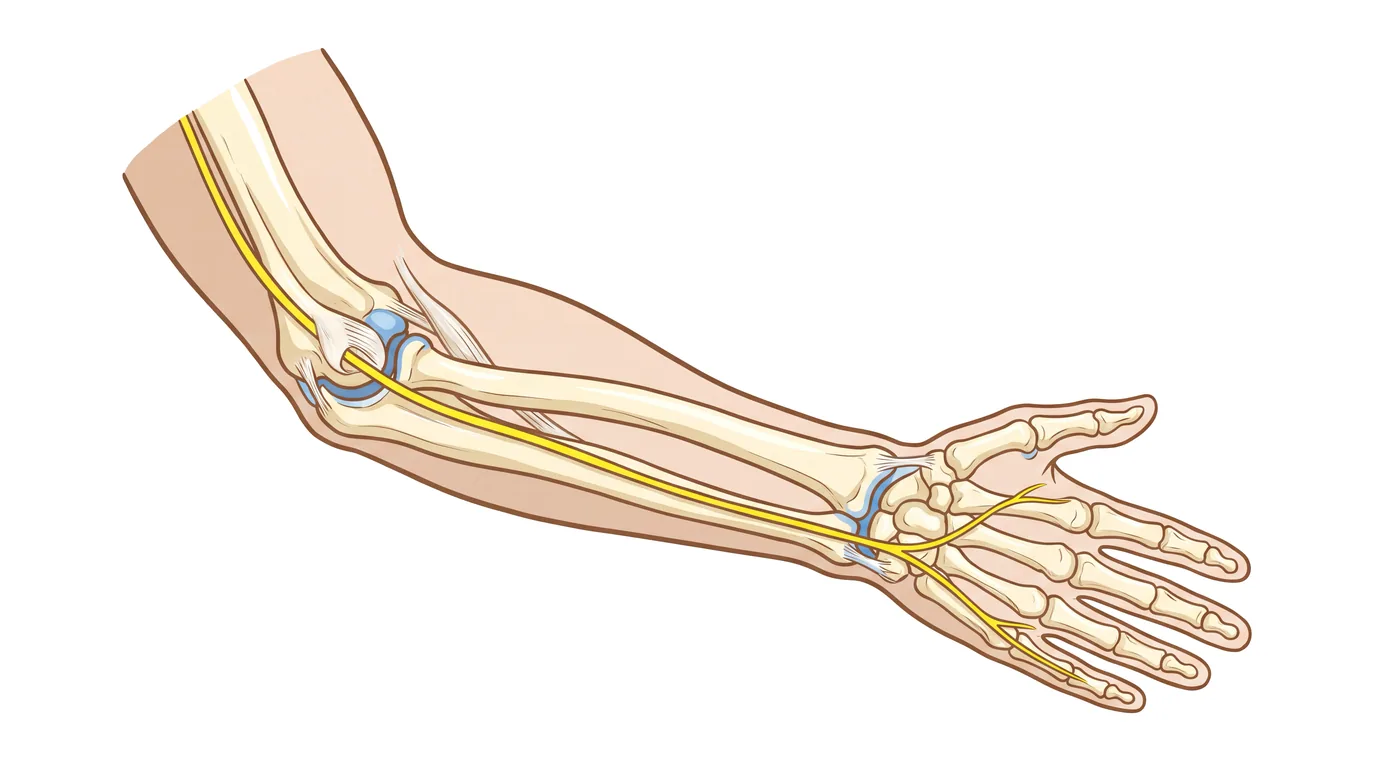
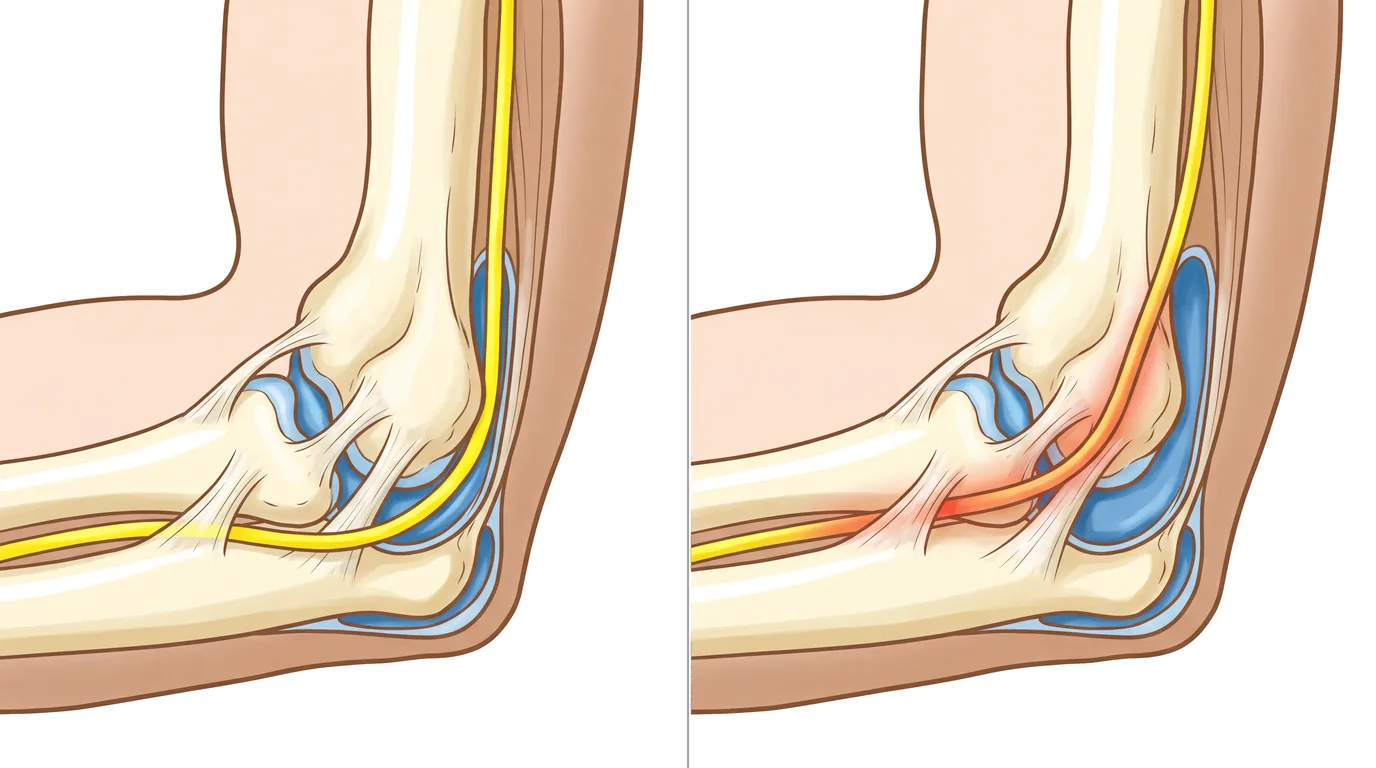
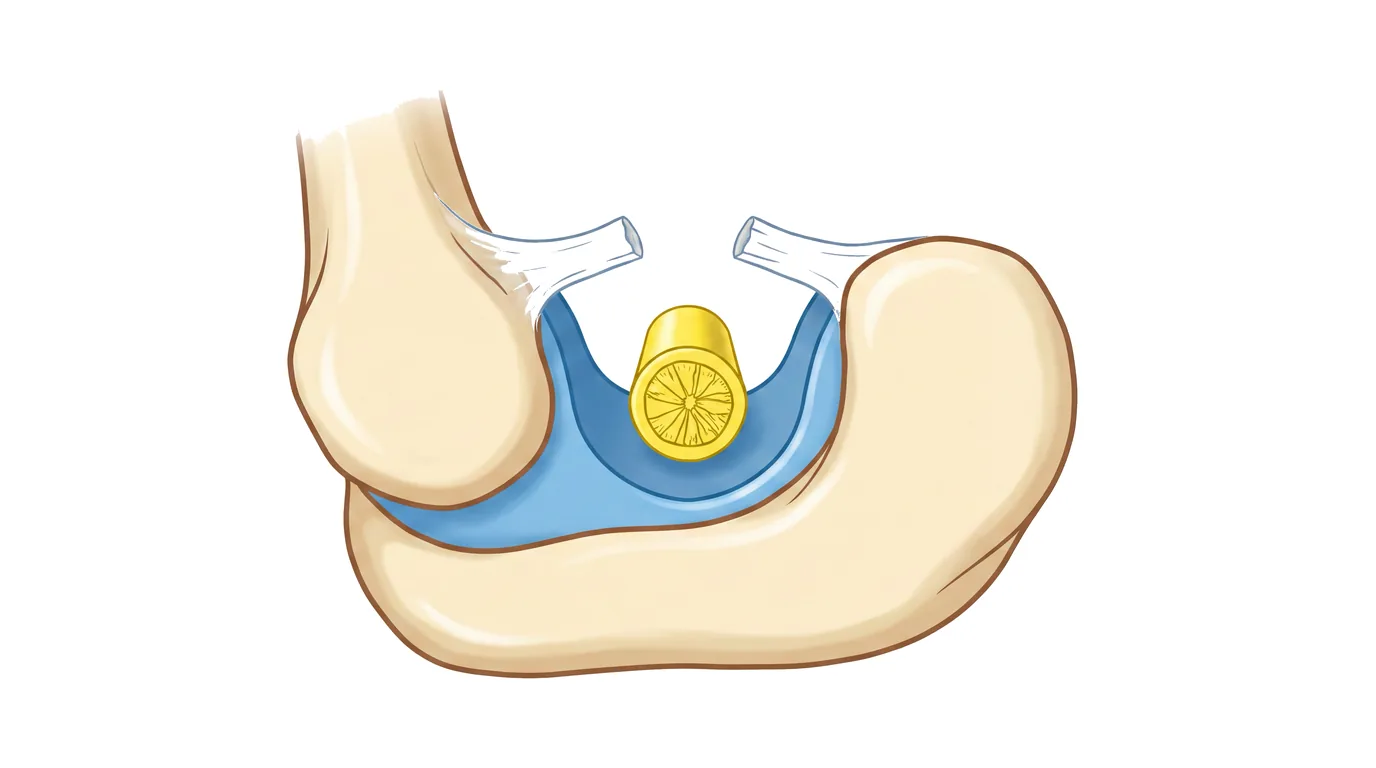
Ulnar nerve decompression surgery releases constricting tissue around the ulnar nerve to create more room and reduce pressure. In the setting most often meant by this phrase, compression behind the inside of the elbow, it is usually called cubital tunnel release. That may include dividing the tissue forming the roof of the tunnel.
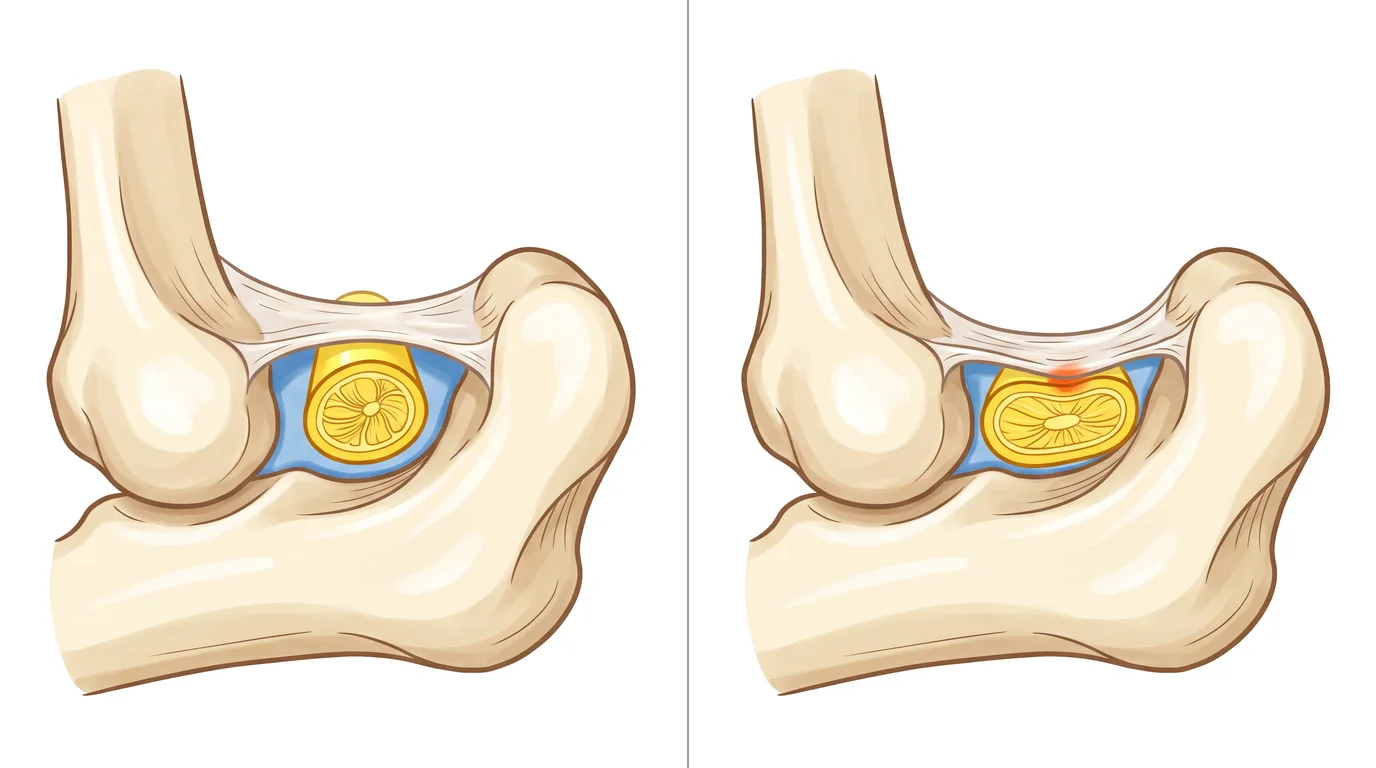
During a simple, in-situ decompression, the nerve stays in its usual groove. Ulnar nerve transposition is a different operation: the nerve is moved to a new position, commonly in front of the elbow, when the surgeon believes that is needed for the anatomy or clinical situation.
Ulnar neuropathy is a broader diagnostic term. It can describe nerve dysfunction from compression or injury at different sites. Cubital tunnel syndrome specifically refers to ulnar nerve entrapment at the elbow. A wrist entrapment, cervical nerve-root problem, or generalized neuropathy may produce overlapping symptoms but calls for a different diagnostic and treatment discussion.
What does it treat? Ulnar nerve compression at the elbow.
This procedure guide focuses on ulnar nerve compression at the elbow (cubital tunnel syndrome). Common features can include numbness or tingling in the little and ring fingers, symptoms that worsen with a bent elbow, aching on the inside of the elbow, hand clumsiness, or grip weakness. These features are clues, not proof of the compression site or of a need for surgery.
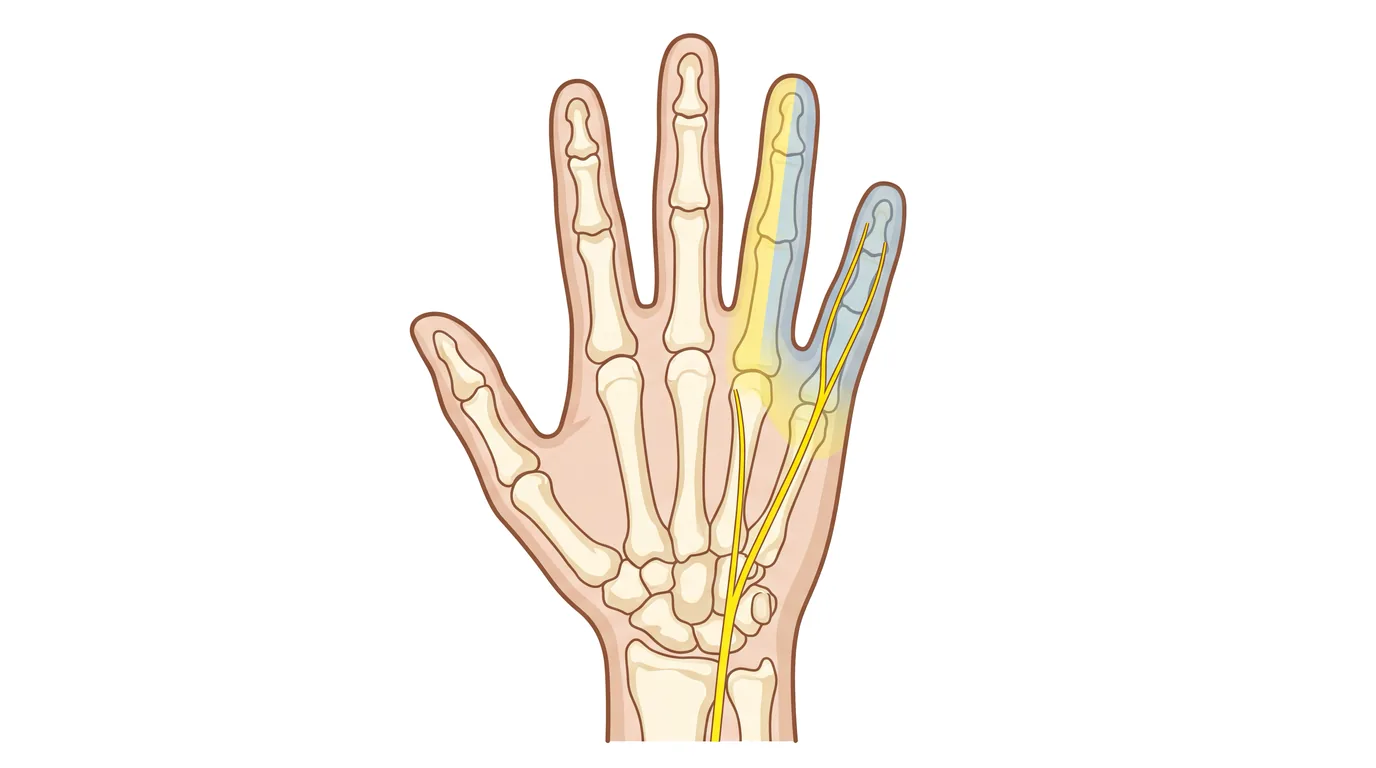
A clinician may discuss cubital tunnel release when:
- symptoms persist despite an appropriate trial of nonsurgical measures;
- testing or examination suggests substantial compression;
- weakness, loss of coordination, or muscle damage is present; or
- the overall findings indicate that continued compression could threaten useful nerve function.
The decision depends on the history, examination, severity, duration, nerve location, and other health factors. A symptom list or an MRI image by itself cannot establish that decompression is appropriate. AAOS describes nonsurgical treatment as common before surgery in many cases, while severe disease may lead a clinician to discuss surgery sooner.
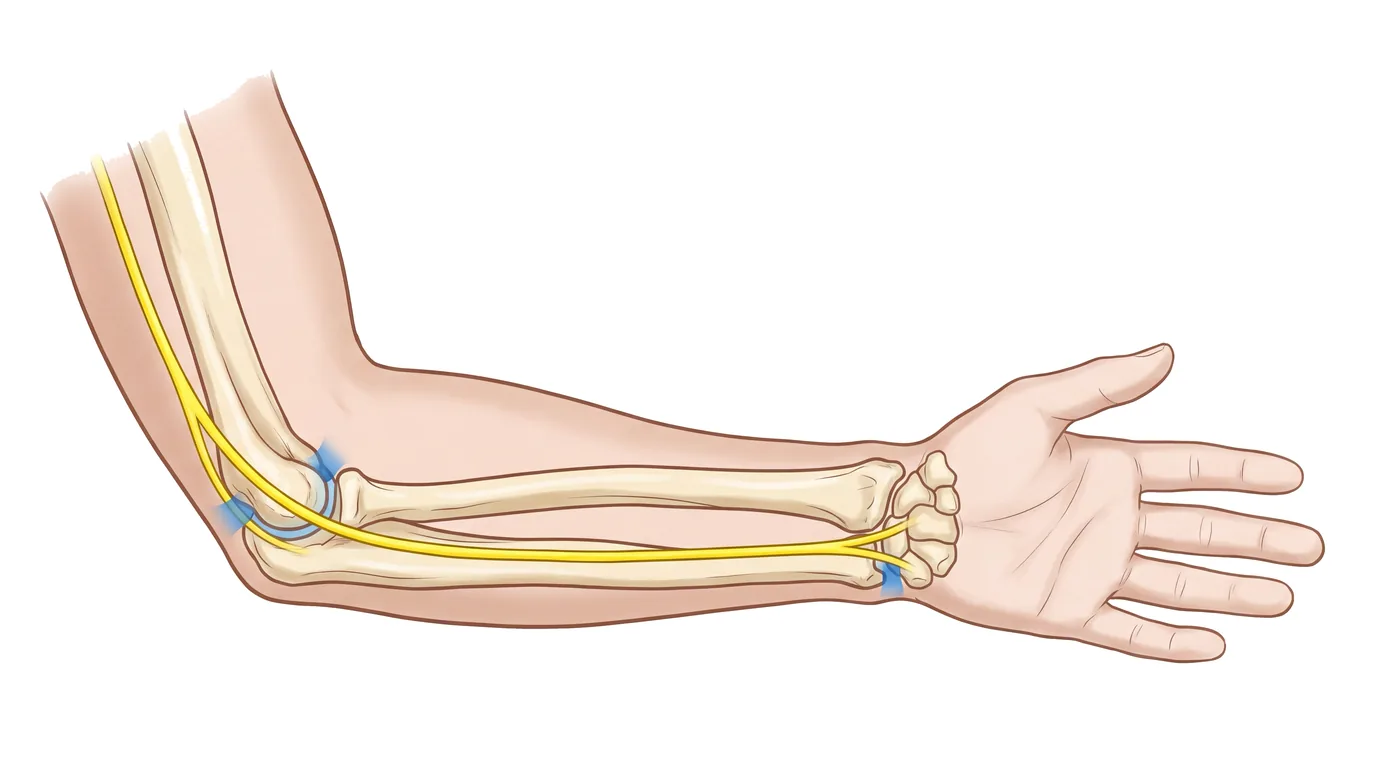
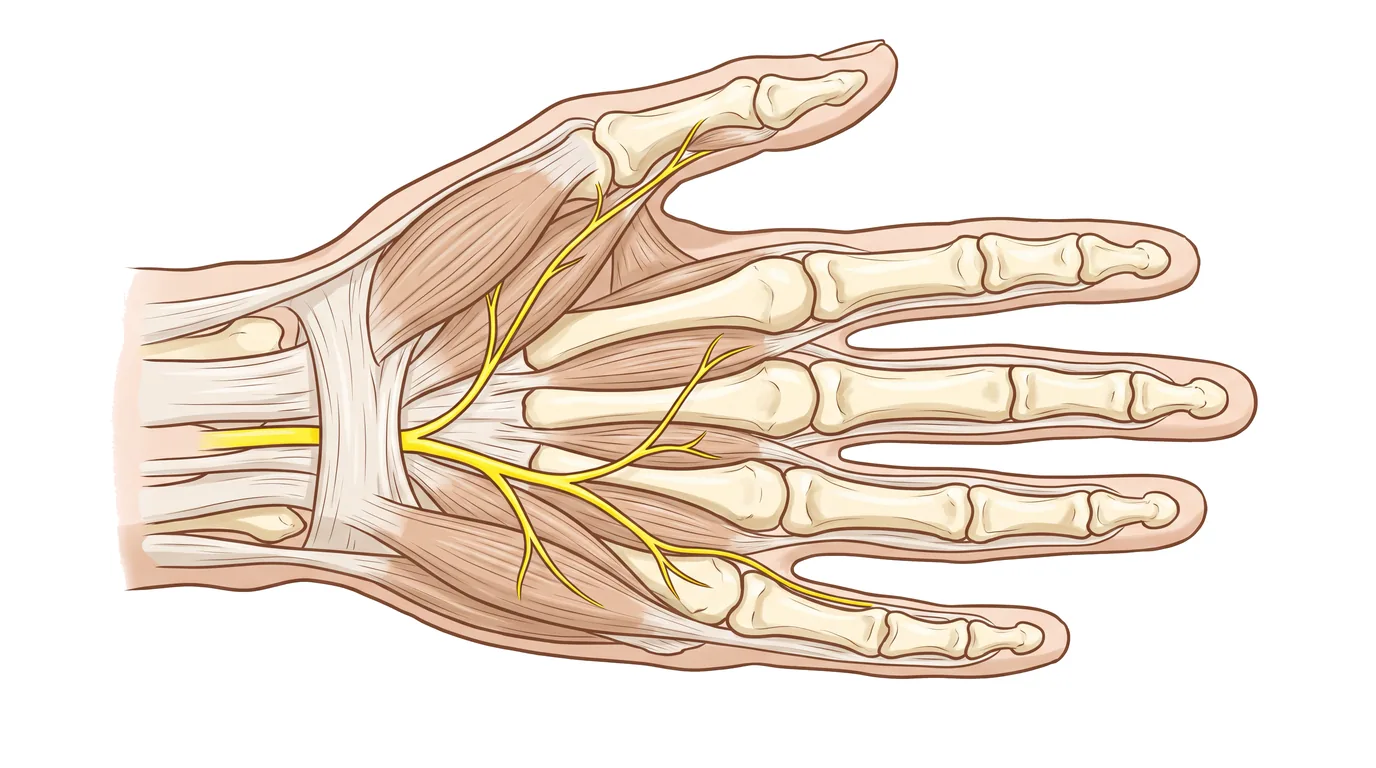
The ulnar nerve can also be compressed at the wrist, near the neck or shoulder, or elsewhere along the arm, and a procedure for one location should not be assumed to treat another. A procedure at the elbow is not automatically treatment for:
- Guyon canal syndrome: ulnar nerve compression at the wrist or base of the palm;
- cervical radiculopathy: irritation of a nerve root in the neck;
- compression near the shoulder or elsewhere in the arm; or
- generalized or systemic nerve disorders, including some conditions associated with diabetes.
The ulnar nerve can be affected at more than one level. Symptoms, examination, and testing, including nerve-conduction studies, help determine where the nerve is affected and whether surgery is an option.
Who is a candidate? A discussion, not a recommendation.
A candidacy discussion is not a recommendation. Candidacy means that a procedure may be reasonable to discuss; it does not predict relief, reversal of weakness, or a particular recovery time.
May be considered when
- Symptoms and objective findings fit cubital tunnel compression
- Symptoms are not improving with nonsurgical care
- There is weakness or nerve damage
May not be the right fit when
- The nerve is not compressed at the elbow, or the diagnosis is uncertain
- Symptoms come primarily from another neurologic or musculoskeletal problem
- The risks of an operation outweigh its possible benefit
- Symptoms are mild or improving, so observation or nonsurgical care may be recommended
Severe or longstanding compression may limit how much function can return even if pressure is relieved. The operation should not be used as a substitute for locating the nerve problem: if symptoms arise at the wrist, neck, or another level, a cubital tunnel release may not address the cause.
The consultation should address:
- how long symptoms have been present and whether they are changing;
- whether sensation, grip, finger coordination, or hand muscles are affected;
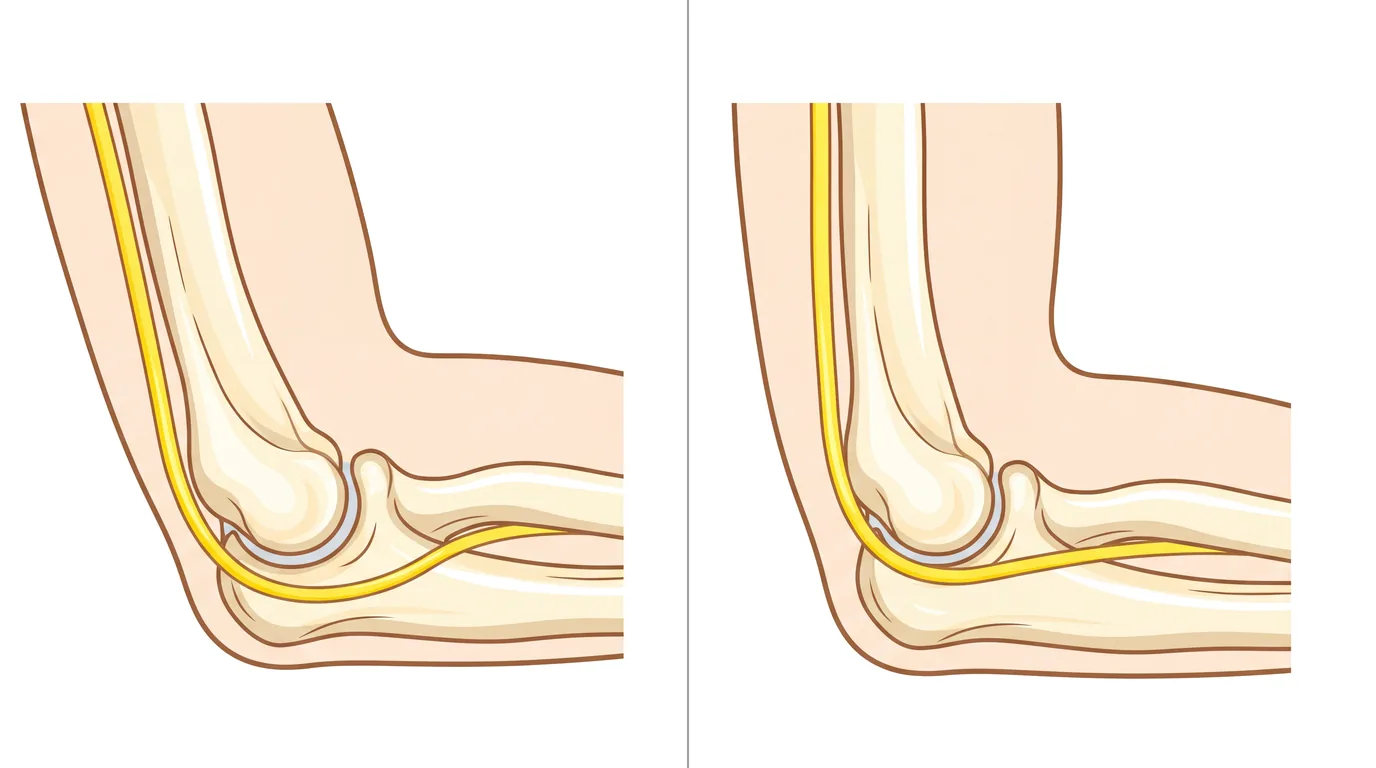
- whether the nerve moves out of its groove when the elbow bends;
- whether an elbow injury, arthritis, deformity, cyst, or prior operation changes the anatomy;
- whether symptoms could also arise from the neck, wrist, or a systemic condition; and
- what you hope to protect or regain in daily life.
A transposition rather than an in-situ release may be considered when the nerve is unstable or slips over the elbow bone, when an elbow deformity or prior injury changes the tunnel, when there is significant scarring or a prior failed operation, or when the surgeon identifies another reason that leaving the nerve in place is not appropriate. This does not mean transposition is routinely better; it is a reason to ask why a particular technique is being proposed.
How does it work? Release the tunnel, or also move the nerve.
AAOS describes open release as a commonly performed cubital tunnel operation. The exact incision, anesthesia, and technique are surgeon- and patient-specific.
Open the constricting tissue
In a simple, or in-situ, decompression, the surgeon opens the constricting tissue over the cubital tunnel.
Leave the nerve in place
The ulnar nerve stays in its native position behind the medial epicondyle. The purpose is to reduce pressure and allow the nerve to move more freely.
Assess nerve stability
The surgeon may assess the nerve's stability during the operation. Transposition can be considered if the nerve becomes unstable after release, or if instability, deformity, severe compression, scarring, or a prior operation makes another position more suitable.
Transpose the nerve when needed
In a transposition, the nerve is released and moved in front of the medial epicondyle, under the skin, within muscle, or beneath muscle. The new position is intended to change how the nerve is exposed to pressure or stretch when the elbow bends.
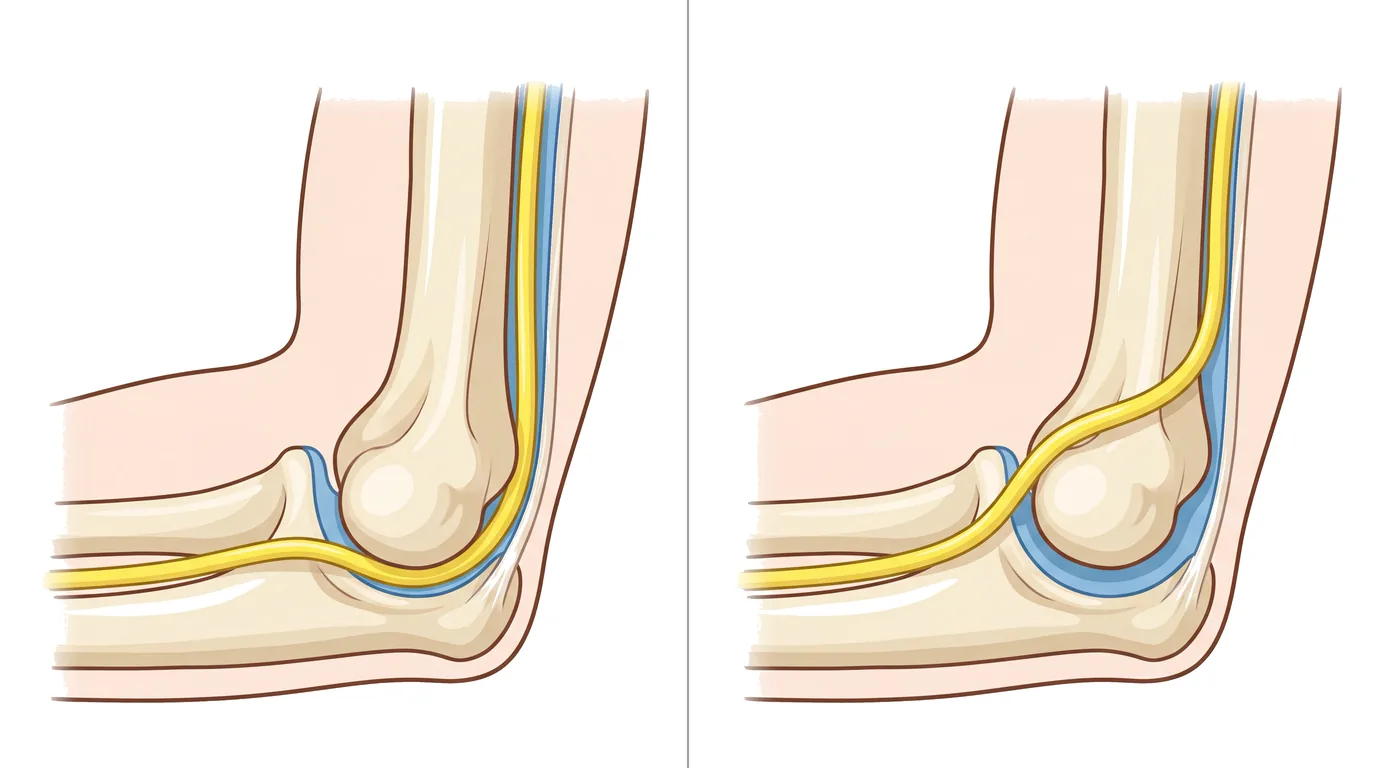
Transposition is not the same as simply opening the tunnel. Evidence comparing the two techniques applies mainly to primary or idiopathic cubital tunnel syndrome and does not mean the same technique fits every situation.
Medial epicondylectomy and operations for ulnar nerve compression at the wrist are related procedures, not synonyms for simple decompression. The proposed operation should name the anatomic site and technique so that consent, risks, and recovery instructions are clear.
What are the goals? Reduce pressure and limit further decline.
The goals of decompression may include reducing pressure on the nerve, limiting further deterioration, and giving symptoms a chance to improve. Numbness, tingling, pain, grip, coordination, and strength may not change at the same rate. Severe or long-standing compression and established muscle wasting can leave residual problems, and surgery is not a guarantee of recovery.
A 2018 updated meta-analysis of studies in adults with idiopathic cubital tunnel syndrome found no statistically significant difference in clinical improvement between in-situ decompression and transposition, while finding more complications with transposition in its pooled analysis. The authors also noted limitations, including few prospective randomized trials, variable indications, and nonstandardized outcome reporting. This evidence does not decide an individual operation or apply automatically to traumatic, recurrent, or anatomically complex cases.
Technical release of a tunnel and a patient-reported benefit are different outcomes. Ask how the clinician will monitor sensation, strength, hand function, and persistent or recurrent symptoms rather than treating the procedure name as a promise.
What is recovery like? Gradual, and specific to your operation.
Recovery from cubital tunnel surgery varies with the operation, the severity and duration of nerve compression, wound healing, work or sport demands, and other health factors. Some patients have a dressing or splint for a period after surgery. Transposition, especially a submuscular transposition, may require more protection than a simple release. Elbow motion may begin early in some plans, but always follow the surgeon's written instructions.
Heavy lifting and forceful use are commonly restricted while the wound and nerve settle, with timing individualized. People with sedentary work may return sooner than people whose work requires lifting or repetitive elbow loading, but there is no universal return-to-work date. Therapy may be suggested when motion, strength, or task-specific function needs support.
The skin incision can heal before the nerve has finished recovering. Sensation, tingling, and strength may change gradually, and severe or longstanding compression may not fully reverse. A lack of immediate improvement does not by itself establish that the operation failed; steadily worsening symptoms still require contact with the care team.
Follow-up should clarify wound care, dressing or splint use, elbow and hand motion, lifting, driving, work, therapy, medications, and the symptoms that should prompt a call. Do not substitute a generic online timeline for the operative team's instructions.
When should I call the care team? Warning signs before and after surgery.
Before surgery, rapidly worsening hand weakness, new loss of useful sensation, visible hand-muscle wasting, or a new injury with numbness or weakness warrants prompt clinical evaluation rather than waiting for a routine educational answer.
After surgery, follow the discharge instructions and contact the operating team promptly for increasing pain, redness, warmth, swelling, drainage, fever, wound separation, or new or worsening numbness, tingling, weakness, or finger movement.
Seek urgent or emergency care for uncontrolled bleeding, rapidly worsening swelling with loss of hand function, or fingers that become unusually cold, pale, or blue. The appropriate response depends on the operation and your instructions; do not assume these signs are a normal part of recovery.
What are the risks? Risks worth discussing.
Potential risks of cubital tunnel release or ulnar nerve transposition include the following.
Infection, bleeding, or wound problems
Infection, bleeding, and wound-healing problems are possible after either operation.
Nerve, vessel, or tendon injury
Irritation or injury can affect the ulnar nerve or nearby nerves, blood vessels, or tendons. AAOS notes numbness near the elbow from irritation of the medial antebrachial cutaneous nerve.
Persistent or recurrent symptoms
Numbness, pain, tingling, or weakness can persist, worsen, or return after surgery.
Stiffness and scar sensitivity
Elbow stiffness, a painful scar, or sensitivity around the incision can occur.
Nerve instability after release
The ulnar nerve can become unstable or snap after release.
Further evaluation or surgery
Some people need additional evaluation or another operation.
A transposition involves more movement and dissection of the nerve than a simple release. The choice should therefore include a discussion of why its possible advantages apply to your anatomy and what additional risks or restrictions may follow. Comparative evidence should be presented with its population and limitations, not as a blanket superiority claim.
What are the alternatives? Options depend on the diagnosis and severity.
Depending on the diagnosis and severity, alternatives or related options may include:
- modifying activities that keep the elbow bent or place direct pressure on it;
- a nighttime positioning aid, brace, or padding when recommended;
- clinician-directed exercises or therapy;
- medication discussions tailored to your health and other medicines;
- continued observation when symptoms are mild, stable, or improving; and
- evaluation for a different compression site or a non-nerve cause.
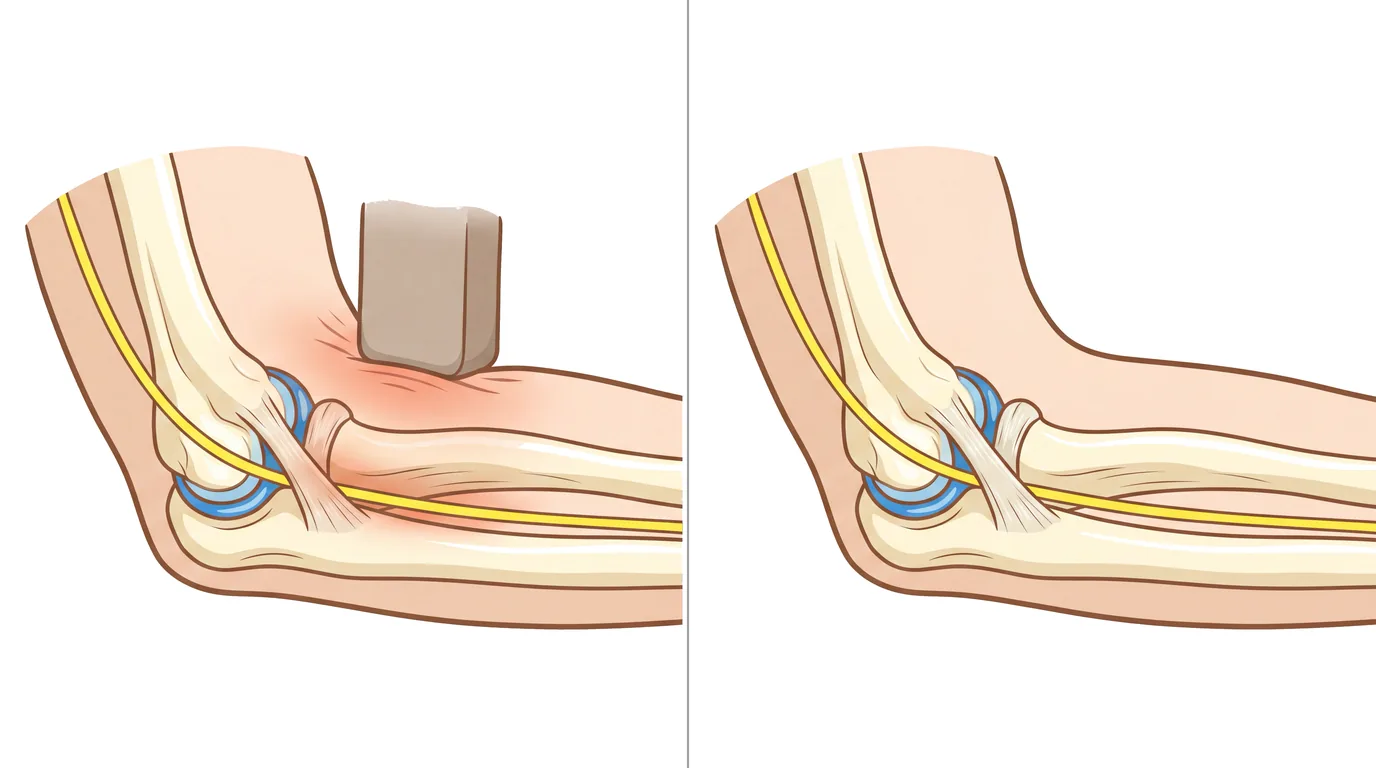
AAOS and MedlinePlus describe activity changes, avoiding pressure, splinting or padding, and clinician-directed therapy as possible nonsurgical measures. These are categories for discussion, not a home prescription or a substitute for examination.
If surgery is proposed, ask whether simple decompression, transposition, or another operation is being considered and why. No procedure should be selected solely because a search result uses a similar keyword.
What should I ask my surgeon? Questions to bring to your consultation.
- Where is the ulnar nerve being compressed: elbow, wrist, neck, or another level?
- What examination or nerve-conduction/EMG finding supports that location and severity?
- Is the nerve stable in its groove when the elbow bends?
- Why is simple decompression, transposition, or another procedure being proposed for me?
- What symptoms might improve, what may remain, and how will progress be assessed?
- What are the alternatives, including observation or continued nonsurgical care?
- What restrictions apply to wound care, motion, lifting, driving, work, and therapy?
- Which changes after surgery require a same-day call or emergency evaluation?
If you are in Rhode Island and want to discuss your symptoms, you can request a consultation. A request is not a diagnosis or a promise that surgery will be offered. For urgent symptoms after surgery, contact your surgical team or emergency services instead of using a form.
